Your Cart is Empty


Post updated: June 2026
Bear culture is one of the most distinctive and enduring subcultures within the LGBTQ+ community. It has its own flag, its own vocabulary, its own global calendar of events, and a sense of brotherhood that is, for many men, genuinely life-changing. But to understand what bear pride actually is, you need to understand why it was created in the first place.
The bear community was not built for fun, though it has plenty of that. It was built as an act of resistance against a very specific kind of rejection.
By the late 1970s and early 1980s, gay male culture in cities like San Francisco was heavily shaped by a particular aesthetic: young, slim, smooth-skinned, and carefully groomed. This was the image in the magazines, the bars, and the mainstream gay media. Men who didn't fit that mould: men who were larger, hairier, older, more rugged in appearance, often found themselves on the margins of spaces that were supposed to be theirs.
The bear movement formed as a direct response to that exclusion. Men in San Francisco began gathering informally, drawn together by a shared sense that their bodies and their version of masculinity were worth celebrating, not apologising for. The earliest recorded use of 'bear' in this context appears in a 1979 article in The Advocate, where writer George Mazzei used animal types to describe different gay male identities. But it was the early 1980s San Francisco scene where bear culture as a community really took shape.
Bear clubs began to form. Social spaces that welcomed bears became known as bear bars. The community created its own vocabulary: cubs for younger or less hirsute bears, otters for hairy men with slimmer frames, wolves for lean and muscular, muscle bears for the weightlifters, polar bears for silver-haired men, and chasers for those attracted to bears regardless of their own identity. The language is detailed because the community is precise about inclusion: there is a place for everyone who wants to be here.
This is the founding logic of bear culture: it was created by men who felt rejected by mainstream gay spaces, who chose to build something better. That origin story shapes everything about it: the warmth, the body positivity, the emphasis on showing up as you actually are.
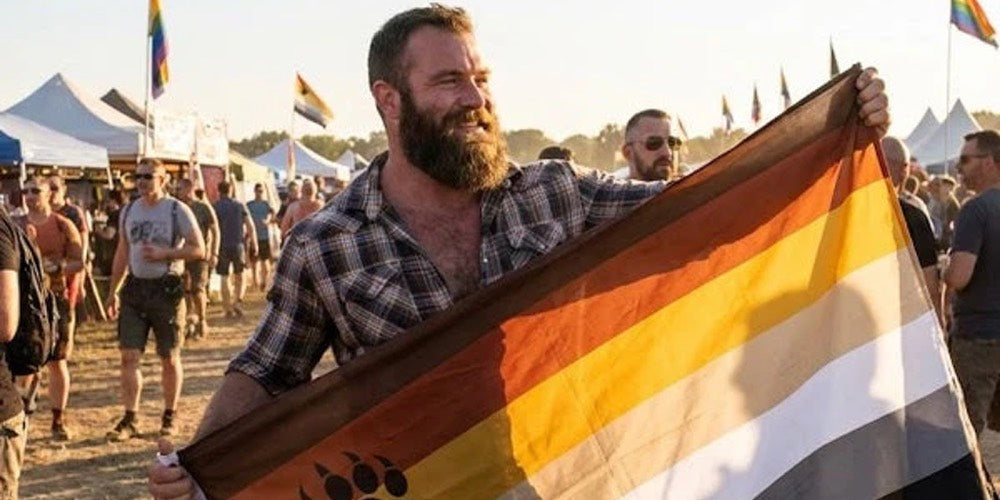
The International Bear Brotherhood Flag was designed by Craig Byrnes in 1995. Byrnes, a psychology student at Mary Baldwin University in Virginia, was researching bear culture as part of his degree and was deeply embedded in the community. He created the flag not to enter a competition, but to give the brotherhood a shared symbol.

The flag's design is deliberate. Seven horizontal stripes in shades of dark brown, rust orange, golden yellow, tan, white, grey, and black represent the full spectrum of bear fur colours worldwide: a visual statement that the community includes men of all skin tones and backgrounds. A bear paw print sits in the upper left corner, echoing the placement of the small heart on the Leather Pride flag and nodding to the community's overlapping history with leather culture.
Byrnes copyrighted the flag not as 'the Bear Pride Flag' but as 'the International Bear Brotherhood Flag', a deliberate choice that emphasised solidarity over pride as the central value. The flag spread quickly: by 1997, a Chicago store was requesting 25 flags at a time to meet demand. Byrnes went on to win the title of International Mr. Bear in 1999. He never finished his psychology degree.
The brown-to-black gradient of the flag is immediately recognisable within the community. Wearing those colours, in any form, is a signal. It says: I know what this means.
The short answer is: anyone who feels they do.
The bear community has always wrestled with the question of definition. Some members place weight on the physical characteristics traditionally associated with bears: body hair, facial hair, a larger build. Others argue that bear is primarily an attitude, a rejection of body-shame and conventional gay male beauty standards, that can be claimed regardless of body type.
What has become clear over the decades is that the community's boundaries have expanded rather than contracted. Trans men and non-binary people who identify with bear culture are increasingly part of it: in 2025, the Mr. Australasia Bear competition crowned its first transgender titleholder. Lesbians who identify with the bear aesthetic are sometimes known as Ursulas. The community that began as a response to exclusion has, at its best, become one of the more genuinely inclusive spaces in queer culture.
The subcategories within bear culture remain useful as self-identification tools rather than gatekeeping mechanisms. They give newcomers a vocabulary for understanding where they might fit and for finding others like them.
Bear events have grown from informal San Francisco gatherings to a genuinely global calendar. Bear Week in Provincetown, Massachusetts, has run annually since 2001 and draws tens of thousands of attendees. Texas Bear Round-Up in Dallas, Southern Decadence in New Orleans, and Atlanta Bear Pride are among the major North American events.
In Europe, the calendar is equally rich. Berlin Bear Summer takes place in June and July, combining the German capital's legendary nightlife with bear culture's embrace of leather and kink. Sitges Bear Week in Spain draws over 8,000 people every September to a coastal town with its own dedicated Bear Village. Reykjavik Bear Week pairs community celebration with guided tours of Iceland's landscape. BearScots Fest brings the community to Edinburgh each October. Belgium Bear Pride and Luxembourg Bear Pride draw attendees from across continental Europe.
These events are not just parties. They are the spaces where the community's founding values: body positivity, brotherhood, radical acceptance, are enacted in practice. For many bear-identifying men, attending their first bear event is a significant moment of belonging.
If you are figuring out whether bear culture is for you, attending an event, even as an observer, is often more illuminating than reading about it. The atmosphere tends to be noticeably warmer and less image-conscious than mainstream gay spaces. That warmth is not accidental. It is the whole point.
Part of what makes the bear community distinctive is that its identity markers travel. You do not need to be at a bear event to signal your membership, or to recognise a fellow bear on the street, in a coffee shop, or at work.
The flag's colours, that warm spectrum from dark brown through rust and tan to black, are recognisable to those who know what they mean. Worn in any form, they communicate membership and belonging without announcing anything to those outside the community.

The RCREW Bear Pride Bracelet carries those flag colours in semi-precious stone: tiger's eye quartz, bronzite, goldstone, yellow jasper, sunstone, white agate, labradorite and black onyx, layered in the flag's palette. To most people, it reads as quality jewellery. To a bear who recognises those warm earth tones on your wrist, it says something else entirely.

A nod across a room. A quiet 'me too' from someone who gets it. Wear it to work, on the commute, at a coffee shop, at a bear run. The brotherhood is wherever you are.

Semi-Precious Bear Pride Bracelet
£35.00
Shop the Bear Pride Bracelet →
Made by hand at Watford Workshop in Hertfordshire, a registered charity providing supported employment for people with disabilities.
Bear culture began as an act of resistance: a group of men deciding that their bodies, their aesthetic, their version of masculinity deserved a community of its own. Forty years later, that community spans continents. The flag is the same. The welcome is still the point.
Want to go deeper? Read The Gay Bear Brotherhood: Identity, Pride and Finding Your People for the full story of the community's values, vocabulary, and global events calendar.

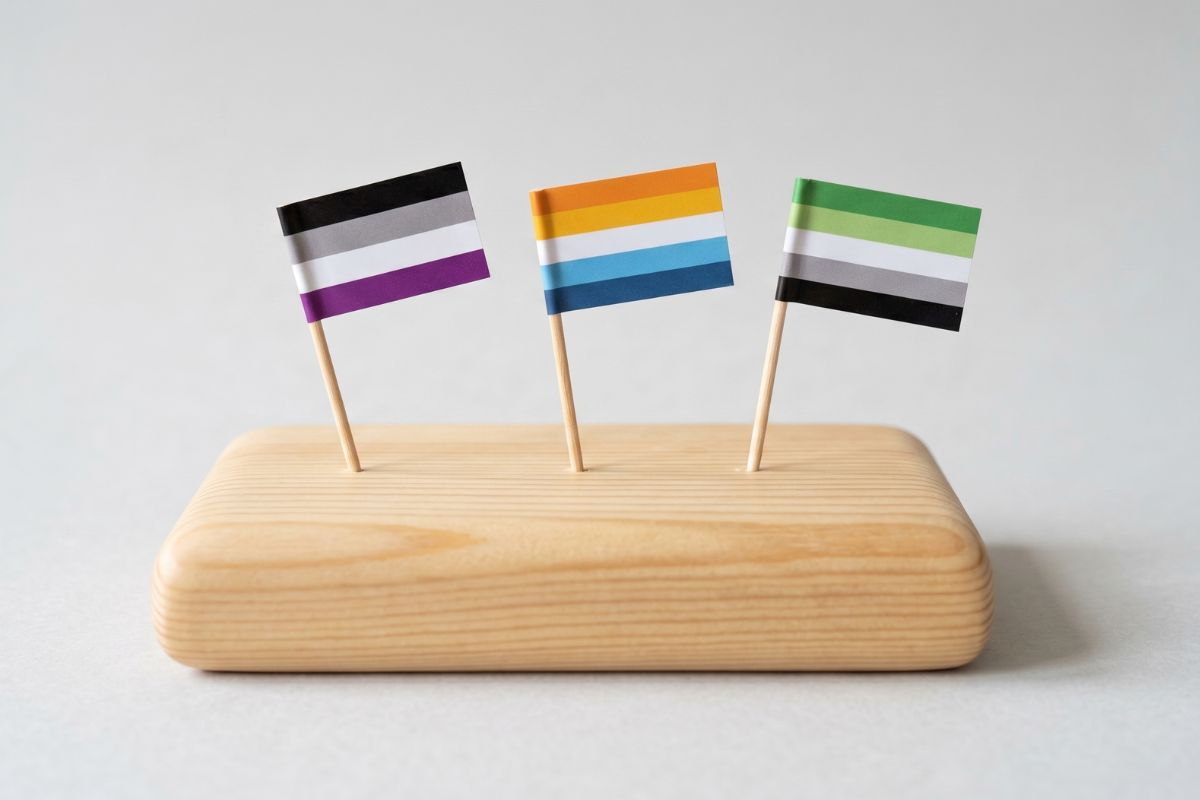
Pride Month is built around love and sexual liberation. For asexual and aromantic people, that framing can make June feel like the loneliest month of all. Here is what that experience actually looks like, and what belonging means when the party was not designed with you in mind.

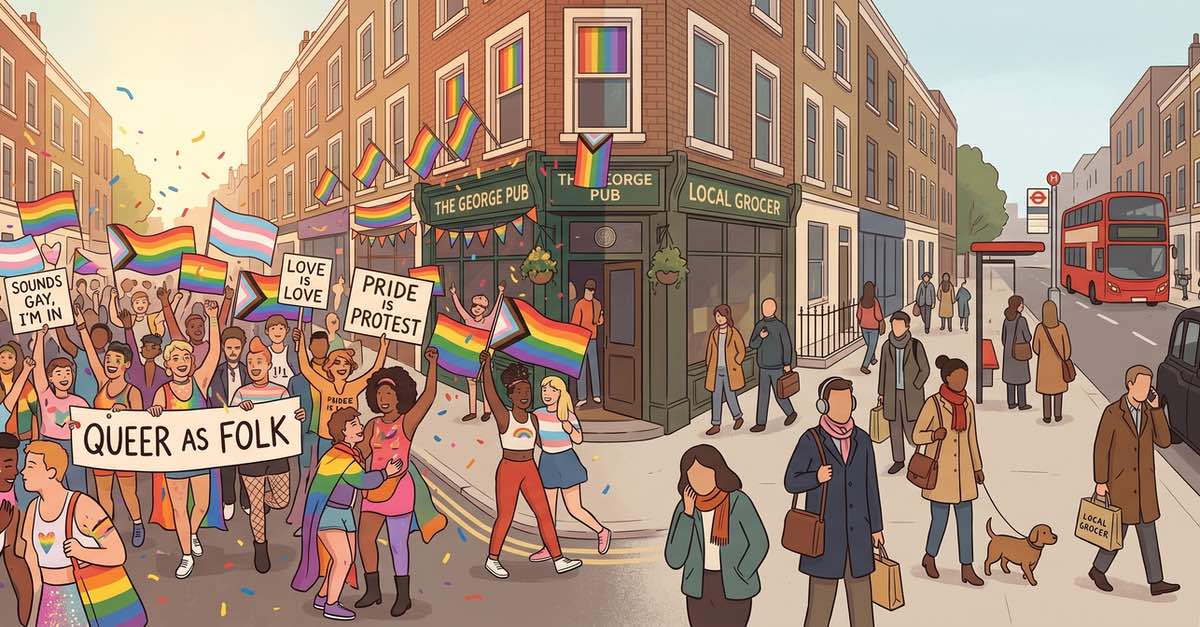
For a few hours every summer, the guesswork stops. You can look around and simply know. This is what Pride does that nothing else does. The question worth asking is what happens when it ends.

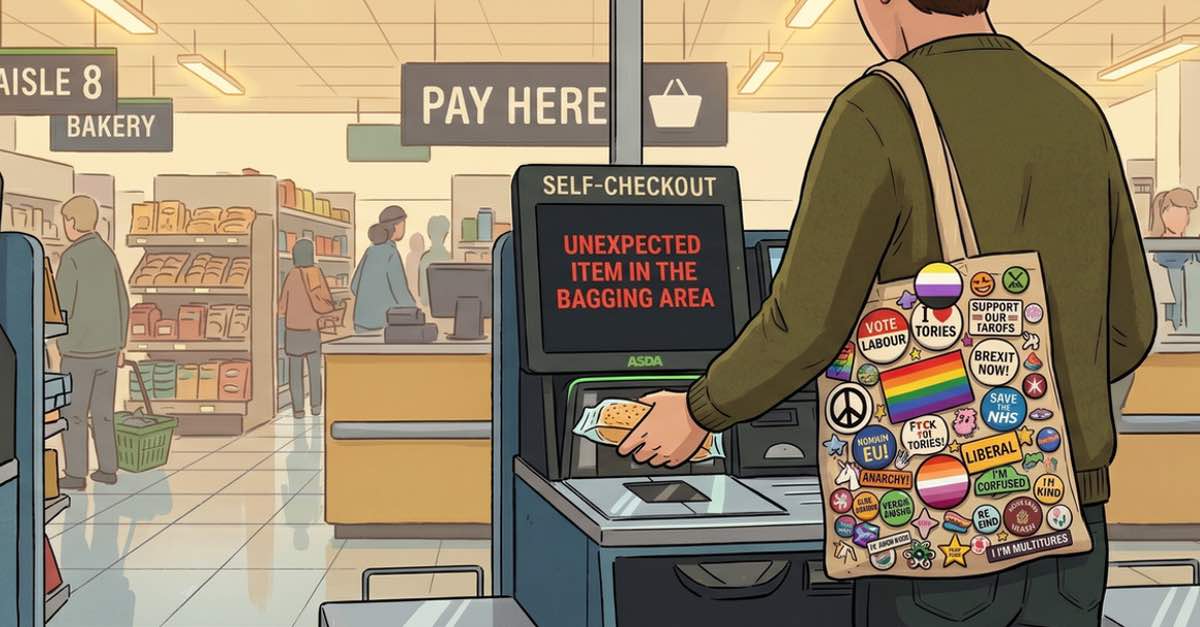
You and your people are in the same spaces every day. The same supermarkets, the same offices, the same commutes. The problem was never finding each other. It was knowing each other. And that is a different problem entirely.