Your Cart is Empty


You're at a music festival somewhere beautiful. Mountains, music, a crowd doing what crowds do. You're looking, the way queer people always look, running the quiet calculation in the background.
The guy ahead of you in the queue: rings, earrings, sport socks. The one at the bar: mullet, tight shirt, dancing like nobody's watching. Every signal you've been taught to read is present, on everyone, all at once. Statistically, the vast majority are straight. The numbers are not on your side.
You try anyway. A look held a fraction too long. A smile. The first guy has a girlfriend. The second gives you the cold shoulder. By the end of the night you've run the calculation a hundred times and you're no closer to knowing who's actually there, who might actually see you back.
This is the guessing game. Most queer people know it by instinct. You develop it early, refine it over years, and carry it into every room you walk into for the rest of your life.
The default setting of most spaces is heterosexual. Not aggressively, not always consciously, but consistently. The festival, the office, the train carriage, the hotel bar, the GP waiting room. These are not queer spaces. They are spaces queer people move through, reading as they go, calculating constantly, with no reliable way to find each other.
For a long time, the answer to this was geography. You moved to the right city, the right neighbourhood, the right postcode. You made the financial sacrifice to live somewhere with a gay scene, because the alternative was isolation. People still talk about this with the matter-of-fact resignation of someone describing the rules of a game they didn't design: the best gay communities are in the most expensive cities, so you make it work, or you make do.
For those who couldn't or wouldn't make that move, the options narrowed quickly. A bar two towns over. A community group that met on Tuesday evenings. An annual Pride march where, for one afternoon, the room was finally readable, then the crowd dispersed and ordinary life resumed.
The guessing game ran in all of it.
The apps changed something real. They digitised the guessing game, moved it indoors, made the invisible legible within a specific geography. You could open your phone in any city and know, roughly, who else was there. For gay men in particular, in cities large enough to populate a screen, this worked.
But it solved a private problem privately. The connection happened in your pocket, face down, away from the room you were actually in. The serendipitous moment, the chance encounter, the conversation that begins because two people are simply in the same space and one of them notices something about the other: none of that was on offer. The apps are useful. They are not the same thing.
And for much of the community, they were never really built to help at all. The platform designed for gay men is not the same platform that serves a bisexual woman who doesn't read as visibly queer, or a non-binary person in a provincial town, or a trans man who wants connection that isn't conditional on a profile photograph. For them, the opportunities were fewer, the distance between chance and connection wider.
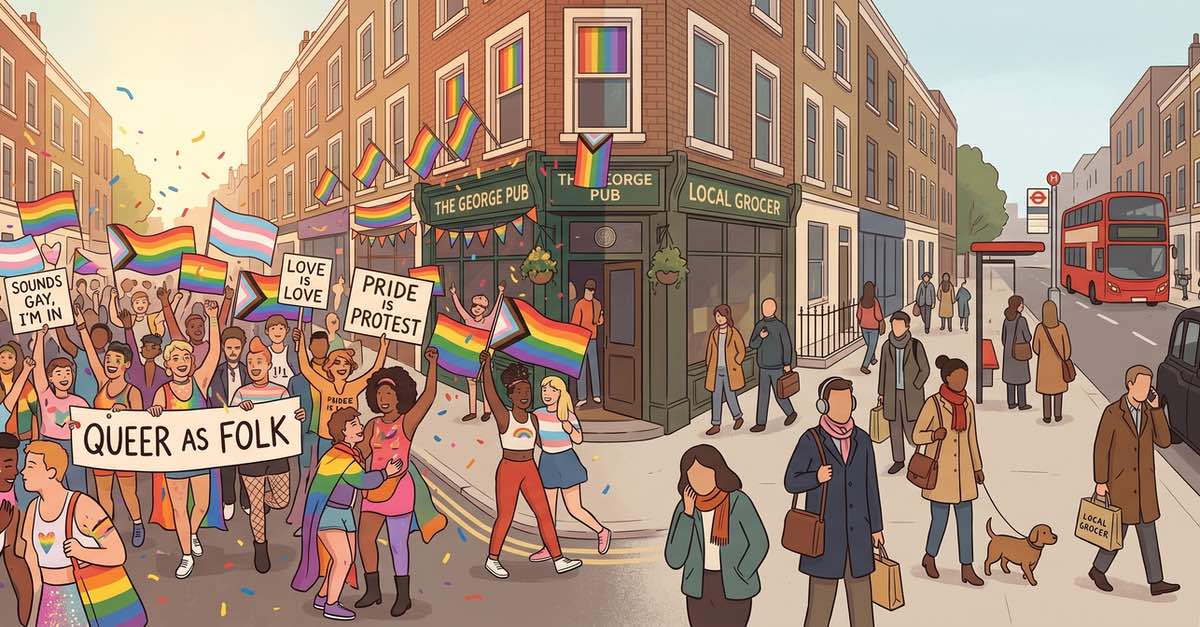
Each summer, visibility becomes easy. The flags come out, the marches happen, the rainbow appears on everything from coffee cups to bank logos. There is colour everywhere, and in that colour, a kind of relief: you can read the room. You can find your people in a crowd.
Pride matters. The visibility it creates is real, and the community it gathers is real. But it is also concentrated. It happens on particular days, in particular places, for a particular season. Once the party is over, the flags go back in the box. The office reverts. The festival quietens. And the calculations start again.
Most of what the market offers queer people is built for those particular days. Bold, bright, designed for the march, the photograph, the celebration. There is nothing wrong with any of it. A souvenir marks a moment worth marking. But a souvenir is not a tool. It does not do anything on an ordinary Tuesday. It does not help at the festival, in the waiting room, or across a bar.
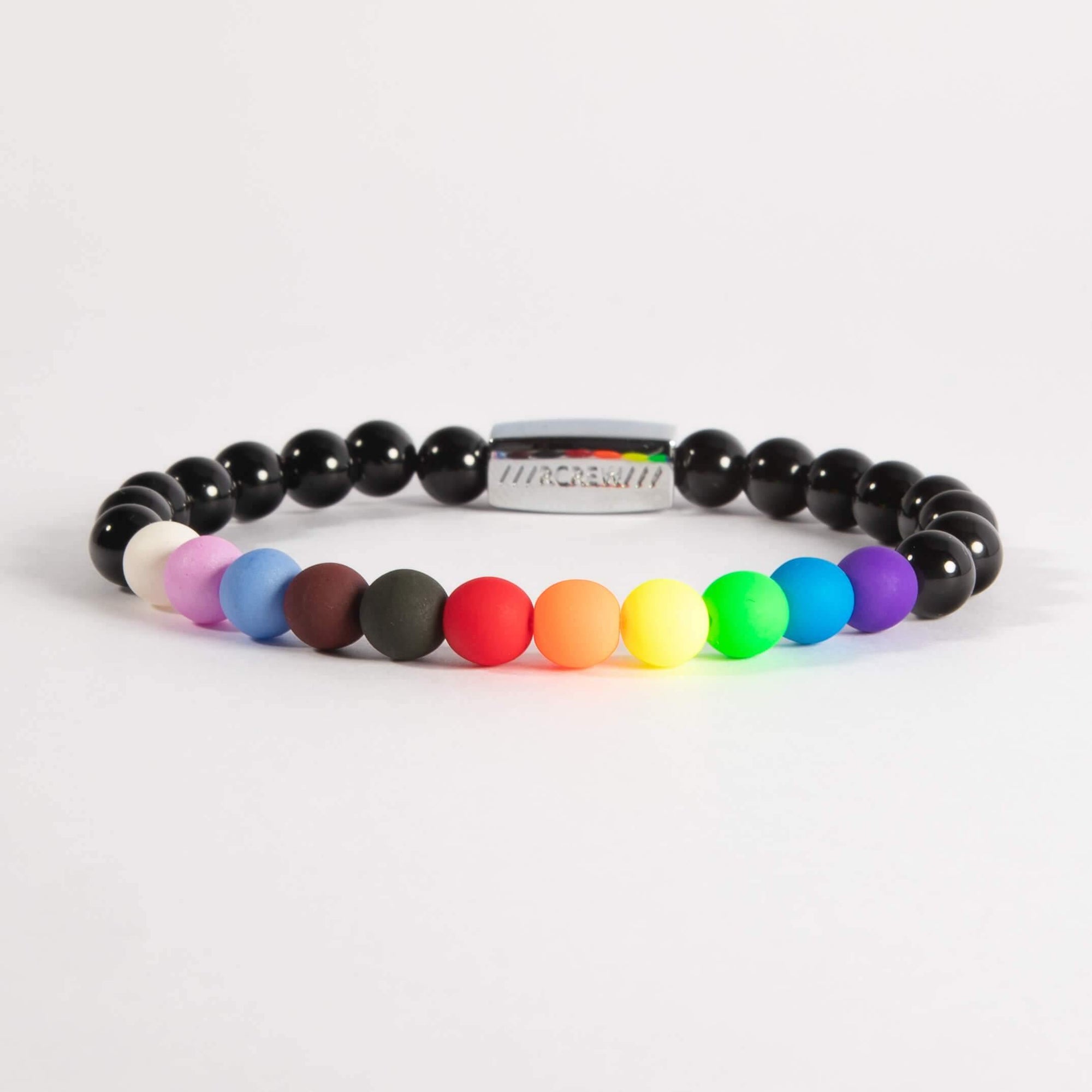
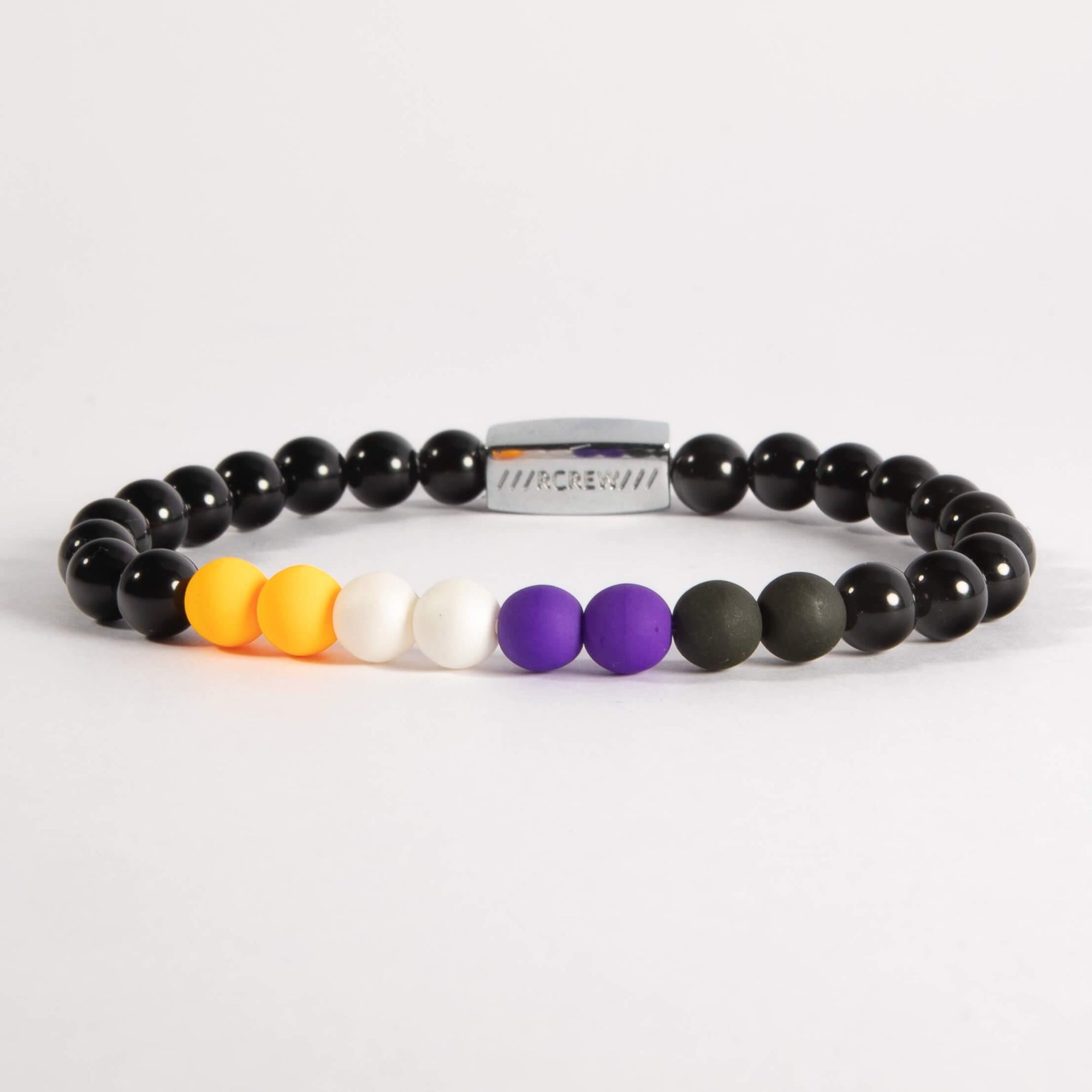
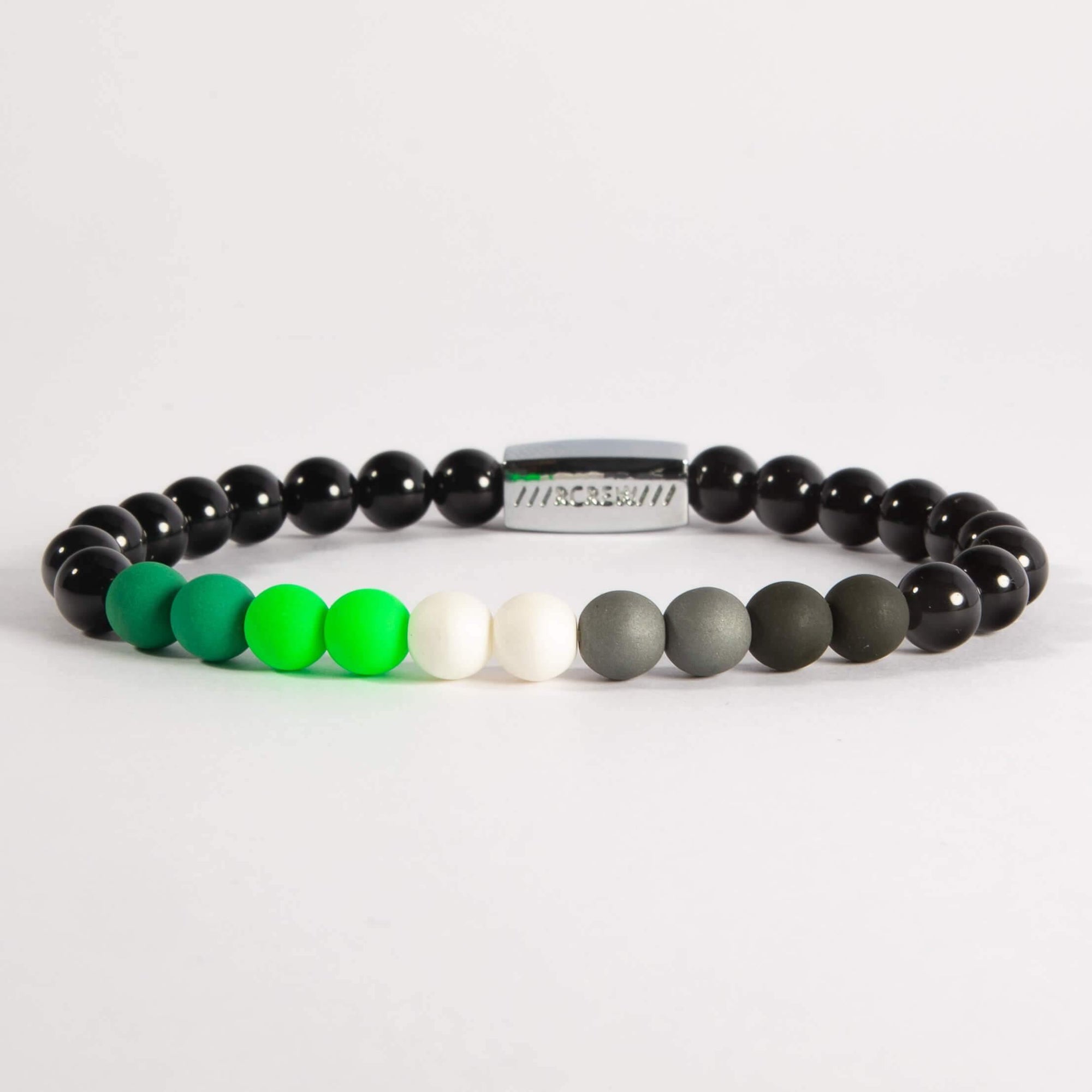
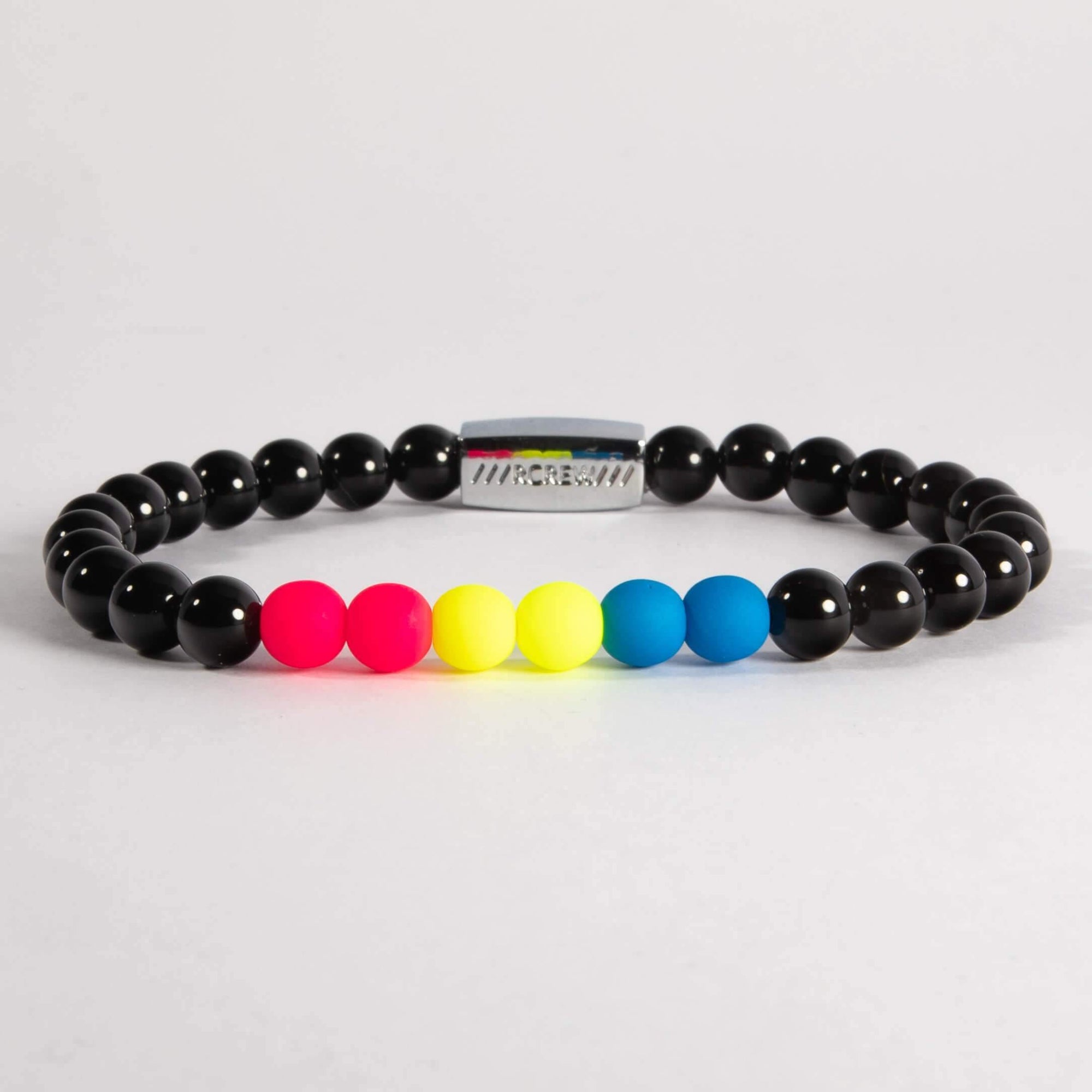
RCREW bracelets are built around a different idea: that visibility should function in any room, on any day, without requiring a declaration, a dedicated venue, or a phone pulled from a pocket.
Each bracelet translates an LGBTQ+ identity flag into colour: colourful beads in the precise sequence of the flags they represent. Gay, lesbian, bi, trans, non-binary, bear, ace, aro and more. To most people in any given room, they read as jewellery. To someone who recognises the colours of a bi flag, a lesbian flag, a bear flag, they read as something else entirely. A signal. A confirmation. An opening that did not exist a moment before.
No app required. No profile. No subscription. Two people in the same space, one of them wearing something the other can read, and a conversation becomes possible that would not otherwise have happened. Serendipitous, unplanned, real.
This is chosen visibility: legible to those who know the code, unremarkable to those who don't. It works in the GP waiting room. It works at the work conference. It works at a music festival where every other signal has become noise, and one clear, specific, readable thing on someone's wrist cuts straight through.
The guy at the bar with the mullet. The look that goes a fraction too long and means nothing or everything depending on who's reading it.
Now imagine one of you is wearing something specific. Not rainbow socks. Not a flag pinned to a backpack. A bracelet, quiet on a wrist, beads in the colours of a pride flag. The other looks. Not at you, at first. At the wrist. Recognises the sequence. Looks up.
The guesswork is gone. Not loudly, not dramatically. Quietly. The way a door opens when someone finally has the right key.
That moment has always been possible in gay bars and at Pride marches. It has never reliably been possible anywhere else.
Until now.

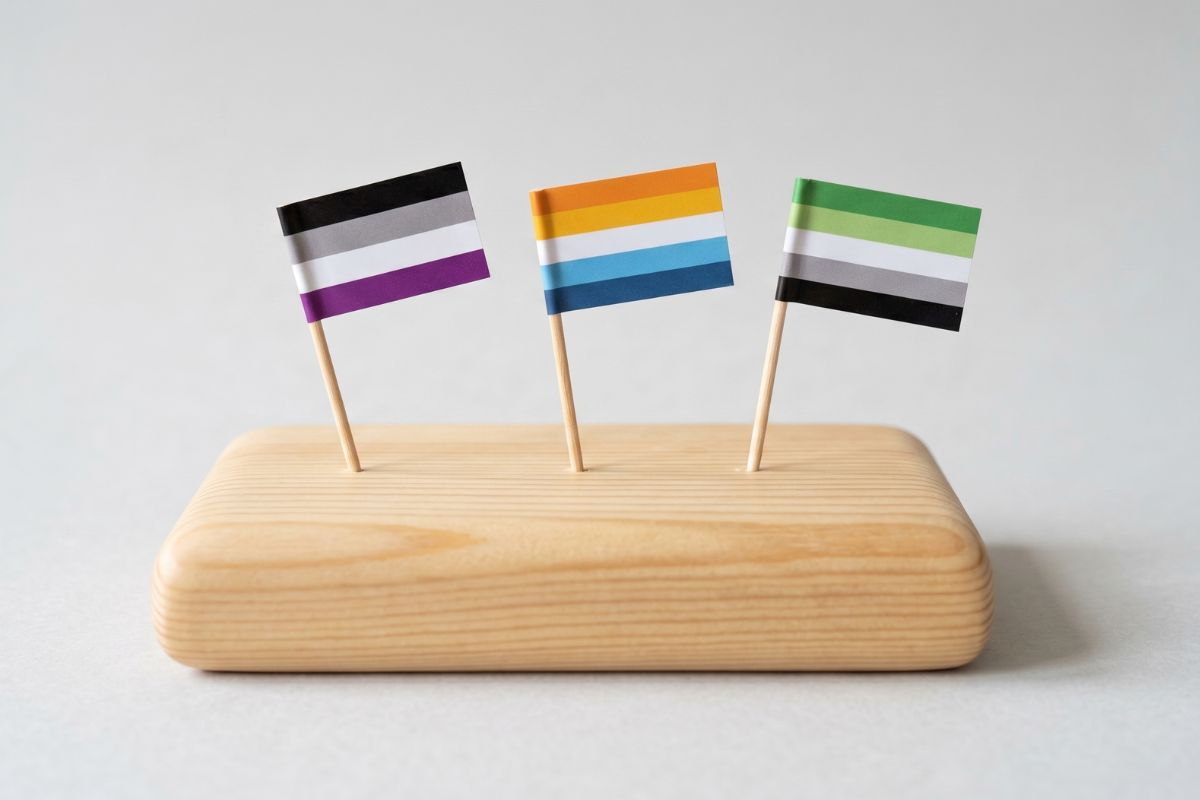
Pride Month is built around love and sexual liberation. For asexual and aromantic people, that framing can make June feel like the loneliest month of all. Here is what that experience actually looks like, and what belonging means when the party was not designed with you in mind.

For a few hours every summer, the guesswork stops. You can look around and simply know. This is what Pride does that nothing else does. The question worth asking is what happens when it ends.

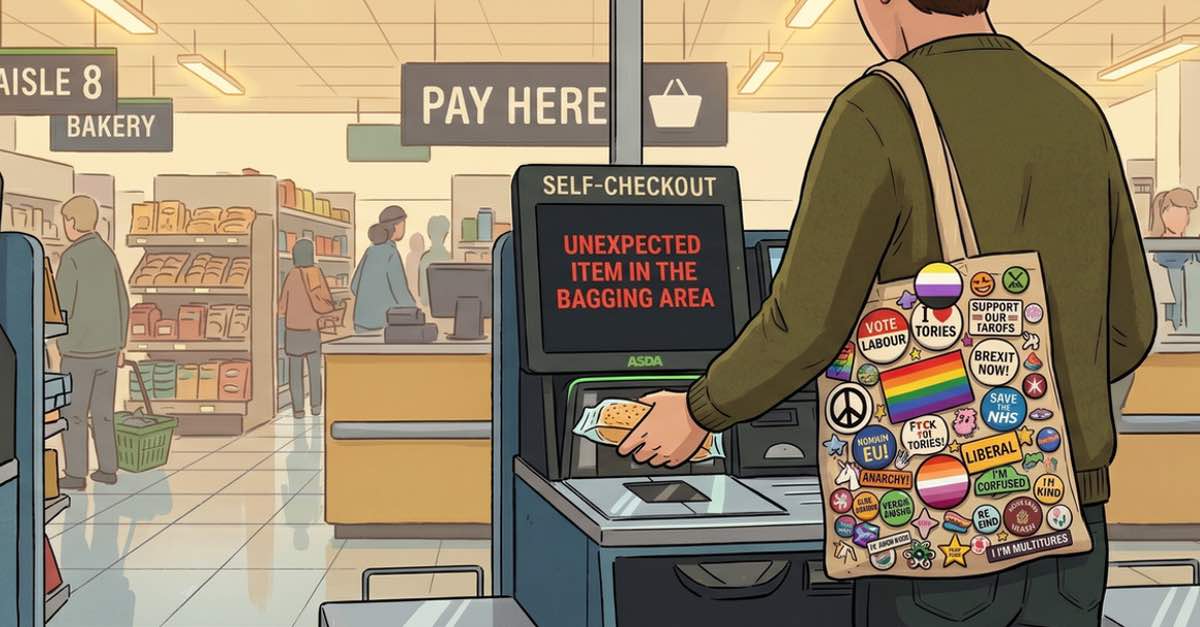
You and your people are in the same spaces every day. The same supermarkets, the same offices, the same commutes. The problem was never finding each other. It was knowing each other. And that is a different problem entirely.