Your Cart is Empty


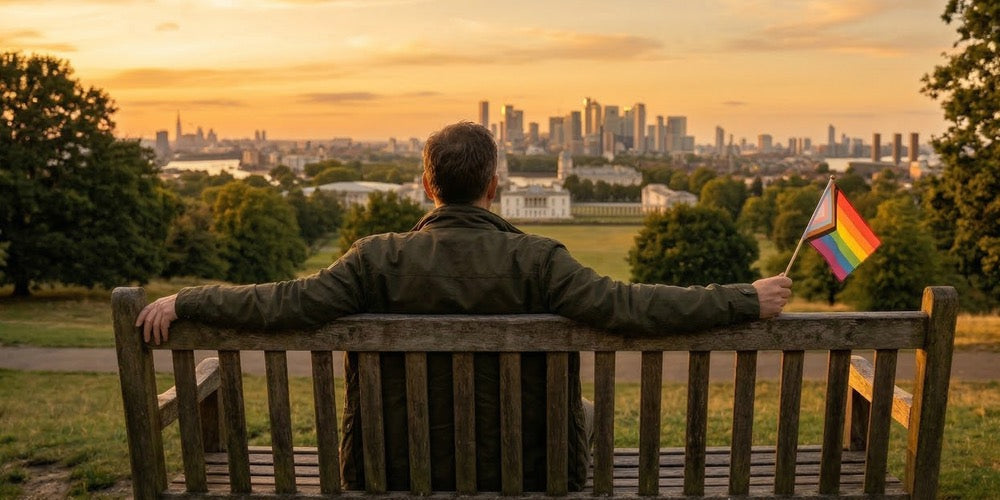
For many people, the question arrives quietly. Not as a revelation, not as a crisis, but as a persistent, low-level awareness that something doesn't quite fit. It surfaces at odd moments. A conversation half-followed. A person watched for a beat too long. A question that gets pushed back down before it can form properly. It may have been there for years, decades even, filed away under things not yet ready to look at.
Coming out later in life is more common than the world tends to acknowledge. And for those navigating it, the experience is rarely the clean, cathartic moment that popular culture tends to portray. It is usually messier, more complicated, and more quietly courageous than that.
Society has a habit of treating coming out as a young person's experience. The assumption runs deep: that identity is something figured out in adolescence, and that anyone who arrives at it later must have been hiding something, or they're confused, or simply slow to catch up.
None of that is true.
According to a Pew Research survey, 59% of LGBT adults knew they were queer between the ages of 10 and 19. One in five didn't know until their twenties. Eight percent say it wasn't until they were 30 or older. For bisexual people, that figure is even higher. And research into women's sexuality specifically suggests that sexual self-knowledge, confidence, and desire often increase with age rather than diminishing. Coming out at 35, 45, or 55 is not a developmental delay. It is a different timeline, shaped by the scripts that were handed to a person long before they had the tools to question them.
Compulsory heterosexuality is the term for it: the way society presents heterosexual relationships as the default, the expected, the only model most people ever see modelled as normal. When that is the only path visible, it takes considerable internal work even to ask the question. For many people, that work does not happen until a catalyst arrives: a relationship that ends, a grief that cracks something open, a person encountered unexpectedly, a quiet Saturday afternoon that finally has enough space in it for honesty.
Coming out later in life does not mean someone was hiding. It often means they were living the only story they knew how to live.
What makes coming out later in life distinct from coming out young is everything that has already been built. The career. The friendships. The family. Often, the marriage. Sometimes the children.
Many people in this situation find themselves confronting not one question but several simultaneously: who am I, and what does that mean for the life I have spent years constructing? These questions do not have tidy answers, and anyone who suggests otherwise has not sat with the weight of them.
For those who are married, the shape of what happens next varies enormously. Some marriages end, amicably or otherwise. Some couples, with honesty and generosity on both sides, find a different arrangement: an open relationship, a companionate partnership, a friendship that outlasts the marriage. Some people stay, for now, because the timing is not right, the children are young, or the ground has not yet steadied enough to move. All of these are real responses to an impossibly complicated situation. None of them are failures.
For those with children, the fear of damage, of disrupting something that was working, of being responsible for a pain that ripples outward, is one of the most commonly reported experiences. What research and lived experience suggest, consistently, is that children are more resilient than the fear gives them credit for, and that a parent who is honest and present tends to be remembered as exactly that, whatever else was true about their family's particular journey.
The grief in all of this is real. Grieving the identity that is ending, even an identity that was never fully true, is not weakness. It is the appropriate response to a significant loss. Many people describe spending time in what one writer called "the in-between": not yet fully out, no longer fully in, living in a suspension that can last months.
Once someone begins to move through that in-between and towards a life that fits, something else tends to happen. Psychologists who work with people coming out in midlife call it a second adolescence, and the name is apt.
The experiences that were missed: first dates, first queer friendships, first encounters with a community that reflects something true about you, all of them arrive at once, and they arrive with the intensity that adolescent experience always carries. There is exhilaration. There is impulsivity. There is, for many people, a period of making choices that the more settled future self might wince at slightly, but that the present self needed to make. Coming out later in life often means living your queer teenage years in your forties, and there is both joy and chaos in that.
This phase is not a sign that something has gone wrong. It is the natural consequence of having deferred so much for so long. The discovery of community, of connection, of desire that finally makes sense, is not diminished by arriving late. For many people, it is more vivid precisely because of how long it was waited for.
The landscape of support for people coming out later in life has grown considerably, even if it remains less visible than it should be.
Online communities have been particularly important. Many people describe the experience of typing "late in life lesbian" or "coming out at 40" into a search bar and finding, for the first time, an entire world of people whose stories sounded like their own. Secret Facebook groups, Reddit communities, and dedicated forums have become the first place many people allow themselves to be honest, precisely because they feel safer than a conversation with someone who knows them.
Beyond online spaces, several organisations offer specific support in the UK. Switchboard LGBT+ runs a helpline (0800 011 9100, daily 10am to 10pm) staffed by LGBTQ+ volunteers who can talk through anything from practical questions to simply needing to speak to someone who understands. The LGBT Foundation (0345 330 3030) offers a range of services including counselling referrals. Pink Therapy maintains a directory of therapists with specific experience working with LGBTQ+ clients, which can be particularly valuable for someone navigating the complexity of coming out inside an existing relationship or family.
Finding one person, or one community, who has been where you are is one of the most consistently reported turning points. The isolation of the in-between feels different once it is known that the in-between has been survived by many people before, and that most of them describe what came after as worth it.
Coming out is often described as a moment. A conversation. An announcement. But for many people, it begins somewhere quieter and more private than that: in the decision to stop pretending, even if only to themselves.
We understand how hard it can be to say the words out loud. Even to yourself, in an empty room.
Sometimes the first person you come out to is yourself. And that moment doesn't need words. It can be as simple as choosing to wear something that carries a meaning only you fully understand. Not a signal to the world. A signal to yourself. That you know. That it's real. That you're allowed to take up space in it.
RCREW was built on exactly this idea. The bracelets we make carry the colours of LGBTQ+ identity flags in semi-precious stones, and they were designed specifically to be worn in ordinary life, wherever you go, without explanation or announcement. We're obviously biased, but for those who want to take a first step that is beautiful and wearable every day, they're worth a look.
A first step on your terms.
Explore the RCREW bracelet collection
This is where it starts. Not with a conversation, not with an announcement, but with the decision to let something true about yourself exist in the world.
Welcome.
If you are navigating this and would like to speak to someone, Switchboard LGBT+ can be reached on 0800 011 9100, daily from 10am to 10pm. The LGBT Foundation helpline is available on 0345 330 3030, weekdays 9am to 9pm. Pink Therapy maintains a directory of LGBTQ+ specialist therapists at pinktherapy.com.

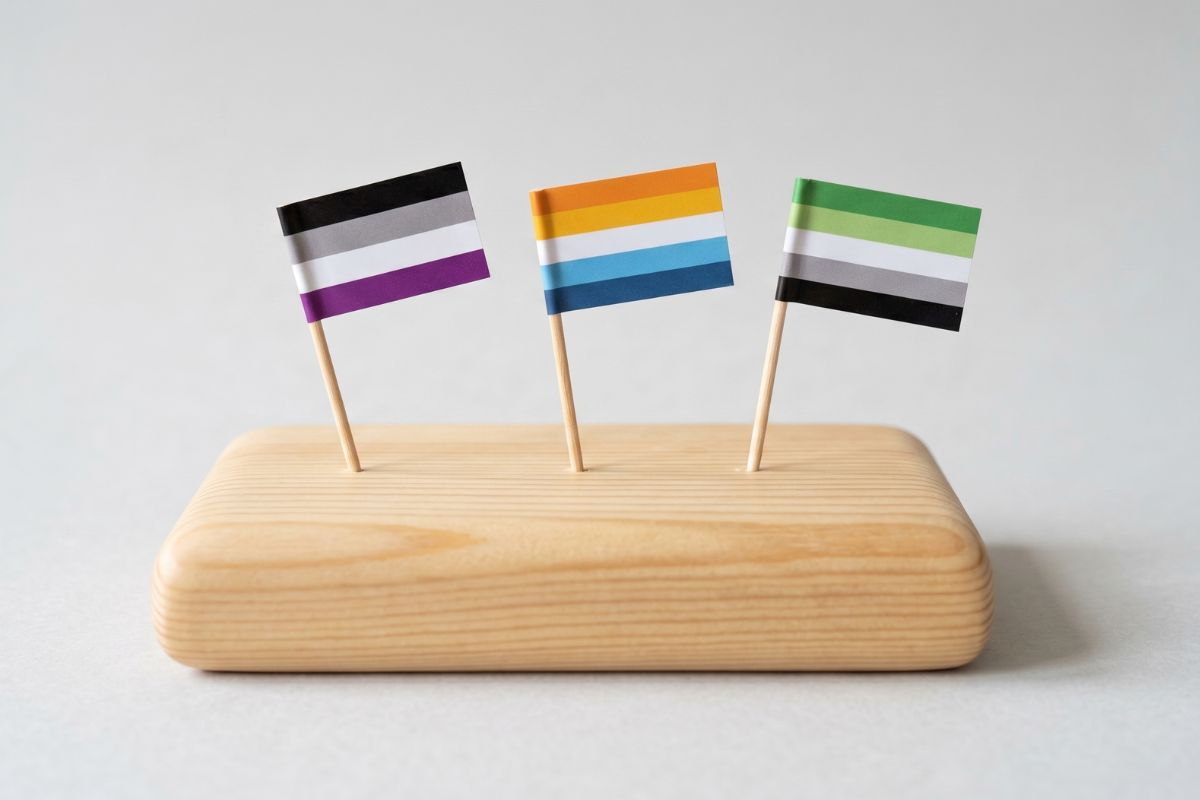
Pride Month is built around love and sexual liberation. For asexual and aromantic people, that framing can make June feel like the loneliest month of all. Here is what that experience actually looks like, and what belonging means when the party was not designed with you in mind.

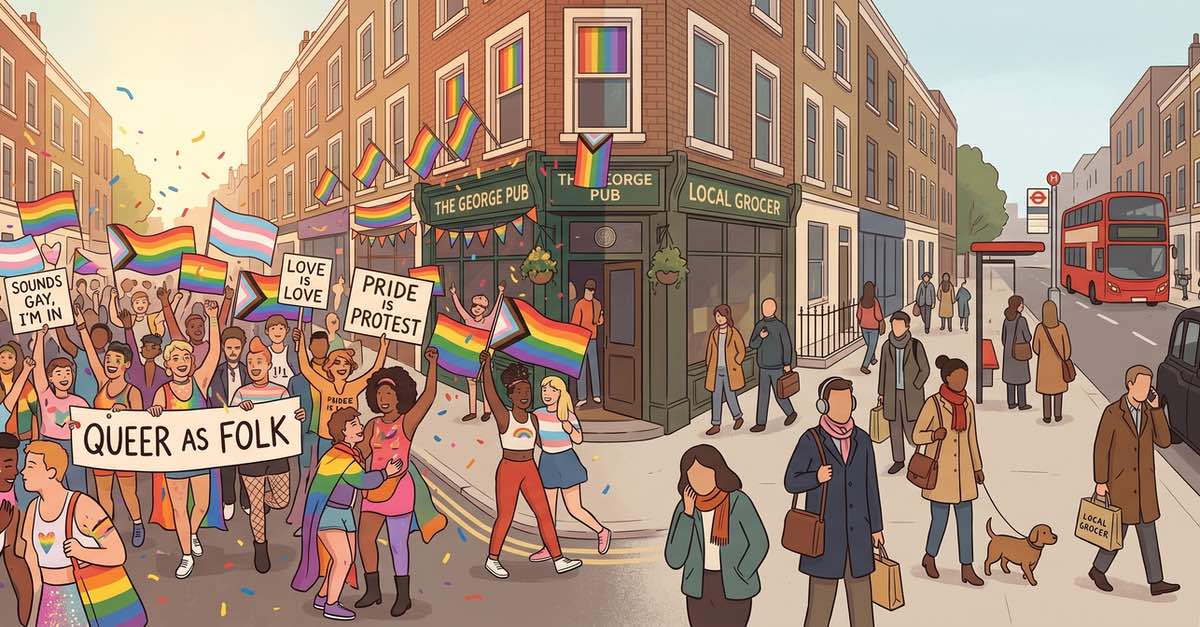
For a few hours every summer, the guesswork stops. You can look around and simply know. This is what Pride does that nothing else does. The question worth asking is what happens when it ends.

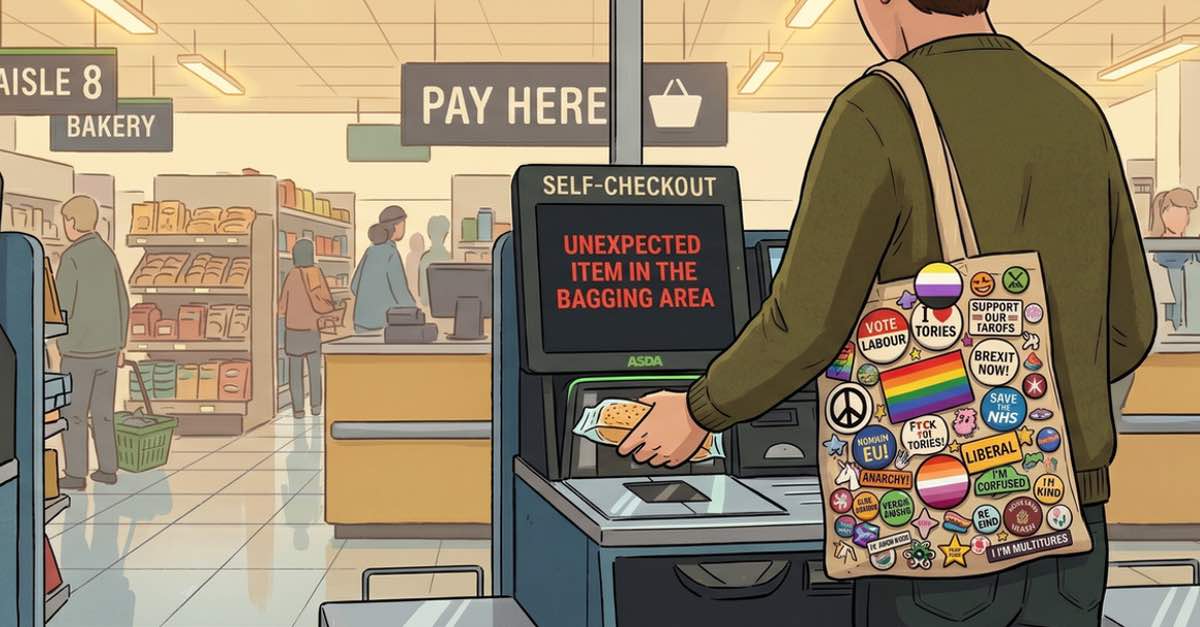
You and your people are in the same spaces every day. The same supermarkets, the same offices, the same commutes. The problem was never finding each other. It was knowing each other. And that is a different problem entirely.