Your Cart is Empty


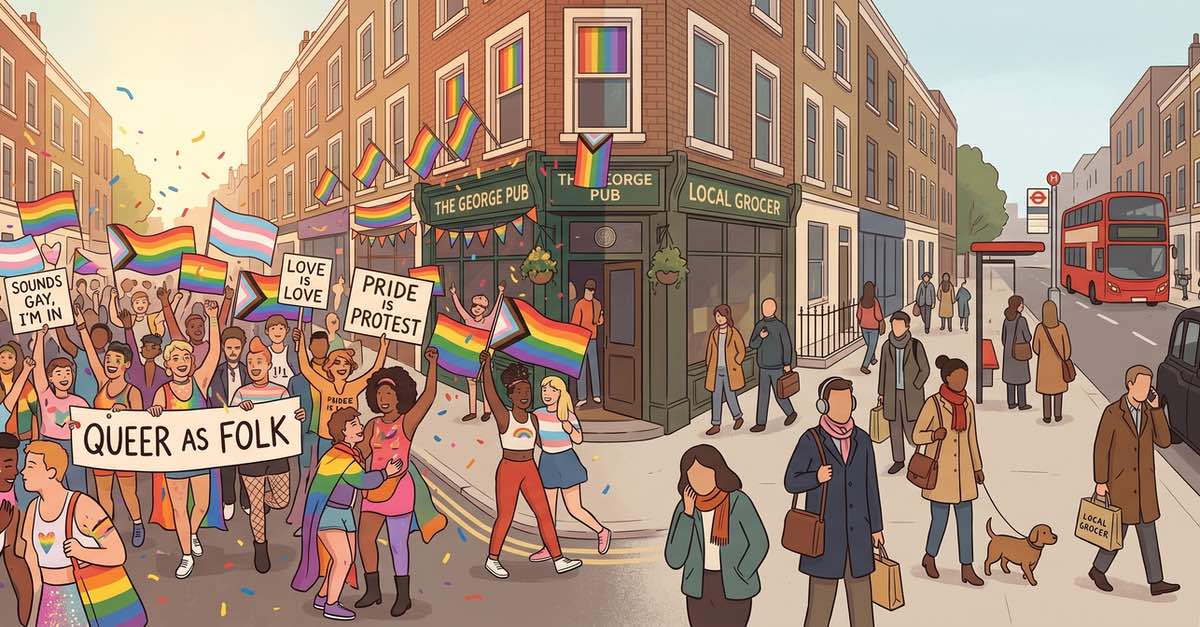
Pride Month is built around two things: love and liberation. The parades, the parties, the banners, the slogans. Love is love. Come as you are. Be proud.
For most of the LGBTQIA+ community, June is the month the world briefly tilts in their direction.
For asexual and aromantic people, it can feel like the opposite.
That is not a criticism of Pride. It is an honest account of what it means to exist outside the assumptions that even queer spaces make about what you want, what you feel, and what belonging looks like.
Pride Month has its roots in sexual liberation. The Stonewall uprising, the marches, the politics that followed: all of it was built, in significant part, around the right to love and desire freely, without shame or prosecution.
That is a vital and hard-won thing. It is also a framing that leaves asexual people in an awkward position.
Asexuality (experiencing little or no sexual attraction) sits within a Pride landscape that celebrates sexual freedom as the central organising value. The environments can be hypersexualised. The language can assume that desire is universal. The "come as you are" message, in practice, often means "come as a sexual being, without shame."
For someone who does not experience sexual attraction, that message lands differently. Not as liberation. As a different kind of erasure.
This matters for a specific reason. Research by the Trevor Project found that asexual young people report higher rates of anxiety and depression than other LGBTQIA+ young people of the same age. Part of that is the exhausting work of moving through the world, including queer spaces, without anyone quite recognising who you are. Hiding that authenticity to connect with others does not reduce loneliness. It compounds it.
Asexual people have a word for the experience of being told their identity is not real, not serious, or not queer enough: acephobia. It does not only come from outside the community. Some ace people have been ghosted by gay men when their identity comes up. Some have been told their orientation is "fake" by other queer people.
June, the month that is supposed to feel like belonging, is also the month when that conversation gets louder.
The aromantic experience during Pride Month is distinct, and in some ways sharper.
The central slogan of the modern Pride movement centres romantic love as the thing worth defending. For queer people who experience romantic attraction, that framing is powerful. It says: the love you feel is real and deserves recognition.
For aromantic people, who experience little or no romantic attraction, the phrase performs a different trick. It makes romantic love the criterion for belonging. And if that is what Pride is celebrating, where does it leave those for whom romantic love is not part of the picture?
The concept at work here is amatonormativity: the social assumption, built into almost every institution and cultural narrative, that every person wants a central, romantic partnership and that this is the highest form of human connection. It runs through the workplace, the family dinner table, the question "are you seeing anyone?" as a perceived measure of whether your life is going well.
Pride Month, for all its radicalism, does not fully escape amatonormativity. The celebration of same-sex love, while important, can inadvertently reinforce the premise that romantic love is the thing worth fighting for. Aromantic people watching that celebration can feel, paradoxically, more invisible than they did in February.
Coming out as ace or aro carries its own specific weight, and it is worth understanding why.
The first difficulty is internal. Growing up in an amatonormative world means being surrounded by the message that romantic and sexual desire are universal. When you do not experience them, the immediate conclusion is rarely "I am aromantic" or "I am asexual." It is more often "something is wrong with me."
That reckoning takes time. For many people it arrives in their twenties or later, after years of wondering why they did not feel what everyone else seemed to feel. The moment of finding the language is its own kind of relief. Not a diagnosis. Recognition.
The second difficulty is social. Telling other people is a different challenge from telling yourself. Asexuality and aromanticism are, for most people outside the community, either unknown or misunderstood. Coming out often means educating people at the same time as being vulnerable. The responses that follow tend to follow a familiar pattern: "you just haven't met the right person," "you'll change your mind," "that's just not wanting commitment." These responses are rarely hostile in intention. But they are invalidating, and they are exhausting to receive repeatedly.
Many ace and aro people make a quiet calculation about who it is worth telling. In workplaces, in families, in certain social circles, the identity stays private. Not because it is shameful, but because the energy required to explain and defend it is finite. That silence has a cost. Social invisibility combined with camouflaging to fit in increases rather than decreases loneliness over time.
Around 1% of the global population identifies as asexual or aromantic. Among 18 to 24-year-olds, that figure rises to around 4%. In the UK alone, that is hundreds of thousands of people, spread across every city, every workplace, every commute.
And almost entirely invisible to each other.
For most identities within the LGBTQIA+ community, finding your people is difficult but not impossible. There are spaces, signals, aesthetics, a cultural vocabulary that travels. For ace and aro people, that vocabulary barely exists in public. The question of what connection even means for this community is one that rarely gets asked. It is not necessarily about finding a partner. It is something quieter and perhaps more fundamental: the relief of finding someone who understands your experience of the world without needing it explained. The recognition that you are not an anomaly. That other people navigate the same landscape.
The community's response to that need was the rings. The black ace ring, worn on the right middle finger, began as a quiet convention on AVEN forums in the mid-2000s. The white aro ring, on the left middle finger, followed around 2015. Both operate on the same principle: legible to those who know, unremarkable to those who do not.
But rings have their limits. They work in close conversation, when someone notices your hand. And even then, rings on those fingers are common enough that the signal can disappear into ambiguity. The code exists, but it requires proximity, attention, and a degree of luck to land.
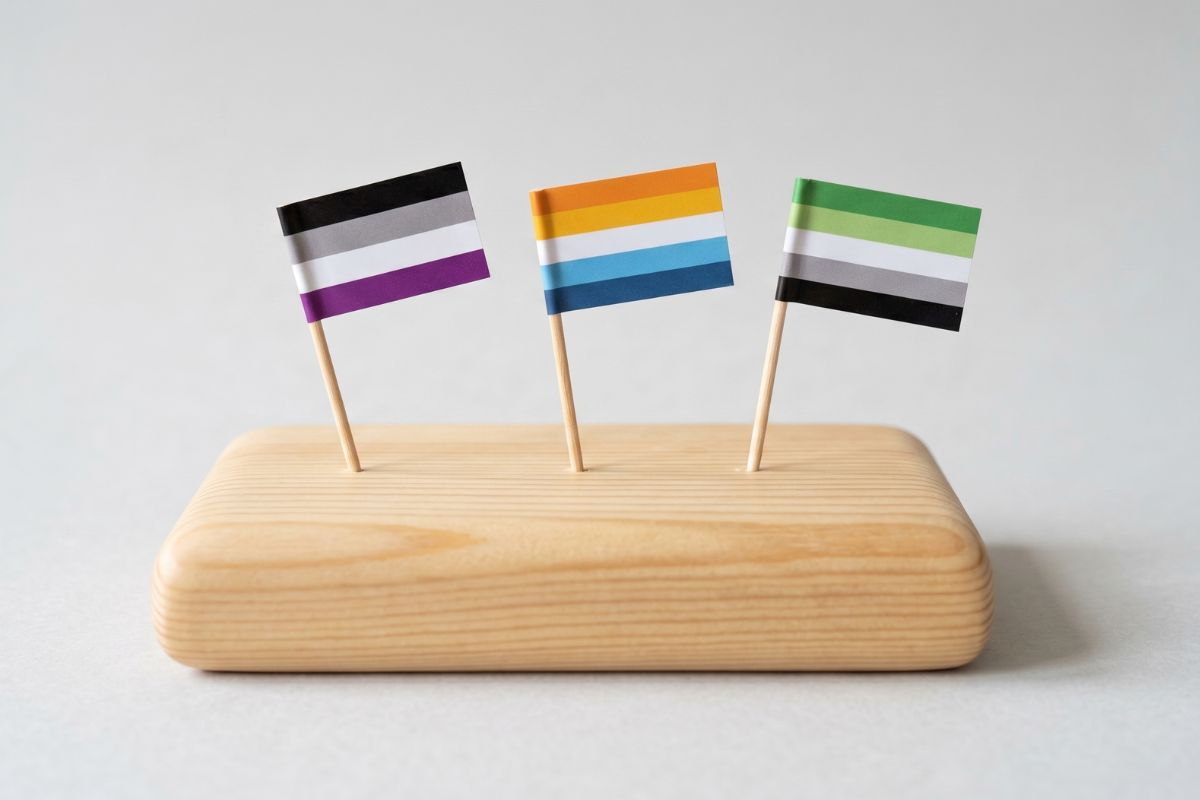
RCREW's ace and aro bracelets were built with that gap in mind. A bracelet is a small beacon of colour that travels into every ordinary space: across a room, down a carriage, through a coffee shop. To someone who does not know the flag colours, it reads as jewellery. To an ace or aro person who does, it says something specific. The rings and the bracelets complement rather than compete. One works in closeness. The other works at a distance. Together they give the community something it has always needed: more ways to find each other before a word is spoken.
Made by hand at Watford Workshop in Hertfordshire, a registered charity providing supported employment for people with disabilities. The semi-precious ace, aro and aroace ranges are in development.
None of this is an argument against Pride. It is an argument for a broader Pride: one that holds space for identities that do not fit the central narratives.
When ace and aro people do find their community: through AVEN, Arocalypse, dedicated spaces online, or the quiet recognition of a shared signal in an ordinary moment, the effect is specific and profound. Chey, an aromantic woman interviewed by AUREA, described coming out as aro this way: "I no longer try to force myself into the amatonormative box that I was expected to be in."
The relief of being understood, without having to explain or justify, is the same relief that Pride is supposed to offer everyone. The more the wider LGBTQIA+ community understands what asexuality and aromanticism actually are (not broken, not a phase, not a failure to have met the right person) the stronger the whole community becomes.
The community is broader than the loudest voices in it. Ace and aro people are part of it too.
RCREW's asexual and aromantic bracelets are made by hand at Watford Workshop in Hertfordshire, a registered charity providing supported employment for people with disabilities. The ace and aro semi-precious ranges are in development. Explore the Bold Asexual Bracelet and the Bold Aromantic Bracelet.

For a few hours every summer, the guesswork stops. You can look around and simply know. This is what Pride does that nothing else does. The question worth asking is what happens when it ends.

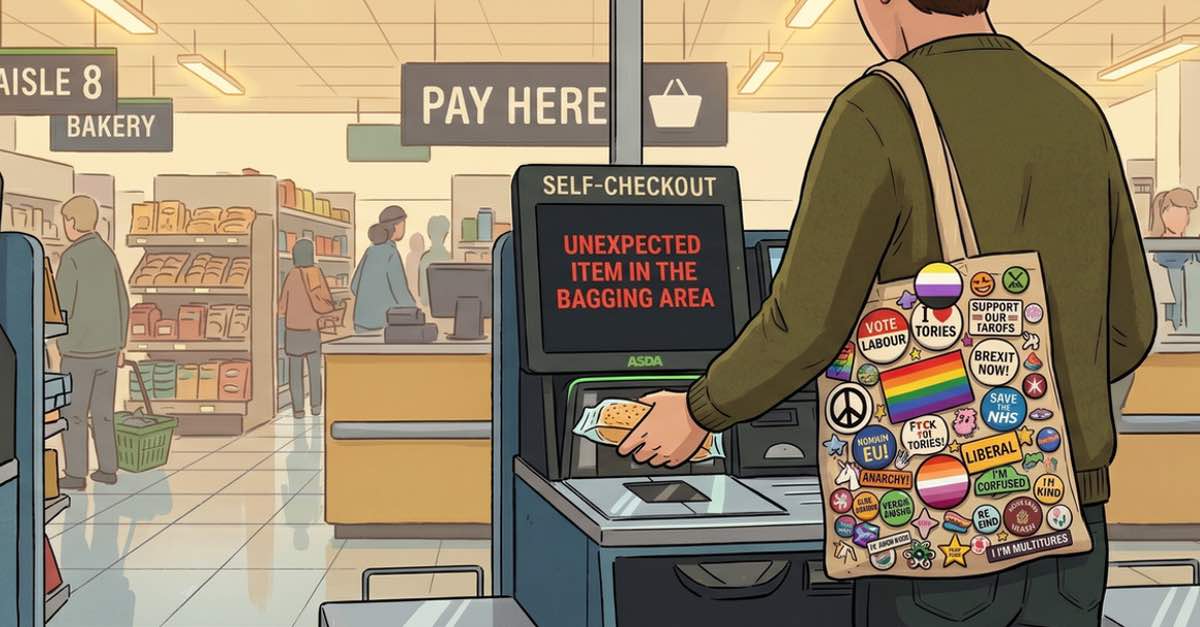
You and your people are in the same spaces every day. The same supermarkets, the same offices, the same commutes. The problem was never finding each other. It was knowing each other. And that is a different problem entirely.

"Every gay person must come out," Harvey Milk said in 1978. He believed visibility would destroy myths and change the world.
He was right. Nearly 50 years later, coming out looks different. It's not always a speech or a grand announcement. Sometimes visibility is as quiet as wearing a bracelet.