Your Cart is Empty


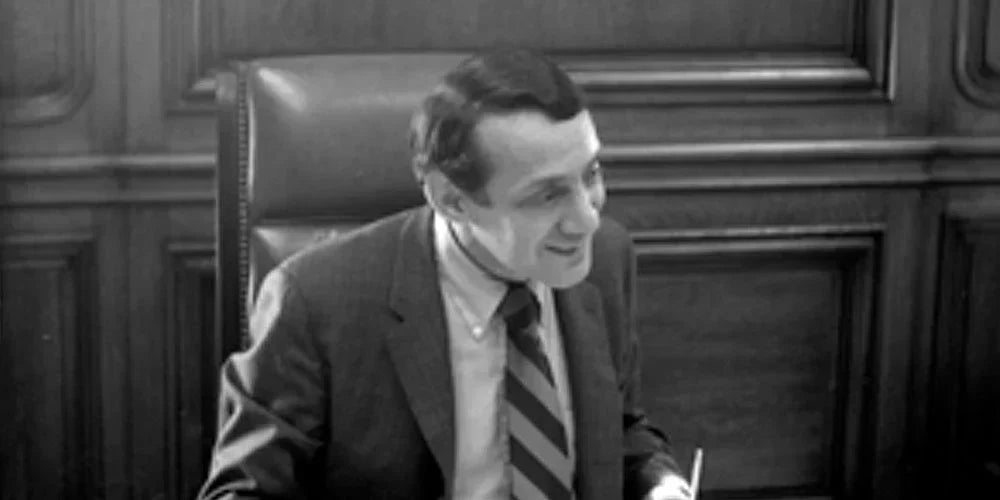
"Every gay person must come out. As difficult as it is, you must tell your immediate family. You must tell your relatives. You must tell your friends if indeed they are your friends. You must tell the people you work with. You must tell the people in the stores you shop in. Once they realize that we are indeed their children, that we are indeed everywhere, every myth, every lie, every innuendo will be destroyed once and all. And once you do, you will feel so much better."
Harvey Milk spoke these words in 1978, calling for radical visibility in an era when being openly gay could cost you your job, your family, your safety. He believed visibility would destroy the lies. He was right.
In 2026, coming out doesn't require a speech. Sometimes it's as quiet as wearing a bracelet, a pin or a lanyard.
Harvey Bernard Milk was born in 1930 in Woodmere, New York, to a middle-class Jewish family. Before he became a politician, he was a teacher, a Navy veteran during the Korean War, and a Wall Street analyst. In 1972, at 42, Milk moved to San Francisco with his partner Scott Smith and opened Castro Camera, a small photography shop in what would become the heart of the city's gay neighbourhood.
The camera shop became more than a business. It became an organising hub. Milk used his shop windows to display political messages, posted community notices, and hosted neighbourhood meetings. He became known as the "Mayor of Castro Street" long before he held any official title.
In 1977, after three unsuccessful campaigns, Harvey Milk won a seat on the San Francisco Board of Supervisors, becoming one of the first openly gay elected officials in the United States. He served for 11 months before his assassination on 27 November 1978.
In those 11 months, he passed a gay rights ordinance protecting LGBTQ+ people from discrimination in housing and employment. He helped defeat the Briggs Initiative, a California ballot measure that would have banned gay teachers from working in public schools. He built coalitions with labour unions, seniors, and racial justice groups. He showed that an openly gay man could govern effectively and represent everyone, not simply the gay community.
His assassination, alongside Mayor George Moscone, by former supervisor Dan White sent shockwaves through San Francisco and the LGBTQ+ community worldwide. The subsequent trial, where White's defence team successfully argued diminished capacity due to depression and junk food consumption (dubbed the "Twinkie defence"), resulted in a voluntary manslaughter conviction rather than murder. White served only five years.
The injustice sparked the White Night riots in May 1979, when thousands gathered outside San Francisco City Hall to protest the lenient sentence. The anger was about more than one verdict. It was about decades of violence, police raids, legal discrimination, and a justice system that treated LGBTQ+ lives as less valuable.
When Harvey Milk called for every gay person to come out, it wasn't a casual suggestion. It was a strategic imperative born from understanding how prejudice works.
In 1978, most Americans believed they didn't know any gay people. Polls showed that only 26% of Americans personally knew someone who was gay or lesbian. Without personal connections, it was easy to believe the myths: that gay people were predators, that they recruited children, that they were fundamentally different from "normal" people.
Milk understood that prejudice survives in abstraction. When you don't know any gay people, "the gays" remain a faceless threat. The moment you discover your child, your sibling, your colleague, your neighbour is gay, everything changes. Suddenly it's not "the gays" threatening your family. It's your family member needing protection.
The Briggs Initiative campaign illustrated this perfectly. California State Senator John Briggs proposed Proposition 6, which would have mandated the firing of any teacher who was gay or who supported gay rights. Milk campaigned tirelessly against it, travelling across California, debating Briggs publicly, and mobilising voters.
His strategy centred on visibility. He urged gay teachers to come out. He encouraged families with gay members to speak publicly. He connected with parent groups, explaining that firing gay teachers wouldn't protect children but would instead teach them that discrimination was acceptable.
The initiative failed, defeated by a margin of more than one million votes. It was the first time a California ballot measure targeting LGBTQ+ rights had been rejected by voters. Milk's visibility campaign worked because it forced voters to see gay people as teachers, neighbours, and community members rather than as abstract threats.
His famous call to come out was rooted in this understanding. "Once they realize that we are indeed their children, that we are indeed everywhere, every myth, every lie, every innuendo will be destroyed once and all." He believed that personal connection was the most powerful tool against prejudice.
He also knew coming out was dangerous. In 1978, homosexuality was still classified as a mental illness by many medical authorities. Sodomy laws criminalised same-sex relationships in most US states. Employment discrimination was legal. Violence against LGBTQ+ people was common and rarely prosecuted.
Milk acknowledged the risk. He received death threats regularly. He recorded several versions of his political will, anticipating his assassination. "If a bullet should enter my brain, let that bullet destroy every closet door," he said in one recording.
He called for visibility anyway because he believed the collective power of coming out would ultimately provide more safety than hiding ever could. Isolation made individuals vulnerable. Visibility, en masse, would force society to reckon with LGBTQ+ humanity.
Nearly 50 years after Harvey Milk's call to visibility, coming out remains complex.
The landscape has shifted dramatically. Same-sex marriage is legal in the UK and many other countries. Employment discrimination protections exist in numerous jurisdictions. Public opinion has shifted: recent polls show that more than 70% of people in the UK support same-sex relationships, compared to only 17% in 1983.
Yet coming out still isn't universally safe.
In the UK, hate crimes against LGBTQ+ people have increased year-on-year. Trans people face particular hostility, with transphobic attacks rising sharply. In many countries, being openly LGBTQ+ remains illegal, sometimes punishable by death. Even in relatively accepting environments, coming out can strain family relationships, complicate workplace dynamics, or invite unwanted scrutiny.
The decision to come out has also become more nuanced. The internet means coming out isn't a single conversation anymore. It's a series of choices across different contexts: family, workplace, social media, healthcare, casual interactions with strangers. You might be out on Instagram but closeted at work. You might be out to your friends but not your grandparents. You might be selectively out depending on who's asking and why.
This selective visibility isn't cowardice. It's strategy.
Harvey Milk called for universal coming out because mass visibility would create safety through numbers. In 2026, we recognise that coming out is deeply personal, that safety varies enormously by location and circumstance, and that nobody owes the world their identity on demand.
Coming out also looks different for different identities. For gay and lesbian people, coming out often centres on who you love. For bisexual and pansexual people, it might mean explaining that your identity isn't determined by your current partner. For asexual and aromantic people, it can involve dispelling myths about being "broken" or "cold." For trans and non-binary people, coming out often involves education about gender identity itself, not simply attraction.
The spectrum of coming out experiences is vast. Some people have known their identity since childhood and come out young. Others discover themselves later in life. Some have dramatic coming out moments. Others let people figure it out gradually. Some face rejection. Others find acceptance. Many experience both.
What remains constant is Milk's core insight: visibility matters. When LGBTQ+ people are visible, myths crumble. When we're hidden, prejudice thrives unchallenged.
The question in 2026 isn't whether visibility matters, it's how we make visibility accessible to more people, particularly those for whom traditional coming out carries high risk.
Not every coming out needs to be verbal.
LGBTQ+ communities have always used symbols as quiet forms of communication. These symbols serve dual purposes: they signal identity to those who recognise them whilst remaining subtle enough to avoid unwanted attention from those who don't.
The pink triangle, originally used by Nazis to mark gay concentration camp prisoners, was reclaimed by activists in the 1970s and became a symbol of pride and remembrance. The rainbow flag, designed by Gilbert Baker in 1978, has become the most recognisable symbol of LGBTQ+ pride worldwide. The lambda symbol, adopted by the Gay Activists Alliance in 1970, represented liberation and became common in activism throughout the 1970s and 80s.
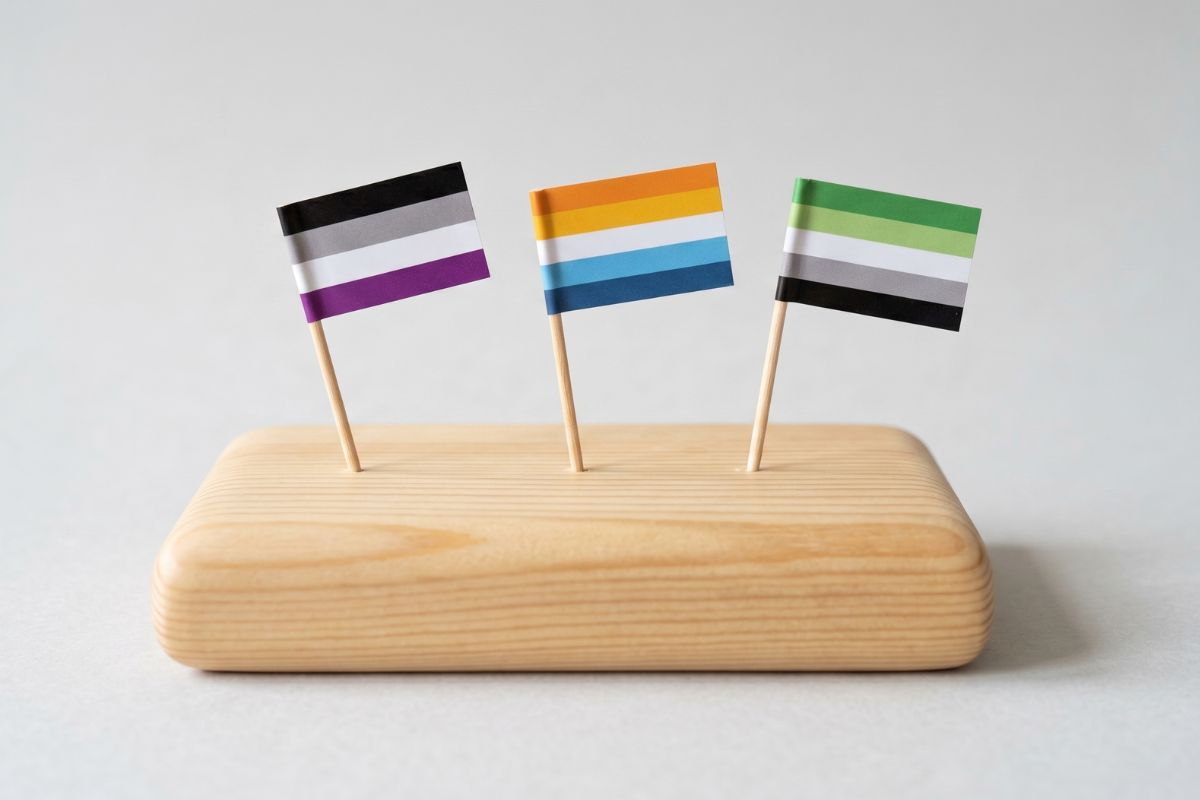
In more recent decades, specific communities have developed their own symbols. Asexual people adopted the black ring worn on the right middle finger in the early 2000s. Aromantic people began wearing white rings on the left middle finger, mirroring the ace tradition. These symbols emerged organically from online communities, providing recognition without requiring explanation.
Pride bracelets follow this tradition. They're visible enough to be noticed by those who understand their meaning whilst appearing as simple accessories to those who don't. They allow for what might be called "passive coming out": you're not hiding, but you're not explaining yourself either. You're simply existing visibly.
Silent visibility creates moments of unexpected connection. When you're wearing a pride bracelet, a pin, rainbow laces, or a lanyard and someone else notices it, there's often a flicker of recognition. A brief smile. A nod. Sometimes a conversation starts. Sometimes it doesn't. Either way, there's an acknowledgement: I see you. We're part of the same community.
These micro-connections matter. LGBTQ+ people, particularly young people in areas with limited community resources, can feel profoundly isolated. Symbols create threads of connection even in isolation. They remind us we're not alone.
Harvey Milk's call for visibility was about being seen. Pride symbols accomplish this: they make LGBTQ+ people visible without requiring verbal explanation, education, or justification. They shift the burden: you're not asking permission to exist. You're simply existing, visibly.
RCREW bracelets emerged from understanding this need for accessible visibility.
Each bracelet features the colours of a specific pride flag. Some, like the rainbow pride bracelet, are instantly recognisable to most people. Others, representing less widely known identities, appear simply as colourful accessories to those unfamiliar with LGBTQ+ symbolism.
The design philosophy centres on wearability and inclusivity. RCREW bracelets are designed for everyday wear: at work, at school, running errands, in any context where you want to be visible without making a production of it. They cover a wide spectrum of identities: lesbian, gay, bisexual, pansexual, asexual, aromantic, transgender, non-binary, genderqueer, genderfluid, and more. This specificity matters: visibility isn't simply about being "LGBTQ+" in general, it's about being seen in your specific identity.
When you wear a pride symbol, you're participating in the visibility Milk called for. You're making LGBTQ+ people visible everywhere: in queues at shops, on public transport, at family gatherings, in professional settings, in schools. You demonstrate that LGBTQ+ people aren't confined to Pride marches or gay bars: we're everywhere, living ordinary lives.
For allies, wearing rainbow bracelets or any other LGBTQ+ symbols signals support and creates safer spaces. Visible allyship matters: it tells LGBTQ+ people they're not alone in a room, and it tells potential bigots that hostility won't go unchallenged.
Harvey Milk Day, observed annually on 22 May (his birthday), commemorates his life and legacy. California officially recognises the day, and communities worldwide hold events honouring his work.
The commemoration matters not simply for remembering what happened in 1978 but for reconnecting with why Milk's work remains urgent.
In 2026, we face renewed challenges to LGBTQ+ rights. In the UK, debates about trans rights have become increasingly hostile, with trans people facing legislative threats and public vilification. Globally, many countries have rolled back protections or introduced new anti-LGBTQ+ laws. In the United States, record numbers of anti-LGBTQ+ bills have been introduced at state levels, targeting everything from healthcare access to school curricula to public accommodations.
This backlash makes Milk's message more relevant, not less. When rights are under threat, visibility becomes even more critical. When politicians can claim they don't know any trans people whilst legislating against them, when people can support discriminatory policies because LGBTQ+ people remain abstract, visibility remains our strongest tool.
Milk's legacy also reminds us that progress isn't linear. He was assassinated. His murderer served five years. The system that failed to deliver justice also failed to protect LGBTQ+ people from discrimination, violence, and legal persecution. Yet the movement continued. Activists built on his work. Visibility increased. Rights expanded.
We're not in 1978 anymore. We have legal protections, social acceptance, and cultural visibility that would have seemed distant to Harvey Milk. We also face new challenges he couldn't have anticipated: digital privacy concerns, online harassment, the complexity of intersecting identities, global connectivity that both enables community and exposes people to international hate movements.
What remains constant is the power of being seen.
Harvey Milk believed visibility would change the world. He was right.
In 1978, he called for everyone to come out everywhere, all at once. In 2026, we recognise that visibility is more complex, more personal, and more varied than a single coming out conversation.
Some people come out loudly and proudly, making public declarations and refusing to hide any aspect of themselves. Others come out selectively, tailoring their visibility to different contexts and relationships. Some people use symbols, letting their jewellery, clothing, or accessories communicate identity without words. Others prefer privacy, sharing their identity only with trusted individuals.
Coming out is a personal decision, and safety must always be the priority. Nobody owes the world their identity. Nobody is required to educate strangers or justify their existence. Only you get to decide when, where, and how you're visible.
What matters is that visibility, in whatever form feels safe and comfortable, changes things. When LGBTQ+ people are visible in schools, workplaces, shops, public transport, family gatherings, and everyday spaces, it becomes harder to maintain the myths that prejudice requires. When people realise we are indeed their children, their colleagues, their neighbours, their friends, discrimination loses its abstraction.
Harvey Milk knew this in 1978. We know it now. Visibility still matters. You're already part of the fight.
Honouring Harvey Milk's legacy is part of why RCREW exists. Every bracelet we create carries forward his vision: making LGBTQ+ people visible everywhere to each other and to the world around us. When you wear one, you're not simply accessorising. You're refusing to be in the closet. You're building the world Harvey Milk imagined: one where being seen is no longer radical, it's simply normal.
Explore our collection of pride bracelets and find the colours that tell your story. Visibility starts with you.

Pride Month is built around love and sexual liberation. For asexual and aromantic people, that framing can make June feel like the loneliest month of all. Here is what that experience actually looks like, and what belonging means when the party was not designed with you in mind.

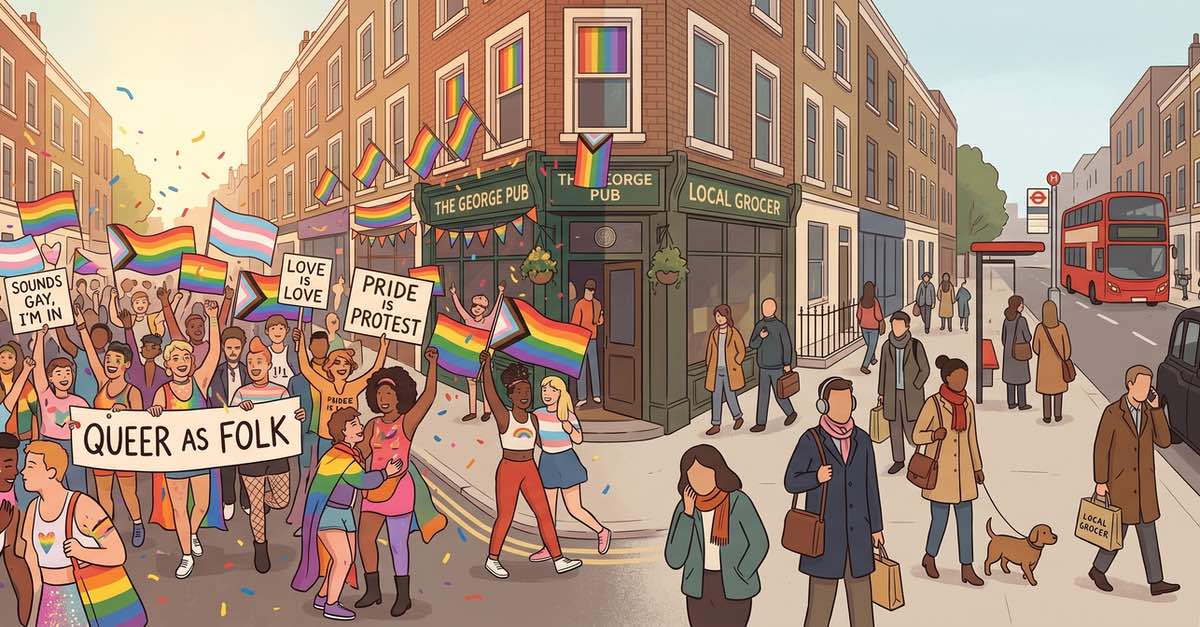
For a few hours every summer, the guesswork stops. You can look around and simply know. This is what Pride does that nothing else does. The question worth asking is what happens when it ends.

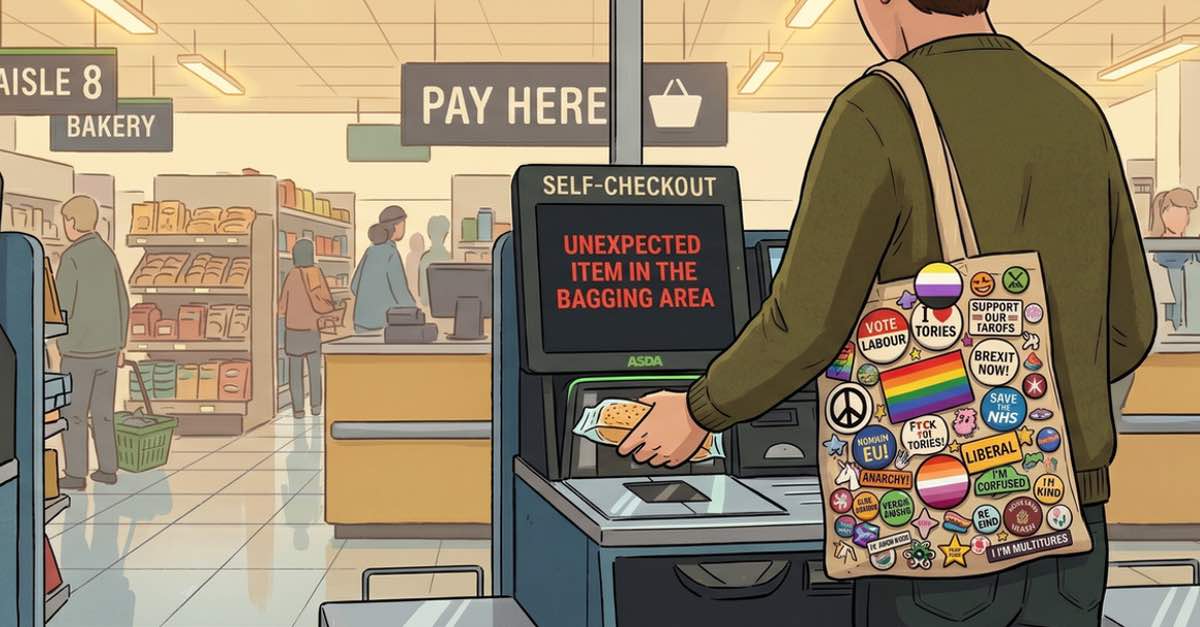
You and your people are in the same spaces every day. The same supermarkets, the same offices, the same commutes. The problem was never finding each other. It was knowing each other. And that is a different problem entirely.