Your Cart is Empty


Something shifted in the last two years. You may have felt it before you could name it. The rainbow banners that used to appear in June are going up later, coming down earlier, or not appearing at all.
The public retreat is real. But inside organisations, something different is happening. ERGs are still running. Networks are still meeting. LGBTQ+ colleagues are still showing up. And they are watching.
The numbers are worth sitting with, not because they are new, but because they are a useful reminder of the gap between what organisations communicate publicly and what employees experience daily.
Galop, the LGBTQ+ anti-violence charity, notes that 91% of LGBTQ+ people do not report their most serious experience of hate crime to the police, meaning the recorded figures significantly understate the reality.
Research published in the British Journal of Social Psychology in 2025 found that when workplace diversity strategies de-emphasise or avoid recognising minoritised identities, employees perceive this as a lack of appreciation for their identity, leading to feelings of being merely tolerated rather than genuinely valued.
British Journal of Social Psychology, 2025Policies and networks help. But when public corporate support retreats at the same time as the wider climate becomes more hostile, the gap between what exists on paper and what employees actually feel can widen quietly, without anyone intending it to.
This is the context ERG leads are working in right now.
Many LGBTQ+ ERGs were built to run events, create community, and channel employee voices into the business. They were not designed to bear the full weight of inclusion when broader institutional support becomes harder to see.
But that is increasingly the reality for some of them. Not because their organisations have abandoned them, but because the broader landscape has shifted. Where senior sponsors remain vocal and resourced, ERGs can thrive. Where they are working with less, the ERG often becomes what LGBTQ+ colleagues look to first when they want to understand where they stand.
That is a significant responsibility. And it reflects just how much trust LGBTQ+ colleagues place in the people who run these networks.
A March 2025 survey of 605 business leaders by the Institute of Directors found that 71% had no plans to alter their approach to ED&I, with only 11% expecting to scale back. The picture is not uniform. Some ERGs are well-resourced and highly visible. Others are doing meaningful work on very little. Most are somewhere between the two, navigating an organisation whose public commitments and internal reality do not always move in the same direction.
The most consistent challenge ERG leads describe is the gap between what they want to do and what resources allow.
The employees in LGBTQ+ networks are not, in the main, looking for another awareness campaign. They are looking for something that reflects that their identity is genuinely understood and valued, in the space they spend most of their waking hours.
That is where something physical and personal can do what an internal webinar cannot. Not branded merchandise. Not a logo on a lanyard. Something that carries actual meaning to the person wearing it.
RCREW produces identity bracelets across 18 LGBTQ+ designs, each representing a specific identity: gay, lesbian, bisexual, trans, non-binary, ace, pan, and more. Every bracelet is handmade by disabled workers at Watford Workshop in Hertfordshire, a supported employment initiative where people who might otherwise be excluded from the workforce do skilled work, paid at a living wage. So when a colleague chooses a bracelet, they are not only affirming their own identity; they are supporting employment that matters.
For LGBTQ+ employees, wearing something in their identity's colours every day, in any setting, does something quiet but meaningful. It creates visibility where there might otherwise be none. It gives colleagues who share that identity a point of recognition. Over time, it helps build the kind of connection and community that ERG leads spend considerable energy trying to foster through events and programming alone.
It is one tool among many. But it is a tangible one.
Research by IRIS Software Group, based on a nationally representative study of 1,000 UK working adults, found that nearly 60% would consider quitting if their employer backtracked on DEI commitments. Two in five said they would seriously consider leaving; one in five said they would certainly walk.
LGBTQ+ employees are not the only ones forming these views. Allies are too. For younger employees, inclusion is not a differentiator. It is a baseline.
The data suggests that how organisations behave during this period matters, to LGBTQ+ employees, to allies, and to the broader workforce making decisions about where they want to work.
If you are reading this, you are almost certainly already doing more than your job description requires. You are running programming, maintaining community, advocating upwards, and trying to make your workplace genuinely better for LGBTQ+ colleagues, often with limited time and minimal budget.
RCREW exists to make some of that work more visible, and more tangible.
Costs nothing to offer. Gives LGBTQ+ colleagues access to something with real personal meaning. No committee sign-off. No procurement process. No budget required.
John, the founder, will get back to you promptly and personally.
LGBTQ+ workplace inclusion does not always require a strategy document. Sometimes it requires something visible. A way for your LGBTQ+ colleagues to find each other, to be seen, and to feel less alone in the room.
That is what we help build.
Sources: The Guardian (December 2025) • Stonewall UK / Home Office Hate Crime Statistics 2024–25 • Galop • British Journal of Social Psychology (2025) • Institute of Directors • IRIS Software Group / Censuswide (June 2025)

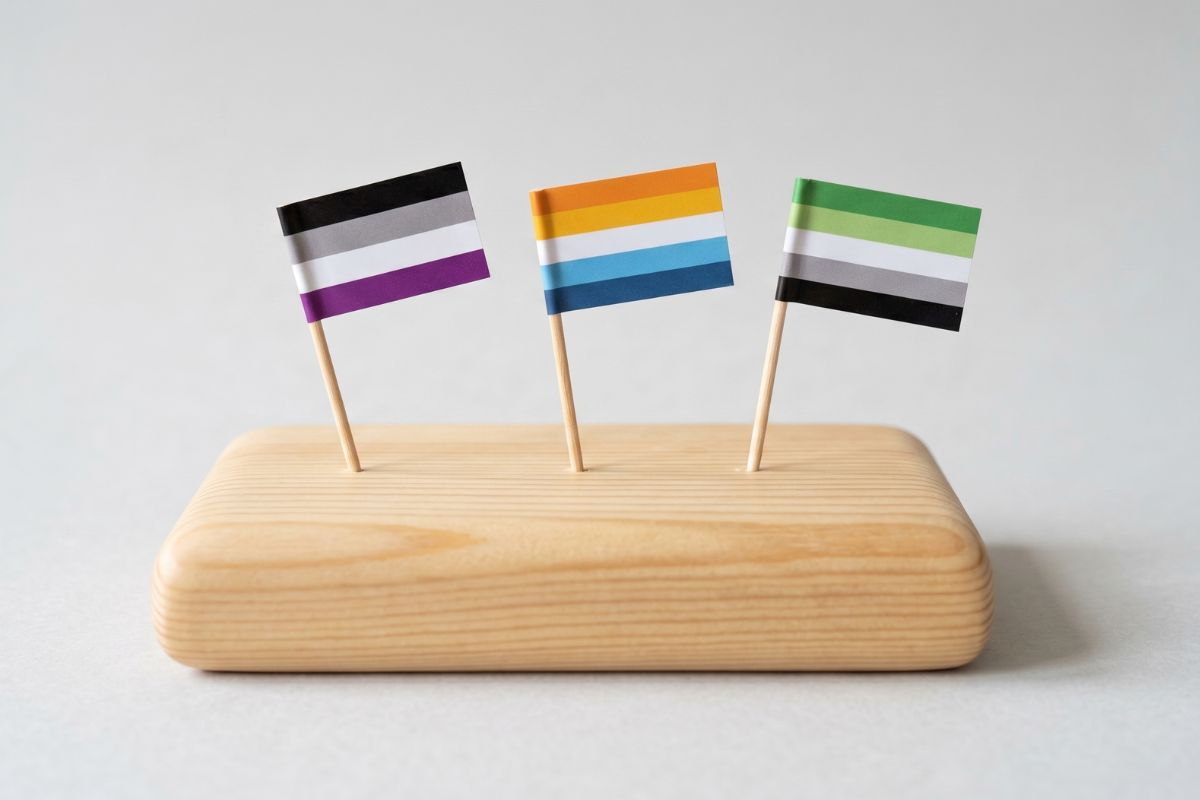
Pride Month is built around love and sexual liberation. For asexual and aromantic people, that framing can make June feel like the loneliest month of all. Here is what that experience actually looks like, and what belonging means when the party was not designed with you in mind.

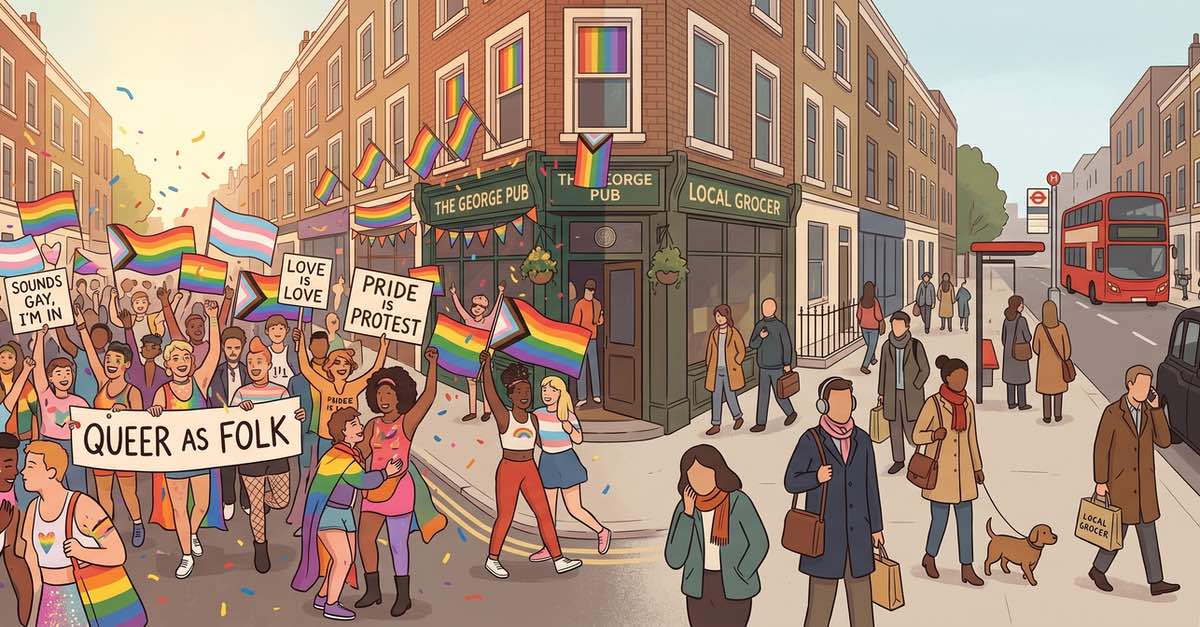
For a few hours every summer, the guesswork stops. You can look around and simply know. This is what Pride does that nothing else does. The question worth asking is what happens when it ends.

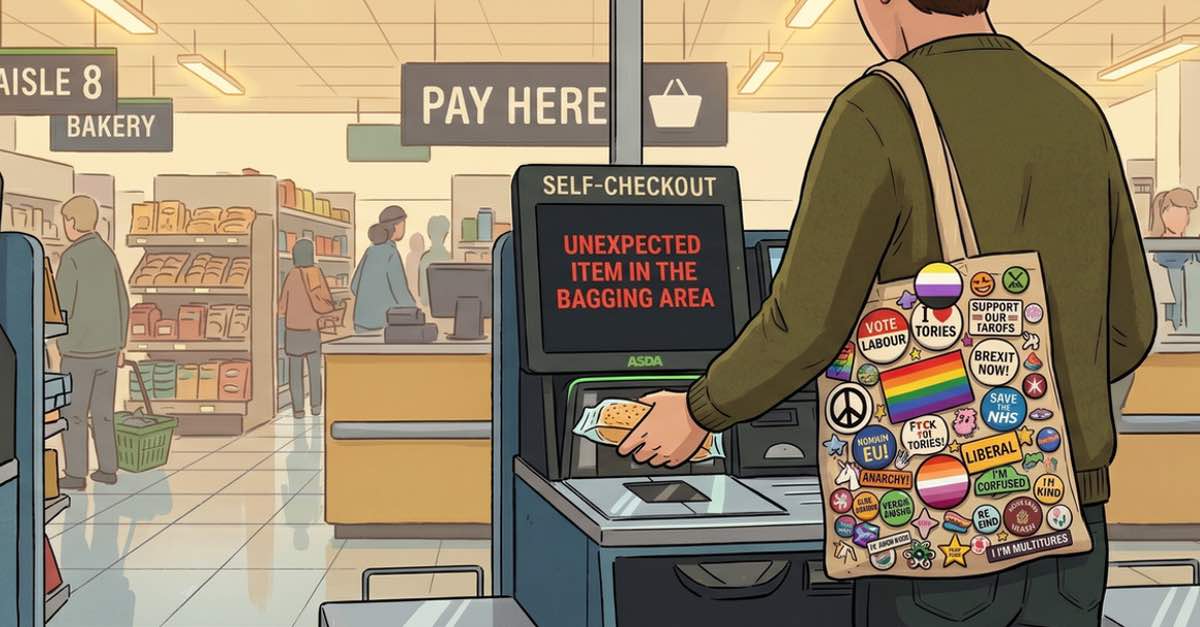
You and your people are in the same spaces every day. The same supermarkets, the same offices, the same commutes. The problem was never finding each other. It was knowing each other. And that is a different problem entirely.