Your Cart is Empty


In 1892, Oscar Wilde attended the opening night of Lady Windermere's Fan wearing a green carnation in his buttonhole. To the theatre critics and London society filling the stalls, it was an eccentric fashion choice from an already eccentric playwright. To the queer men scattered throughout the audience, it was something else entirely: a signal. A way of saying 'I see you' without uttering a word.
Wilde hadn't invented the green carnation. It was already circulating as a subtle symbol within London's underground queer circles. But by wearing it so publicly, he transformed it into one of history's most famous examples of queer coding: the practice of using visual markers to communicate identity to those in the know, whilst remaining invisible to everyone else.
This wasn't frivolity. For most of queer history, visibility meant violence. Legal persecution. Social ruin. The loss of family, employment, freedom. So LGBTQ+ people developed codes: visual languages that allowed connection without exposure, community without announcement. From Victorian flowers to Cold War slang, from leather subcultures to the explosion of modern pride flags, these codes tell a story of survival, resistance, and the profound human need to be recognised by your people.
Before we can understand the evolution of queer codes, we need to understand why they existed at all. The answer is grimly simple: for the vast majority of human history, being visibly LGBTQ+ was dangerous.
In Britain, the 1885 Labouchere Amendment criminalised 'gross indecency' between men, a deliberately vague term that could encompass anything from a kiss to a love letter. Oscar Wilde himself would be imprisoned under this law in 1895, the same year he wore that green carnation. The trial destroyed him. He died in exile three years after his release, broken by the experience.
In the United States, the Lavender Scare of the 1950s saw thousands of federal employees fired for suspected homosexuality, deemed security risks who could be blackmailed by Soviet agents. Across Europe, Nazi Germany sent an estimated 100,000 gay men to concentration camps, forcing them to wear pink triangles as markers of their 'crime'.
Even in places and times without active legal persecution, social consequences were severe. Families disowned children. Employers dismissed workers. Communities shunned neighbours. The closet wasn't cowardice. It was survival strategy.
But survival isn't the same as isolation. Queer people still needed to find each other. To build relationships, communities, moments of joy. Codes made that possible. They were a way of being visible only to those who mattered, invisible to those who posed a threat. A green carnation. A lavender tie. A particular way of wearing a handkerchief. These small signals created networks of recognition that allowed queer life to flourish even in hostile territory.
The green carnation that Oscar Wilde popularised wasn't the only floral code in Victorian queer circles. The language of flowers (florography) was already a mainstream Victorian practice, where different blooms carried specific meanings. Queer people simply added their own layer.
Violets and pansies became associated with same-sex desire, partly because the word 'pansy' was already emerging as slang for effeminate men. In her poems, Sappho (the ancient Greek poet from Lesbos whose name would eventually become synonymous with women-loving-women) references violets, creating a throughline from classical Greece to Victorian England.
But the green carnation was different. It had no 'official' meaning in mainstream florography. It was purely a queer invention. The green was achieved by placing white carnations in water with green dye: an artificial creation for an identity that Victorian society deemed 'unnatural'. The irony wasn't lost on those who wore them.
Robert Hichens' 1894 novel The Green Carnation, a thinly veiled satire of Wilde and his circle, brought the symbol wider attention. But it was Wilde's very public wearing of it that cemented its place in history. After his trial and imprisonment, the green carnation became too dangerous to wear openly. The code had been broken. But it had served its purpose: creating a moment of visibility, of pride, before the hammer fell.
If visual codes could be spotted and decoded by hostile eyes, language offered another option: develop words that only your community understood.
Polari was a secret language used by gay men in Britain from the early 1900s through to the 1970s. Drawing from Italian, Yiddish, Romani, backslang, and theatre cant, it created a vocabulary that allowed queer men to discuss their lives in public without detection.
'Bona' meant good. 'Vada' meant look. 'Omi-palone' meant gay man. You could discuss whether someone was 'trade' (sexually available) or talk about going to a 'bijou' (small) party without heterosexual listeners understanding a word.
Polari wasn't functional alone. It was joyful. It turned oppression into play, created community through shared language, and allowed queer people to claim space even in hostile environments. When the radio comedy Round the Horne featured characters Julian and Sandy speaking Polari in the 1960s, millions of British listeners heard it weekly. Most didn't realise what they were hearing. Those who knew, knew.
The colour lavender has a complex relationship with LGBTQ+ history. During the Lavender Scare of the 1950s, it was used against queer people. 'Lavender lads' was a derogatory term for gay men in government positions. But like the pink triangle before it, the community reclaimed the colour.
By the 1960s and 70s, lavender had become a symbol of queer pride. Lesbian feminists spoke of 'lavender menace' (a term originally used to dismiss them, which they then wore as a badge of honour). Lavender sashes, shirts, and accessories became ways of signalling queer identity and political solidarity.
The reclamation of lavender demonstrated something crucial about queer codes: they're not static. They evolve. They respond to oppression by transforming symbols of shame into symbols of power.
In the gay male communities of 1970s America, particularly in cities like San Francisco and New York, a new code emerged: the hanky code, also known as flagging.
Men would wear coloured handkerchiefs in their back pockets. The colour indicated sexual preference. The pocket (left or right) indicated role. It was a sophisticated system that allowed men to communicate desires in spaces where verbal negotiation might be impossible or dangerous: crowded bars, cruising areas, bathhouses.
The code was particularly prominent in leather and BDSM communities. Yellow meant watersports. Black meant heavy S&M. The specificity allowed for consent and compatibility to be established at a glance.
Was everyone who wore a handkerchief participating in the code? No. But those who knew, knew. And for a community navigating sexuality in an era when homosexuality was still criminalised in many places, that knowledge was valuable.
On 25 June 1978, artist Gilbert Baker raised two enormous handmade flags above the San Francisco Gay Freedom Day Parade. They had eight stripes: hot pink for sex, red for life, orange for healing, yellow for sunlight, green for nature, turquoise for magic, blue for serenity, and violet for spirit.
This was different from every code that had come before. The rainbow flag wasn't subtle. It wasn't plausibly deniable. It was a declaration. A decision to be visible, to claim public space, to say 'we exist and we're not hiding anymore'.
Baker's timing was significant. The gay liberation movement was gaining momentum. Harvey Milk had been elected to the San Francisco Board of Supervisors the year before (one of the first openly gay elected officials in America). The Stonewall Riots of 1969 had sparked a new militancy, a rejection of the closet as the price of safety.
The rainbow flag was a product of this moment: optimistic, unapologetic, impossible to miss. It wasn't a code for those in the know. It was a banner for everyone to see.
The flag evolved. Hot pink was removed because the fabric was difficult to source commercially. Turquoise was dropped to create an even number of stripes for street displays. The six-stripe version (red, orange, yellow, green, blue, violet) became the standard we recognise today.
The rainbow flag became so successful, so universal, that a new need emerged: specificity. The LGBTQ+ community isn't a monolith. Different identities within it have different experiences, different histories, different needs for recognition.
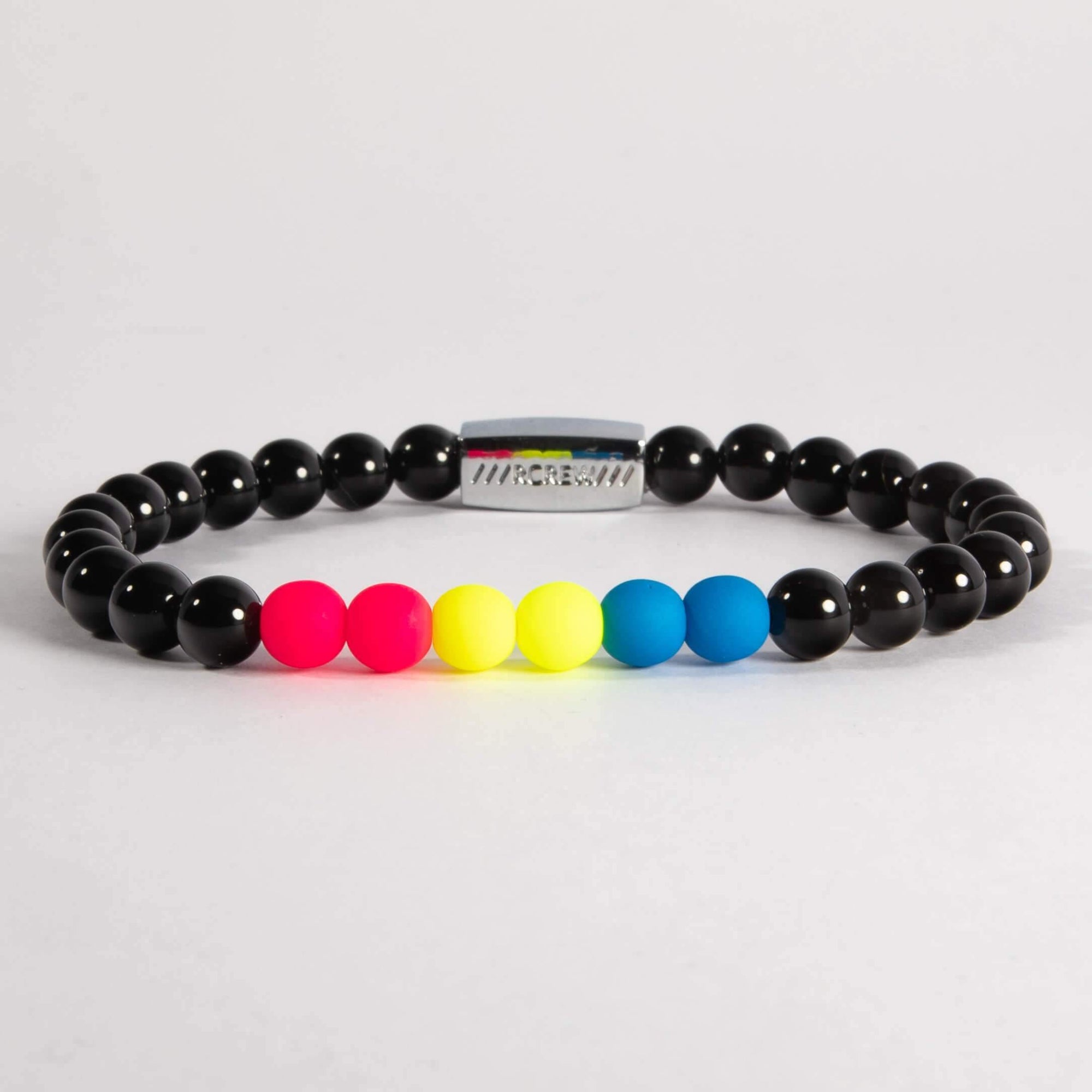
So the flags multiplied. The bisexual flag was created in 1998 by Michael Page, using pink, purple, and blue to represent attraction to multiple genders. The transgender flag, designed by Monica Helms in 1999, uses light blue, pink, and white to represent traditional gender associations and the transition between them.
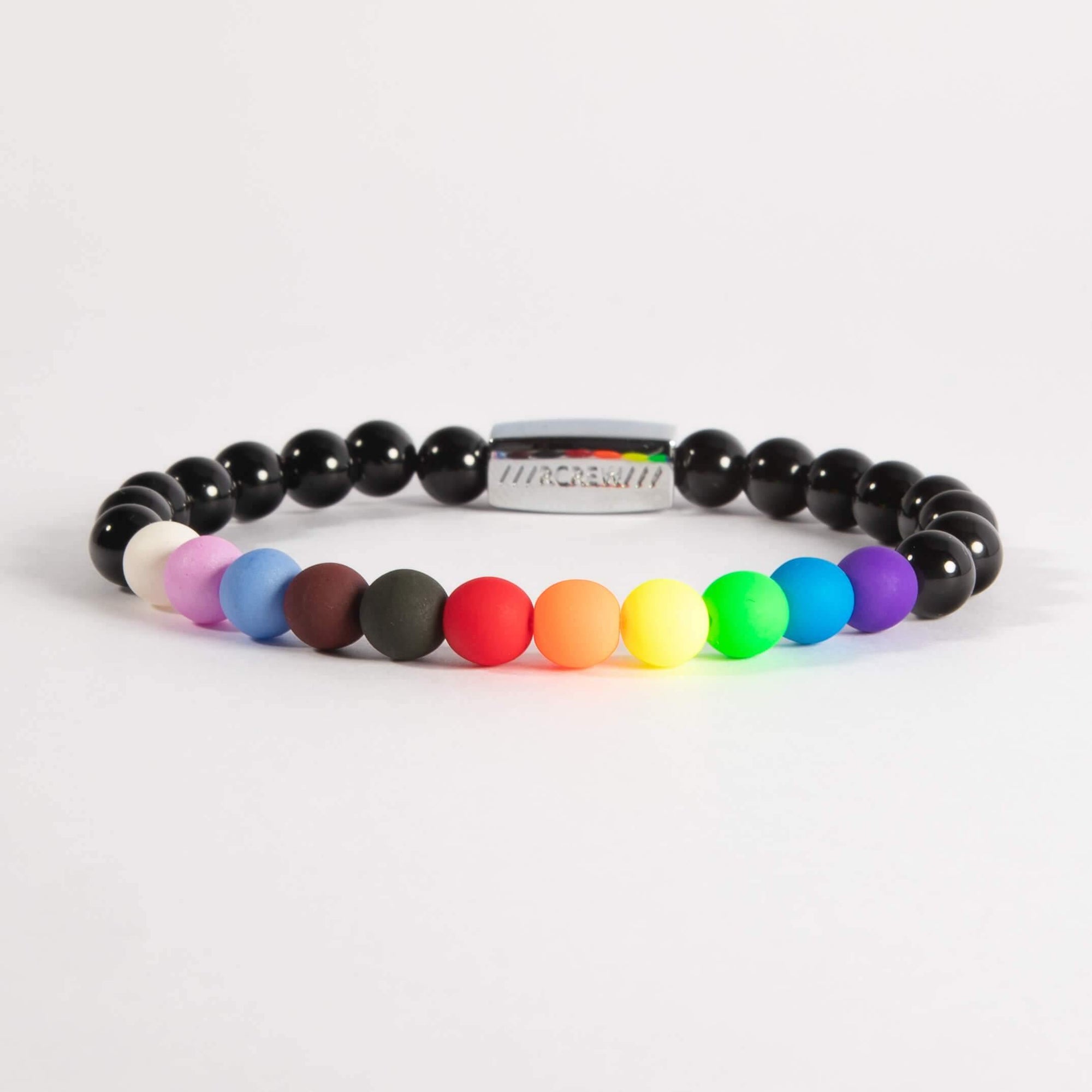
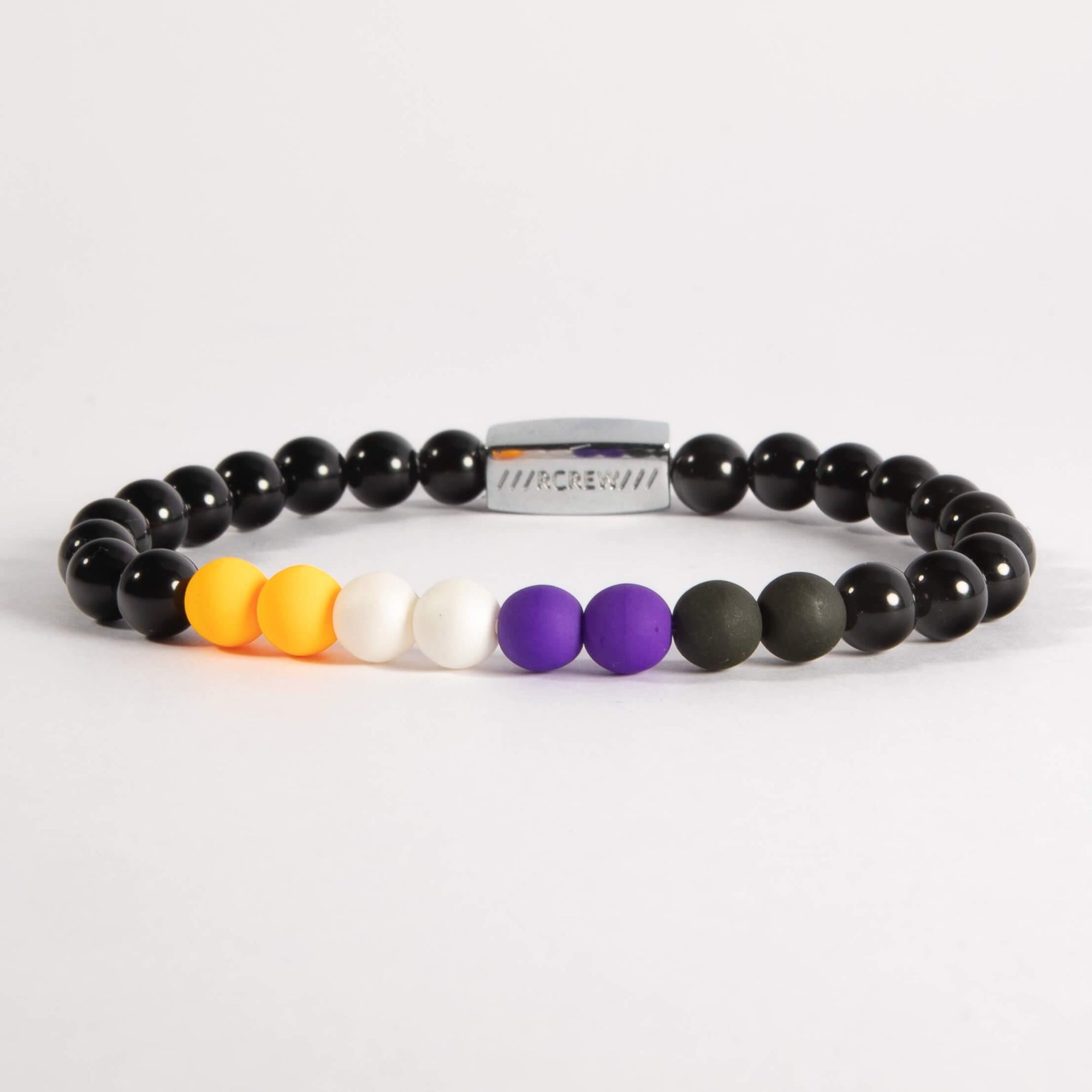
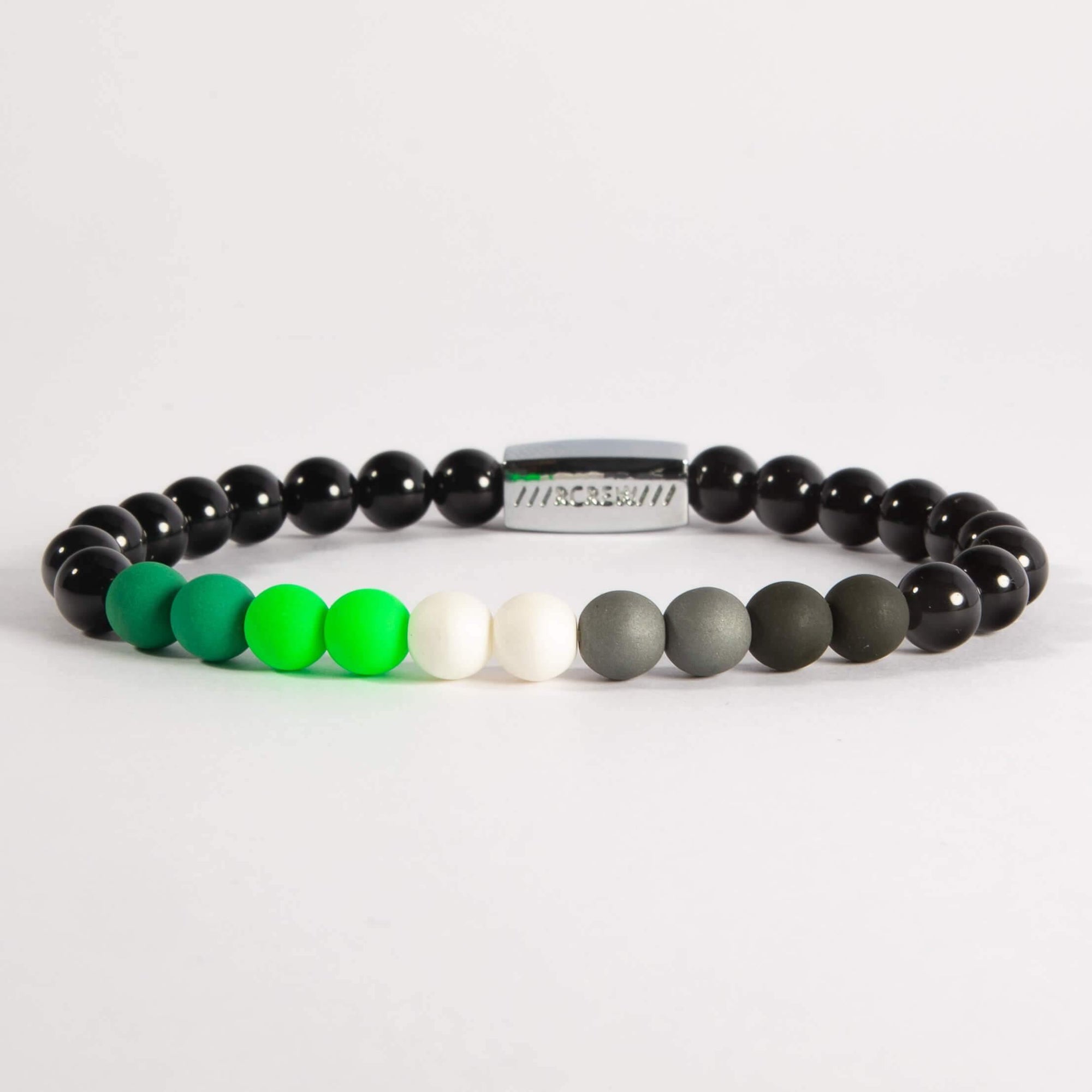
The 2010s saw an acceleration. The asexual flag. The pansexual flag. The non-binary flag. Flags for demisexual, aromantic, genderfluid, agender identities. The Progress Pride flag, designed by Daniel Quasar in 2018, added chevrons to the traditional rainbow to centre trans people, people of colour, and those living with HIV/AIDS.
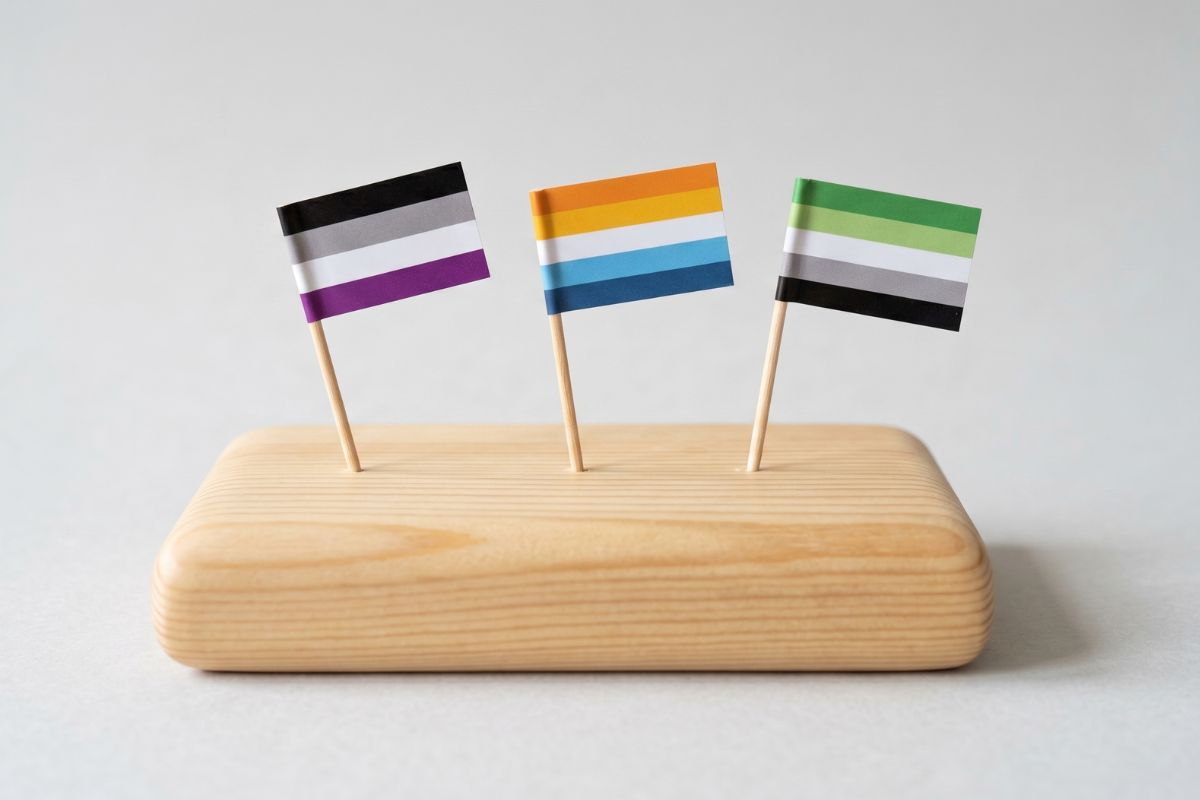
Each flag serves the same function those Victorian flowers and 1970s handkerchiefs did: it says 'this is who I am' to those who recognise the symbol, whilst often remaining illegible to those outside the community. A demisexual flag (black, grey, white, and purple) might look like abstract minimalism to someone unfamiliar with it. To someone on the asexual spectrum, it's instant recognition.
We live in a paradox. In many parts of the world, LGBTQ+ rights have advanced significantly. Same-sex marriage is legal across much of Europe and North America. Workplace protections exist. Pride marches draw millions.
And yet. Hate crimes against LGBTQ+ people are rising in the UK. Trans people face unprecedented legislative attacks. In 70 countries, homosexuality remains criminalised. Even in supposedly progressive spaces, queer people navigate contexts (conservative workplaces, family gatherings, international travel) where bold visibility carries risk.
So the need for codes persists. But the form has evolved again. Today's codes aren't flowers or handkerchiefs. For RCREW and our customers, they're jewellery. Specifically, bracelets made from semi-precious stones in the colours of pride flags.
This is coded signalling for the 21st century: recognisable to your community, invisible to those who might threaten your safety or professional standing. It allows for what Oscar Wilde did with his green carnation (the creation of connection in hostile spaces) but with a sophistication those Victorian queers could only dream of.
These modern codes are handcrafted by people who understand their significance. At Watford Workshop in the UK, disabled workers create each bracelet by hand, adding another layer of meaning: these aren't mass-produced accessories from corporations performing allyship during Pride Month. They're made by people within marginalised communities, for people within marginalised communities.
The evolution of queer codes (from green carnations to gemstone bracelets) isn't a story of linear progress. It's not a neat narrative where oppression leads to liberation and codes become obsolete.
Instead, it's a story of constant negotiation. Of communities finding ways to be visible on their own terms, to control who sees them and when. Of reclaiming symbols used against them. Of creating beauty and connection even in hostile territory.
The codes change with each generation. The green carnation gave way to Polari, which gave way to handkerchiefs, which gave way to flags, which gave way to the explosion of specific identity markers we see today. But the underlying need (the need to signal 'I'm one of you' without announcing it to everyone) persists.
Because context still matters. Safety still matters. The power to choose your visibility still matters. A trans person might wear a bold trans flag shirt to Pride and a subtle bracelet to a job interview. A bisexual person might fly a flag at home and wear coded jewellery whilst visiting family who don't know. These aren't contradictions. They're strategies, refined over generations.
Oscar Wilde died in exile in 1900, three years after his release from prison. His green carnation (once a symbol of queer London's underground elegance) had become too dangerous to wear. But the principle he demonstrated lived on: queer people will find ways to recognise each other, to build community, to claim space, even when that space is hostile.
Today, those ways include semi-precious stones arranged in specific colour sequences. Bracelets that look like jewellery to some and recognition to others. Codes that work in conference rooms and airport security queues and family dinners. Codes that say, quietly, 'you're not alone'.
The methods change. The need doesn't. And as long as that need exists, queer people will continue to develop new codes, new signals, new ways of being visible on their own terms.
We are part of a lineage that stretches back centuries. Every bracelet, every flag, every subtle signal is connected to those Victorian flowers, those 1970s handkerchiefs, those whispered Polari conversations. We are still finding our people. We are still creating beauty in the margins. We are still here.
Explore our collection of pride bracelets, from bold rainbow statements to coded signals in semi-precious stones. Every piece handmade by disabled workers at Watford Workshop. Shop now

Pride Month is built around love and sexual liberation. For asexual and aromantic people, that framing can make June feel like the loneliest month of all. Here is what that experience actually looks like, and what belonging means when the party was not designed with you in mind.

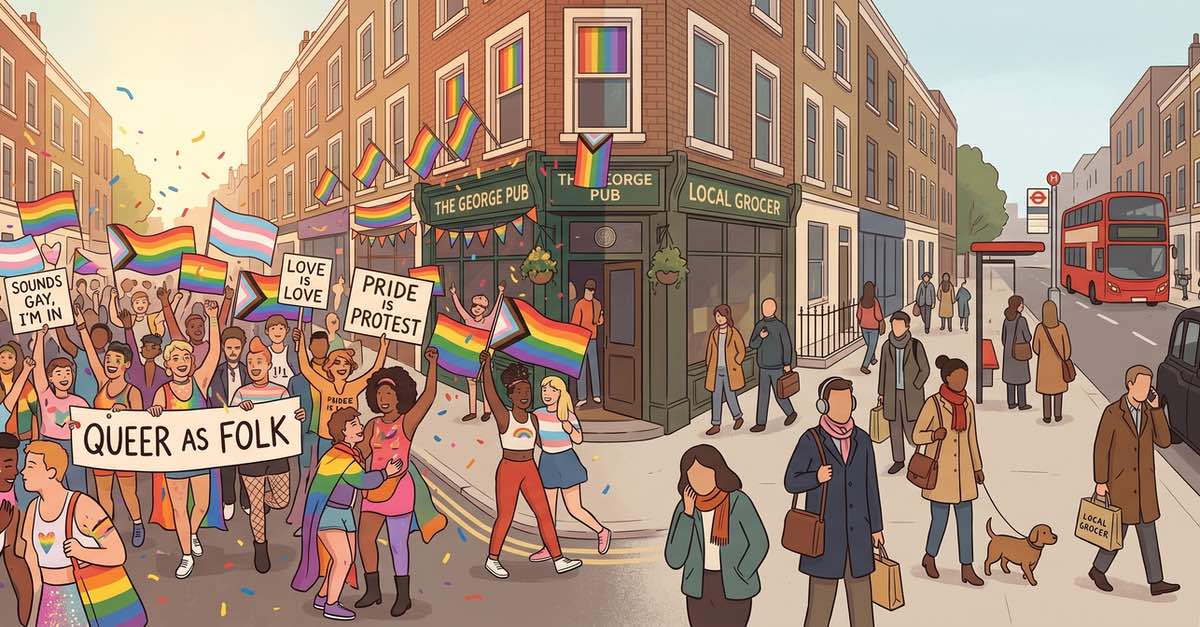
For a few hours every summer, the guesswork stops. You can look around and simply know. This is what Pride does that nothing else does. The question worth asking is what happens when it ends.

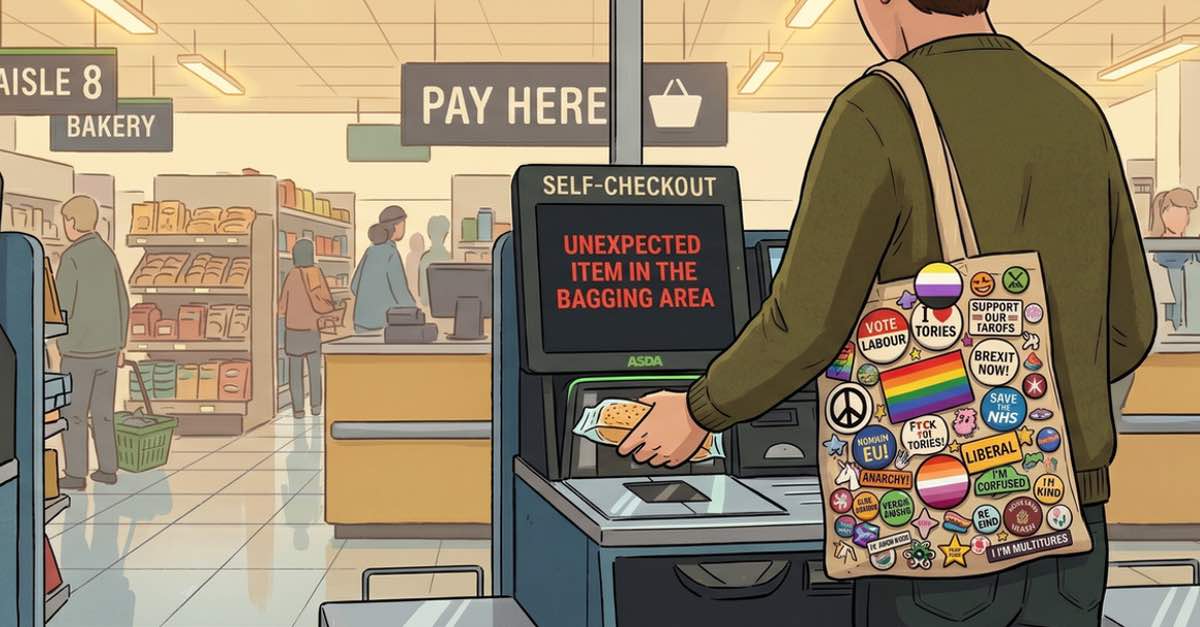
You and your people are in the same spaces every day. The same supermarkets, the same offices, the same commutes. The problem was never finding each other. It was knowing each other. And that is a different problem entirely.