Your Cart is Empty


"What are your pronouns?"
A simple question that's somehow become a battleground. You've seen the headlines: "Woke pronoun madness," "Gender ideology run amok," "Why can't people just pick a side?"
Here's what's actually happening: we're finally acknowledging that not everyone experiences gender as simply "man" or "woman." And for non-binary people who've existed all along, it's about bloody time.
Non-binary means experiencing gender outside the traditional categories of exclusively male or exclusively female. It's not a trend. It's not confusion. It's not "making things up." It's simply how some people experience their gender, and it's existed across cultures for thousands of years.
Let's talk about what that actually means, why pronouns matter, and why this has become such a flashpoint in our current moment.
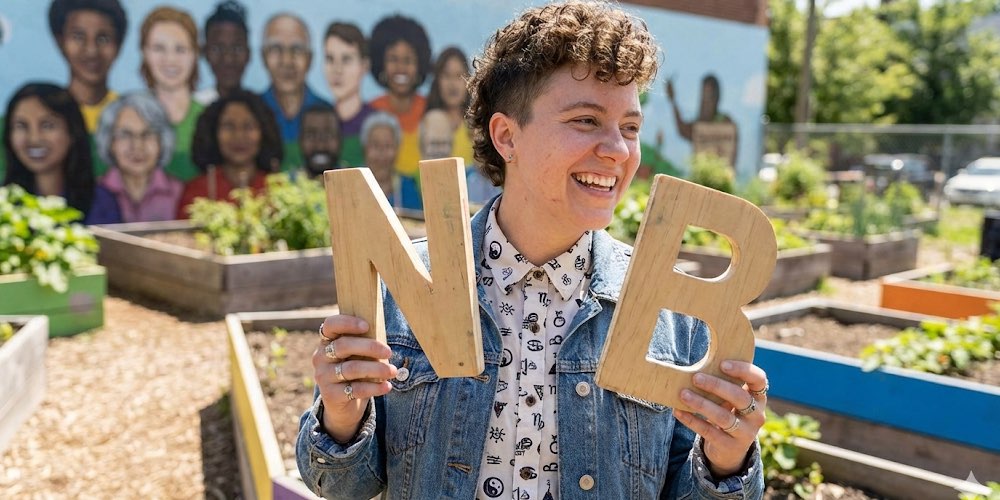
Non-binary (often shortened to "enby" from the abbreviation NB) is an umbrella term for gender identities that don't fit exclusively into male or female categories.
Non-binary people might:
Important distinction: Non-binary is a gender identity, not a sexual orientation. Who you're attracted to (sexual orientation) and how you experience your own gender (gender identity) are separate things. You can be non-binary and straight, gay, bisexual, pansexual, asexual: any orientation.
Some non-binary people also identify as transgender (because their gender differs from what they were assigned at birth), whilst others don't use that label. Both approaches are completely valid.
Think of it this way: if gender were a paint colour, most people are told they must be either "pure blue" or "pure pink." Non-binary people are saying, "Actually, I'm purple. Or green. Or I'm a colour that shifts depending on the light. Or I'm not on this colour spectrum at all."
If you've been paying any attention to media and politics lately, you've heard pronouns described as "woke ideology" or "compelled speech." But here's what's actually happening: we're learning more about the human experience.
Think about it: We once believed the Earth was flat. We thought the sun revolved around us. We were convinced humans couldn't run a mile in under four minutes until Roger Bannister did it in 1954, then suddenly dozens of people managed it within the year.
Our understanding of humanity constantly evolves as we learn more.
For centuries, Western culture insisted there were only two genders, that they were fixed and immutable, determined entirely by biology. But the more we've studied human experience, through anthropology, psychology, neuroscience, and simply listening to people,the more we've discovered:gender is more complex than we thought.
This isn't "making things up." It's recognising what's always been there.
Consider left-handedness. For centuries, left-handed people were forced to write with their right hands. Being left-handed was seen as sinister (literally—the word comes from the Latin for "left"), wrong, even evil. Teachers tied children's left hands behind their backs to "correct" them.
Then we realised: left-handedness is simply a natural variation in human beings. It's not a phase, not a choice, not something to "fix." It's just how approximately 10% of people are.
The percentage of left-handed people didn't suddenly increase when we stopped forcing them to be right-handed, our recognition of them did. Once we stopped punishing people for being left-handed, more people felt safe being openly left-handed.
Sound familiar?
Non-binary identities haven't been invented by "woke culture." They've been discovered, named, and finally given space to exist openly in mainstream Western society.
Throughout history, humans have been discovering aspects of our own existence:
Each time, there was backlash. Each time, people claimed we were "making things up" or "going too far." Each time, we were simply recognising what had always existed.
Non-binary gender is the same. We're not creating new genders—we're finally acknowledging that gender is more nuanced than a simple binary, and that some people have always experienced it differently.

Pronouns aren't new. You've been using them your entire life. Every time you say "he," "she," "him," or "her," you're using pronouns. What's new is asking people which pronouns they use rather than assuming based on appearance.
Why? Because as we've learnt more about gender diversity, we've realised: you can't determine someone's gender by looking at them.
"But they/them is plural!"
Actually, singular "they" has been used in English since the 14th century. Shakespeare used it. Jane Austen used it. You use it constantly without thinking: "Someone left their umbrella, I hope they come back for it."
The only thing new is using "they/them" intentionally for specific people who've asked for those pronouns. That's not changing language, that's using language we already have in a more precise way.
This is the real question, isn't it? And it's worth examining honestly.
Language has always evolved as we've learnt more. We no longer use medical terms from the 1800s that we now know are inaccurate or harmful. We've updated our vocabulary around race, disability, and mental health as we've understood more about human experience.
This isn't "political correctness gone mad", it's precision. As we learn more, we speak more accurately.
Using someone's correct pronouns isn't about politics. It's about acknowledging what we now understand: that gender is more diverse than we previously recognised, and that respecting how someone experiences their own gender is basic human decency.
Is it an adjustment if you're not used to it? Sure. So was learning that the Earth revolves around the sun, not the other way round. Adjustments in understanding are part of human progress.
When anything is new to us, it can feel confusing. But let's be honest about what we're actually being asked to do:
Learn someone's pronouns.
That's it. Just like you learn their name, you learn their pronouns. If you can remember that Robert prefers "Rob," that Margaret goes by "Mags," and that your colleague takes their tea with two sugars, you can remember that Sam uses they/them.
The "confusion" often isn't about capability; it's about willingness. And here's the thing: most non-binary people aren't offended if you make an honest mistake. They're frustrated by people who refuse to try, who treat their identity as an imposition rather than as simply... who they are.
Here's what's fascinating: as we've developed better tools to study human biology and psychology, we've discovered that even biological sex is more complex than we thought.
Chromosomes, hormones, anatomy, and brain structure all play roles in sex and gender, and they don't always align neatly. Intersex people (with variations in sex characteristics) are as common as people with red hair, roughly 1.7% of the population.
We're learning that gender identity has biological components we're only beginning to understand. Brain imaging studies of transgender people, for instance, often show patterns more similar to their identified gender than their assigned sex.
This isn't "ideology"—it's emerging science. And like all science, it's teaching us that human beings are more wonderfully complex than we previously understood.
Nope. Non-binary identities have existed across cultures throughout history. Two-Spirit people in Indigenous North American cultures, hijra in South Asian cultures, muxe in Zapotec culture, fa'afafine in Samoan culture; gender diversity isn't new or Western.
What's new is language and visibility in mainstream British society. More people identify as non-binary now partly because they finally have words for their experience and see others like them. That's recognition, not invention.
You ask. Or they tell you. You can't determine someone's gender identity by looking at them, which is exactly why asking about pronouns matters.
Making assumptions based on appearance (clothing, hairstyle, body type) is precisely what we're moving away from. Gender identity is internal; gender expression (how you present) is external. They're related but not the same thing.
Apologise briefly, correct yourself, and move on. "Sorry, they are coming to the meeting later." Don't make a huge production of it or expect the non-binary person to comfort you about your mistake. Just do better next time.
The key word is "accidentally." Non-binary people can tell the difference between someone who's genuinely trying and occasionally slipping up, versus someone who refuses to make any effort.
Because gender expression (how you present) and gender identity (how you experience your gender) aren't the same thing. A non-binary person might wear dresses, have a beard, present androgynously, or any combination. Their appearance doesn't invalidate their identity.
There's no "non-binary look" you have to achieve. Some non-binary people enjoy playing with gender presentation. Others don't. Some days they might present more masculine, other days more feminine. It's all valid.
Drop the word "preferred." They're not preferred pronouns; they're just pronouns. You wouldn't say someone's "preferred name" is Robert. It's just their name. Same with pronouns.
This one's particularly frustrating for non-binary people because coming out as non-binary often brings negative attention. Discrimination, family rejection, workplace harassment, constant explaining and defending yourself.
If someone wanted positive attention, there are far easier ways to get it than by claiming a marginalised identity that most people still don't understand.
Many non-binary people describe years, sometimes decades, of feeling "wrong" in both male and female categories before discovering non-binary identities exist. It's not that they suddenly decided to be non-binary, it's that they finally found language for how they've always felt.
For some, it's a gradual realisation. "I never quite felt like a woman, but I don't feel like a man either. What am I?" Then they discover non-binary identities and think, "Oh. That's what this is."
For others, it's an immediate "oh, that's me" moment when they first learn about non-binary identities. Like finding the missing piece of a puzzle you didn't know was incomplete.
Some non-binary people knew from childhood that something didn't fit about the gender they were assigned. Others didn't realise until adulthood, sometimes because they didn't have the language or because they were successfully suppressing those feelings.
When Oscar-winning actor Olivia Colman told The Times in January 2025 that she feels "very non-binary" but uses she/her pronouns because changing them is "just too much faffing around," she articulated something many non-binary people feel but rarely say aloud.
Being non-binary doesn't require a public pronoun announcement. It doesn't require coming out to everyone. It doesn't require "looking" a certain way.
Some non-binary people use they/them pronouns publicly. Some use he/him or she/her because it's easier, safer, or simply less exhausting. Some use multiple sets of pronouns. All of these approaches are valid.
Colman's admission at 51 also challenges the narrative that non-binary identity is a "young person's phase." She's known her whole career that she doesn't really identify as a woman. She's only now, with changing cultural conversations, felt able to name it publicly.
How many others are out there, across all ages and backgrounds, who've always felt this way but never had the language or safety to express it?
Non-binary people often have to come out repeatedly: every new job, every new social situation, every time someone assumes their gender based on appearance. It's exhausting.
And unlike coming out as gay or lesbian, coming out as non-binary often requires explanation. Many people still don't know what non-binary means, leading to the same conversations over and over: "What does that mean?" "So you're transgender?" "But you look like a woman/man?"
In professional settings, many non-binary people face a difficult choice: correct people and risk being seen as "difficult," or let it slide and feel invisible. According to Stonewall's 2018 LGBT in Britain report, 31% of non-binary people experienced harassment from colleagues in the workplace.
Imagine being referred to incorrectly dozens of times a day. Cashiers, colleagues, strangers, all making assumptions based on your appearance. For many non-binary people, this is constant reality.
"She's in the queue." "He left his jacket." Every instance a small paper cut. Most non-binary people develop a thick skin out of necessity, but that doesn't mean it doesn't hurt.
Some non-binary people feel safe correcting strangers. Many don't, especially in situations where being "difficult" about pronouns could affect their safety, employment, or social standing.
The non-binary community is beautifully diverse. Some non-binary people are also transgender. Some are also gay, lesbian, bi, pan, or ace. Non-binary people exist across all races, ages, classes, and backgrounds.
Finding others who understand, who don't require explanation or justification, is invaluable. Online spaces, LGBTQ+ groups, and Pride events offer that community. There's profound relief in spaces where you can just be without constantly defending your existence.
Non-binary people face unique challenges around visibility and recognition. For decades, they've existed without official acknowledgment: no checkbox on forms, no recognition in law, no way to even count how many non-binary people there are.
That changed in 2021 when the UK Census included a gender identity question for the first time in history. The results confirmed what non-binary people already knew: we've always been here.

The 2021 Census recorded 30,000 people in England and Wales explicitly identifying as non-binary,and that's almost certainly an undercount. The question was voluntary, carried uncertainty for people with lower English proficiency, and many non-binary people still don't feel safe disclosing their identity on official government forms. Some researchers estimate the true figure could be 3-5 times higher.
What the census did prove: non-binary people aren't a fringe anomaly. They're 0.06% of the population at minimum: roughly 30,000 people, concentrated in London (particularly Newham and Brent) and Brighton & Hove. That's more people than live in Cambridge. That's a small city's worth of non-binary people, just in England and Wales.
And this invisibility, this decades of not being counted, not being recognised, not existing in official data, has real consequences:
Health disparities: Research by Stonewall found that non-binary people have higher rates of mental health issues compared to both cisgender and binary transgender people, partly due to feeling unwelcome in both straight and LGBTQ+ spaces.
Workplace discrimination: According to Stonewall's 2018 LGBT in Britain report, 31% of non-binary people experienced harassment from colleagues in the workplace. One in four avoid being open about their gender identity at work for fear of discrimination.
Legal erasure: UK law is slowly catching up, but non-binary people still face barriers in legal recognition. Whilst the 2021 Census was a milestone, there's still no official "X" gender marker on UK passports or driving licences (unlike countries such as Australia, New Zealand, and Canada).
Visibility combats all of this. When non-binary people are open about their identity, it:
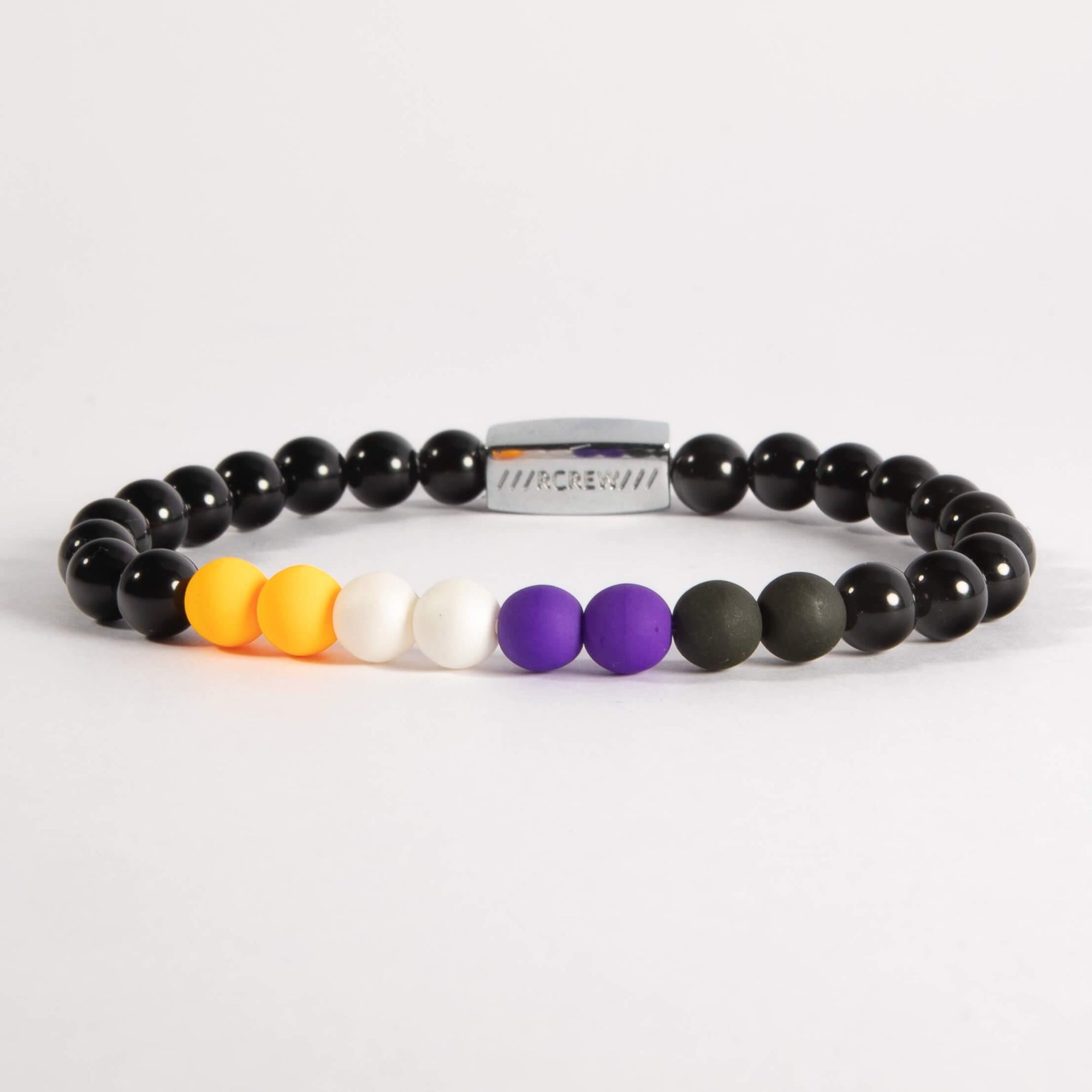
The non-binary pride flag features four horizontal stripes:
 |
Yellow represents gender existing outside the binary, those whose gender is entirely separate from male and female. White represents people with many or all genders, those whose experience encompasses the full gender spectrum. Purple represents people with genders that are a mix of male and female, those who experience both or a blend. Black represents people without gender, agender individuals who don't experience gender at all. |
The flag was created by Kye Rowan in 2014, a non-binary person who was just 17 at the time. Rowan wanted to create a flag that represented the diversity of non-binary experiences whilst standing distinct from the transgender flag.
The design has become widely recognised as a symbol of non-binary identity and is flown at Pride events worldwide.
In a world where people constantly make assumptions about gender based on appearance, having a visible signal becomes powerful.
Throughout history, LGBTQ+ people have developed ways to signal identity whilst controlling visibility: from Oscar Wilde's green carnation to hanky codes to rainbow flags. Each generation creates new signals for new contexts.
Wearing a non-binary pride bracelet isn't about announcing your gender to everyone. It's about:
Being findable to other non-binary people. When someone spots your bracelet and their shoulders relax slightly, when you've just become a safe person in their day, that's the power of visibility.
Signalling safety to LGBTQ+ folks who need allies. Even if you're not out to everyone, you can be out to the people who need to find you.
Daily reminder that you're valid despite the noise. When politicians debate your existence and media questions your reality, a visible reminder of community matters.
Quiet resistance against erasure. Your identity doesn't disappear based on how you're dressed that day or who you're dating. The bracelet says: "I'm non-binary, full stop."
In professional settings where being openly non-binary might be risky, a subtle pride bracelet offers a middle ground. Colleagues who know, know. Those who don't might just think it's a colourful bracelet.
Our non-binary bracelet is designed for exactly this. Subtle enough for workplace safety, clear enough that other non-binary people recognise it immediately. Because visibility should be something you control, not something thrust upon you.
If you're non-binary, whether you've just discovered this identity or you've known for years, you're not alone. The UK has vibrant non-binary communities and excellent resources.
Gendered Intelligence (genderedintelligence.co.uk)
UK-based organisation supporting trans and non-binary people of all ages. Offers youth groups, educational workshops, and professional training. Particularly strong on supporting young non-binary people.
Mermaids (mermaidsuk.org.uk)
Supporting gender-diverse children, young people, and their families. Helpline, web chat, and resources for understanding non-binary identities. Essential resource for non-binary youth and their parents.
Stonewall UK (stonewall.org.uk)
Britain's leading LGBTQ+ rights charity, with specific resources for non-binary people. Workplace guidance, school resources, and campaigning for legal recognition.
Non-Binary Inclusion Project (nonbinary.wiki)
Practical guidance on non-binary inclusion in workplaces and social settings. Excellent resource for allies, HR departments, and organisations.
LGBT Foundation (lgbt.foundation)
National charity with advice, support, and resources. Helpline available for anyone needing support around gender identity.
In Their Shoes: Navigating Non-Binary Life by Jamie Windust
British non-binary writer's personal journey and practical guide. Covers everything from coming out to healthcare to fashion. UK-focused perspective, accessible and honest.
Beyond the Gender Binary by Alok Vaid-Menon
Short, powerful, accessible introduction to non-binary identities. Perfect for both non-binary people and those wanting to understand.
Gender: Your Guide by Lee Airton
Comprehensive, practical guide to understanding gender diversity. Written by a Canadian non-binary professor, accessible to general audiences.
None of the Above by I.W. Gregorio
YA novel about an intersex teenager discovering her identity. Excellent for understanding the complexity of sex and gender.
Jammidodger (YouTube)
Trans and non-binary content creator with educational videos, personal stories, and humour. Covers everything from pronouns to medical transition to daily life. Very accessible.
Ash Hardell (YouTube)
Non-binary creator discussing identity, relationships, and LGBTQ+ topics. Down-to-earth, personal approach.
Jeffrey Marsh (TikTok, Instagram)
Non-binary author and spiritual content creator. Focuses on self-acceptance, compassion, and authenticity. Gentle, affirming content.
Jamie Windust (Instagram, writing)
British non-binary writer, model, and activist. Contributing editor at Dazed, author of In Their Shoes: Navigating Non-Binary Life. Sharp cultural commentary, UK fashion/beauty industry perspective, and advocacy work.
Television and film are slowly catching up with non-binary representation:
Billions – Asia Kate Dillon as Taylor Mason, one of the first major non-binary characters on mainstream television
Sex Education – Dua Saleh as Cal, navigating school as a non-binary student
Yellowjackets – Liv Hewson as Van, adult timeline shows non-binary identity
The Umbrella Academy – Elliot Page as Viktor Hargreeves (character's journey reflects Page's own)
r/NonBinary on Reddit – Active, supportive community with 300,000+ members
#NonBinary and #Enby on TikTok and Instagram – Huge communities sharing experiences
UK Non-Binary Facebook Groups – Local, UK-specific support networks
Non-binary isn't a trend. It's not "woke ideology." It's not confusion.
It's simply how some people experience gender; and it's part of the beautiful complexity of being human.
Throughout history, we've constantly discovered that humanity is more diverse, more nuanced, more wonderfully complicated than we previously understood. Non-binary identities are part of that ongoing discovery.
You don't need to understand it completely to respect it. You just need to recognise that as we learn more about ourselves as a species, we make room for more ways of being.
That's not ideology. That's progress.
If you're non-binary: You're valid. You don't owe anyone proof. You don't need to look a certain way or explain yourself constantly. You're enough, exactly as you are.
And when you're ready to signal that identity—to stay visible even when the world tries to erase you: we're here for that.
Because gender is more complex than a binary, and that's something worth celebrating.

Pride Month is built around love and sexual liberation. For asexual and aromantic people, that framing can make June feel like the loneliest month of all. Here is what that experience actually looks like, and what belonging means when the party was not designed with you in mind.

For a few hours every summer, the guesswork stops. You can look around and simply know. This is what Pride does that nothing else does. The question worth asking is what happens when it ends.

You and your people are in the same spaces every day. The same supermarkets, the same offices, the same commutes. The problem was never finding each other. It was knowing each other. And that is a different problem entirely.