Your Cart is Empty


Picture two men standing at a bar in 1950s London. They're talking. To everyone around them, it sounds like colourful nonsense, a smattering of odd words dropped into ordinary English. To each other, it's a full conversation: who's attractive, who's police, whether it's safe to be here tonight.
They're speaking Polari. And what they're doing, by speaking it, is surviving.
Before the rainbow flag, before Pride marches, before any of the visible markers of identity that exist today, queer people in Britain developed something extraordinary: a language. A secret code spoken in plain sight, designed to connect a community while keeping it hidden from everyone who might do it harm.
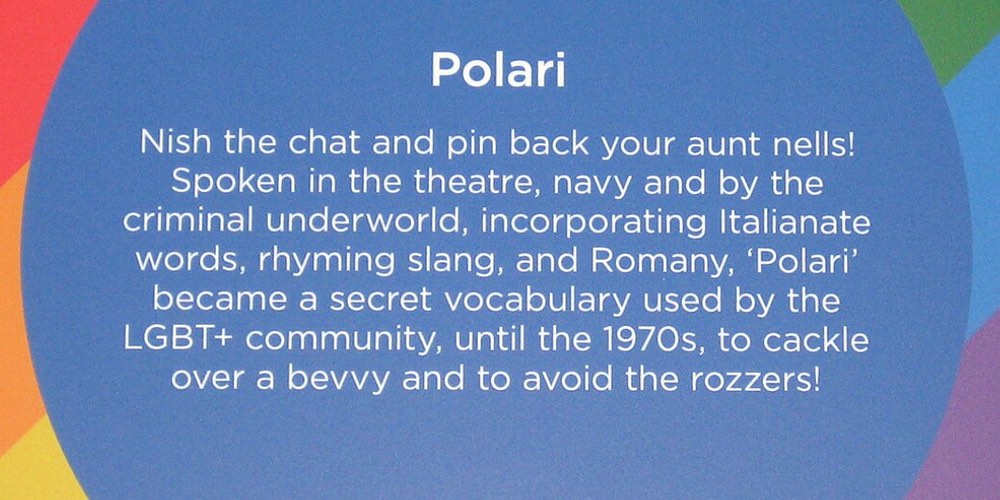
Polari (from the Italian parlare, meaning 'to talk') was a form of slang used primarily by gay men in Britain, reaching its peak in the mid-twentieth century. It wasn't a complete language in the grammatical sense. It was a vocabulary of several hundred words, dropped into everyday English to obscure meaning from outsiders while signalling identity to those who were in the know.
Its roots were gloriously mongrel. Polari drew from Italian, Romani, Cockney rhyming slang, backslang, Yiddish, French, and sailors' cant. It arrived in Britain through a mix of travelling circus performers, Punch and Judy puppeteers, merchant navy sailors, and theatre workers, many of whom were gay, and found a ready home in the underground queer spaces of London and other port cities.
Some of its words will be immediately familiar, because they made it into everyday British English without most people knowing where they came from. Naff (meaning tasteless or awful) is Polari. So is camp, drag, butch, and scarper. You've probably used at least one of them this week.
The reason Polari existed was simple, and it was serious. Before the partial decriminalisation of homosexuality in England and Wales in 1967, being gay was a criminal offence. Men faced imprisonment, public humiliation, and the destruction of their lives. Thousands were prosecuted. Speaking openly about desire, identity, or community could get you arrested.
So the community did what communities under pressure have always done. It created a code.
Polari allowed gay men to identify each other in public, to flirt, to gossip, to warn each other about police, to build something resembling normal social life, all while straight people around them heard nothing of consequence. Vada the bona omi meant 'look at that attractive man.' Nanti rozzers meant 'no police.' The conversations happening in the room were completely invisible to anyone who wasn't supposed to hear them.
This is precisely what the history of queer codes has always looked like: community finding ways to exist in the gaps left by a hostile world.
The most remarkable chapter in Polari's story involves the BBC.
Between 1965 and 1968, the radio comedy Round the Horne attracted up to fifteen million listeners a week. Among its recurring characters were Julian and Sandy, played by Hugh Paddick and Kenneth Williams: two outrageously camp men whose dialogue was laced with Polari. 'Oh hello Mr Horne, how bona to vada your dolly old eek' ('Oh hello Mr Horne, how nice to see your pretty face') was the kind of greeting that landed differently depending on who was listening.
Gay audiences across Britain were in on the joke. BBC executives, apparently, were not. For a community that was still criminalised, hearing their private language broadcast into millions of British living rooms was extraordinary. It was community and survival and joy, hiding in the schedules between the shipping forecast and the afternoon play.
It also, eventually, helped end Polari. Once the secret was out, the language lost some of its power. Combined with the 1967 decriminalisation, which reduced the need for coded communication, and a shift in younger gay culture towards visible political activism and pride rather than coded survival, Polari faded from everyday use through the 1970s. By the 1980s it had largely gone. Cambridge University labelled it an 'endangered language' in 2010.
Polari's decline was, in many ways, a measure of progress. A community that no longer needs to hide its language is a community that has won something real.
But its existence tells us something important about the long history of queer ingenuity. Centuries before flags and marches, community found each other through codes: the green carnation, the handkerchief, a particular way of speaking that meant everything to those who understood it and nothing to those who didn't. Polari was one of the most sophisticated versions of that instinct, and it was distinctly, defiantly British.
That instinct hasn't disappeared. The specific codes change, but the need they answer, to signal identity, to find your people, to be seen by the right people without being exposed to the wrong ones, is as present as it ever was.
Today that signal might be a bracelet. Specific colours in a specific order, translating a pride flag into something wearable. To someone unfamiliar, it reads as jewellery. To someone who knows what the colours represent, it's an introduction, a recognition, a quiet 'I see you.'
Different method. Same need. Same impulse that kept queer Britain talking through the decades when talking could get you arrested.
Every RCREW bracelet is handmade at Watford Workshop in Hertfordshire: a supported employment initiative where people with disabilities do skilled work at a living wage.
Bona to vada you.

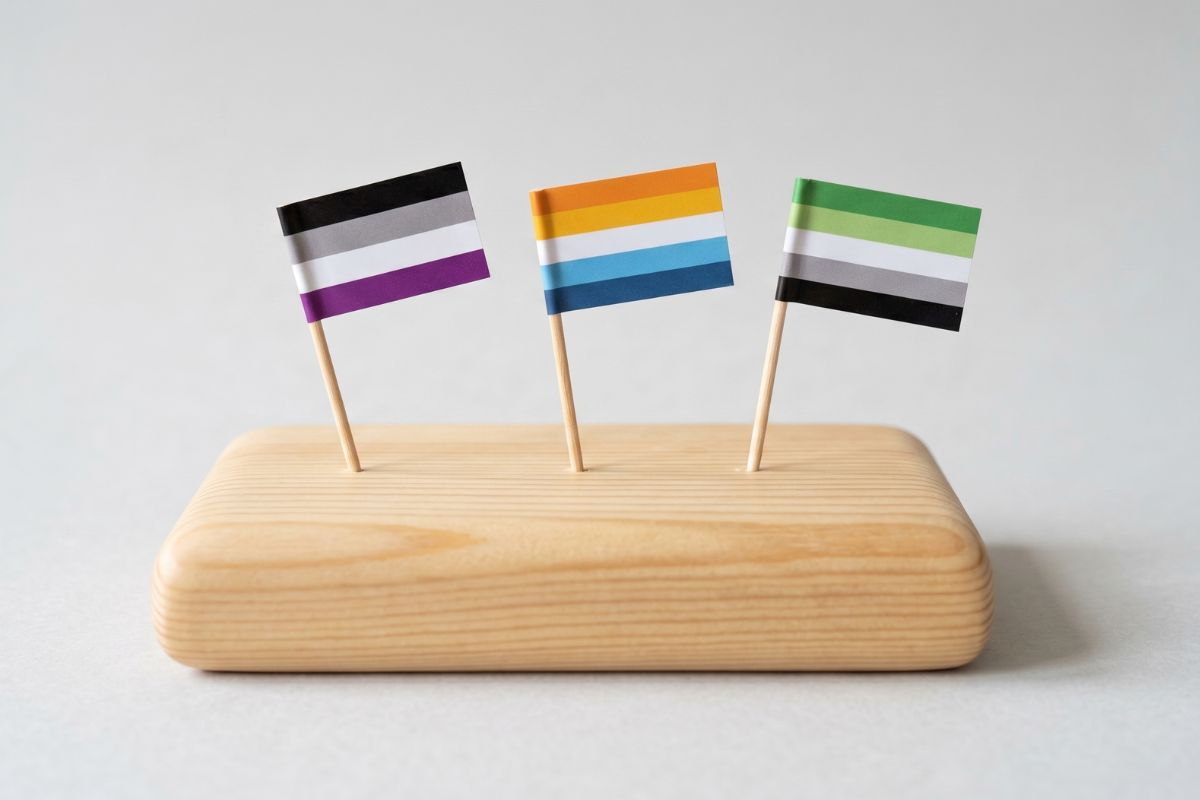
Pride Month is built around love and sexual liberation. For asexual and aromantic people, that framing can make June feel like the loneliest month of all. Here is what that experience actually looks like, and what belonging means when the party was not designed with you in mind.

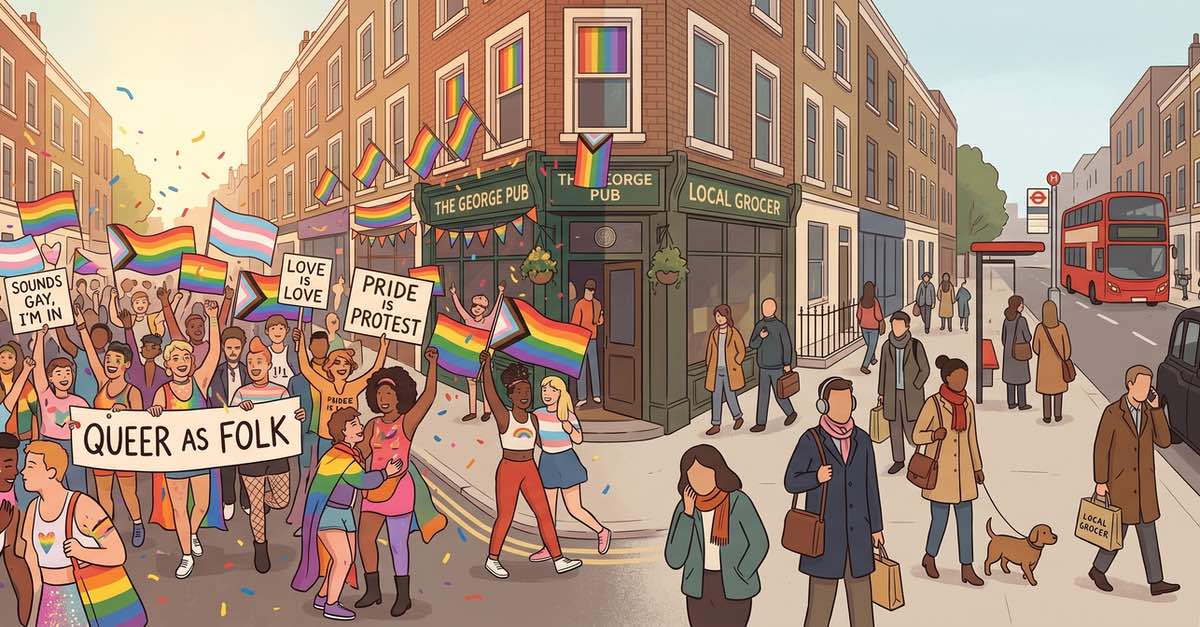
For a few hours every summer, the guesswork stops. You can look around and simply know. This is what Pride does that nothing else does. The question worth asking is what happens when it ends.

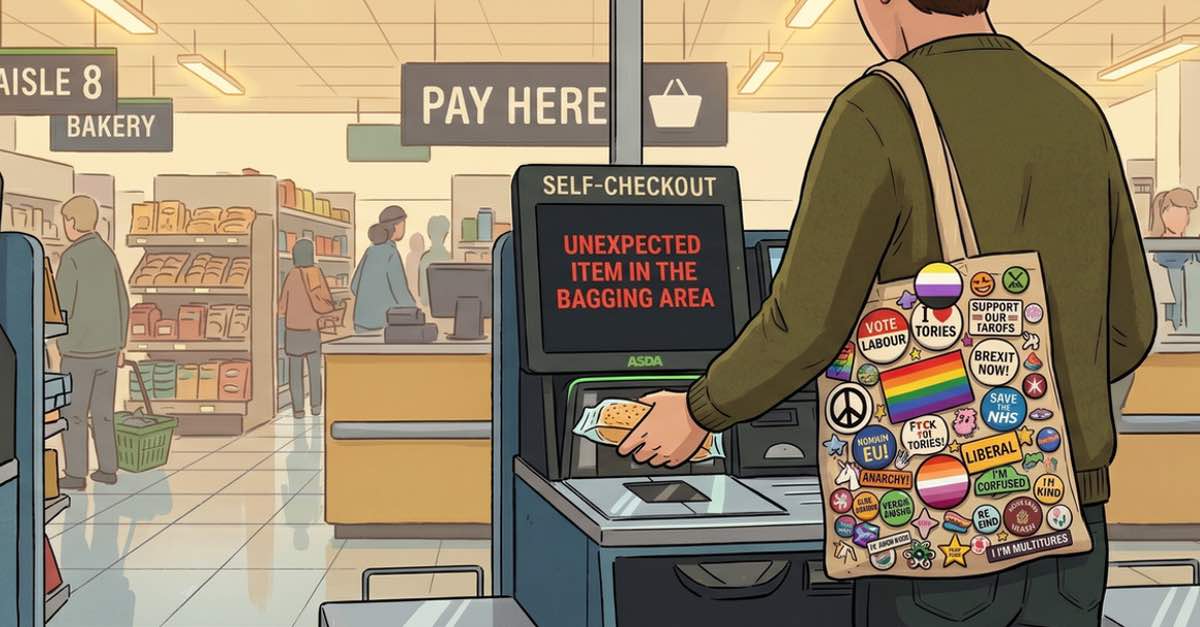
You and your people are in the same spaces every day. The same supermarkets, the same offices, the same commutes. The problem was never finding each other. It was knowing each other. And that is a different problem entirely.