Your Cart is Empty


Coming out is supposed to be the hard part.
You do it once, maybe to a best friend at 2am, maybe in a shaking voice to your parents over a Sunday dinner, and then it's done. That's the story, anyway. A single moment of courage, followed by a lifetime of freedom.
If you're part of the LGBTQ+ family, you already know the truth. Coming out isn't an event. It's a practice. Something you do over and over again, in every new room you walk into, for the rest of your life.
New job. New flatmate. New GP. New city. New relationship. Every single time, the same quiet calculation: do I say something, or do I let them assume?
Sometimes it's easy. The room feels safe, the people feel trustworthy, and the words come without thinking. Other times you weigh it for weeks, reading the energy, watching for signals, wondering whether it's worth it.
And sometimes, often, you're tired. Not closeted. Not ashamed. You're out, you're proud, you've done the work. You're tired of the performance of it. Tired of the moment when the conversation shifts and you become, briefly, someone else's education.
There's a particular kind of exhaustion that comes not from hiding who you are, but from constantly deciding whether to reveal it.
The exhaustion isn't only about the words themselves. It's everything around them. It's reading the room before you speak. It's choosing between a hint and a statement, between 'my partner' and a name, between correcting an assumption and letting it stand. It's the moment before you say it, when you still don't know how it will land.
You move to a new city and realise you're starting from zero. You begin a new job and spend the first month quietly figuring out whether it's safe, really safe, to put a pronoun in your email signature or mention your partner's name without a gender-neutral edit first.
You visit a new GP and wonder whether to mention it, what it means for your care if you don't, whether the next practice might be better.
You meet someone new at a party, someone who might become a friend or something more, and you're back in that familiar moment: do I wait for them to ask? Do I drop it casually into conversation? Do I hope they already know?
This is the coming out nobody celebrates. The hundredth one. The quiet, unglamorous, unremarkable daily act of deciding who gets to know you today.
RCREW started from a moment of recognition, not revelation.
In Berlin, watching how queer people found each other in a crowd without saying a word, something clicked. The nod across a bar. The small signal that said I see you and I know. The way community forms not through announcement but through recognition.
That moment raised a question: what if you could carry that signal with you? Not a flag, not a slogan, not something that requires you to announce yourself to everyone in the room. A colour. A code. Something that says I'm here to the people who know how to look, and says nothing at all to the people who don't.
That's what the bracelets are. Not pride merch. Not a statement. A signal. One that works quietly, in every room, without asking anything of you.
You might want to read our post on the history of queer codes to see how far back this kind of signalling goes — from Victorian green carnations to Polari to the flags we wear today.
Each RCREW bracelet sits somewhere on a spectrum of visibility.
Some are universal. A rainbow bracelet in bold coloured beads needs no decoding. It's one of the most recognised symbols in the world, and wearing it says something clear, to everyone, without a word spoken.
Others work differently. The colours of the non-binary flag, yellow, white, purple and black, will be immediately understood by many in the community and pass entirely unnoticed by those outside it. That's not a limitation. For a lot of people, that's the whole point.
The same is true across the full spectrum of identity flags. The genderfluid flag, the genderqueer flag, the bisexual flag, the pansexual flag: each one readable to those who know it, unremarkable to those who don't.
Every bracelet is handmade by disabled workers at Watford Workshop in the UK. Each purchase supports meaningful employment for people who are often excluded from the workforce. Two communities, one signal.
A bracelet doesn't do the calculation. It's there. It says what it says, to the people who can hear it. You don't have to find the words, choose the moment, or manage the reaction.
For some people, that means a rainbow on the wrist that everyone understands. For others, it's a colour combination that speaks clearly to their community and reads as pretty jewellery to everyone else. Both are valid signals. Both let the bracelet do the talking.
We're not trying to replace the big moments. The 2am conversations, the shaking voices, the relief of being truly known by the people who matter most. Those are irreplaceable. If you're looking for guidance on how to make those moments easier for the people around you, our guide for allies and family members covers what actually helps.
But between those moments there are a thousand smaller ones. A thousand new rooms where you're running the calculation again. A thousand new people wondering whether you'll let them in.
For those moments, you deserve something that works quietly. Something that lets you be seen by the people who are looking, without requiring anything from you in return.
You've already been brave enough. More times than anyone knows.
Browse identity bracelets: Gay, Lesbian, Bisexual, Non-Binary, Genderfluid and more — each handmade at Watford Workshop in Hertfordshire.
Coming out at work never really ends. But the right environment makes it easier. If you're building that environment for your LGBTQ+ colleagues this Pride season, we've made it straightforward: rcrew.com/workplace

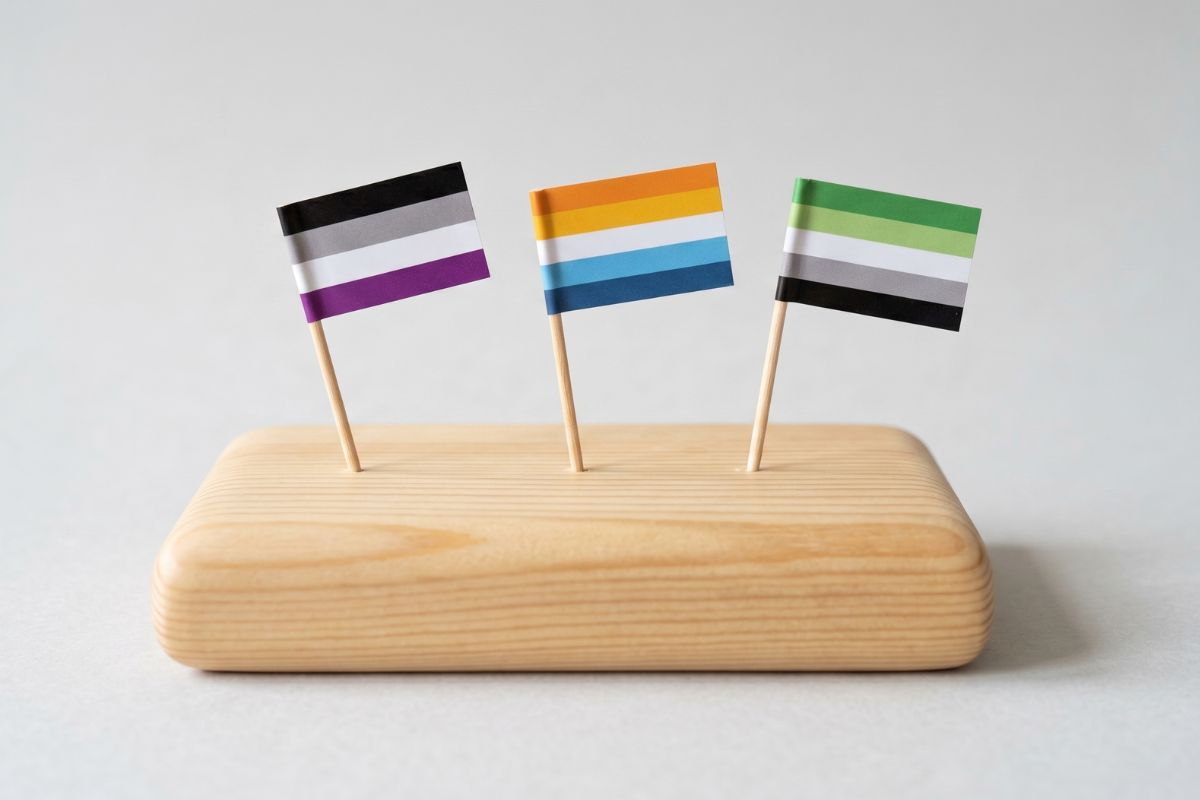
Pride Month is built around love and sexual liberation. For asexual and aromantic people, that framing can make June feel like the loneliest month of all. Here is what that experience actually looks like, and what belonging means when the party was not designed with you in mind.

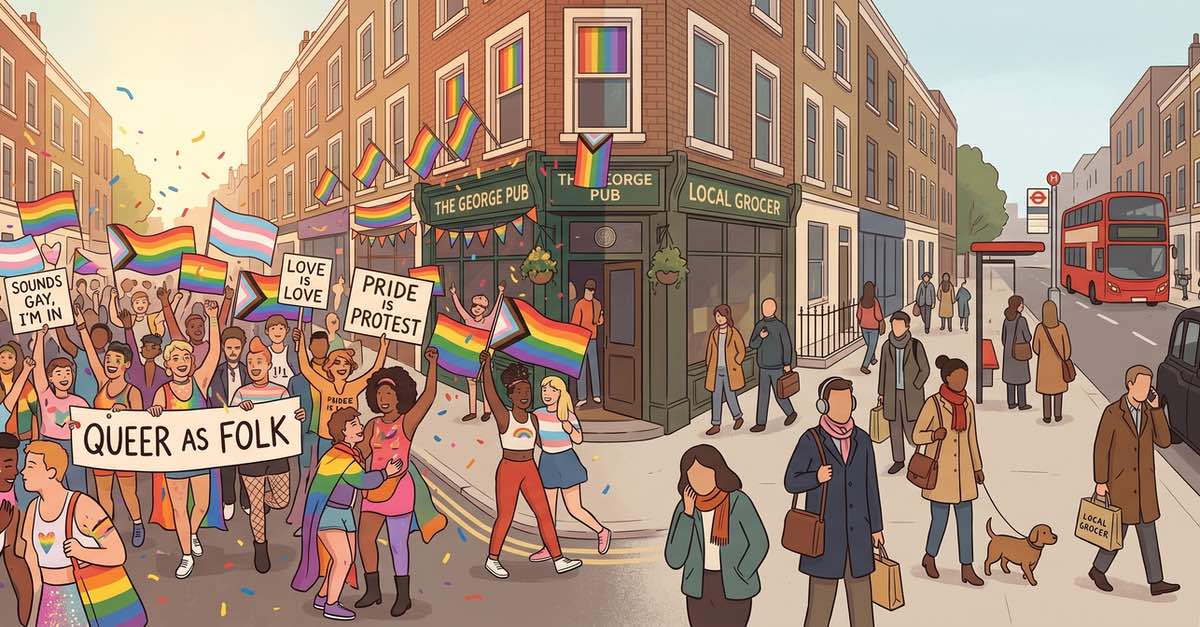
For a few hours every summer, the guesswork stops. You can look around and simply know. This is what Pride does that nothing else does. The question worth asking is what happens when it ends.

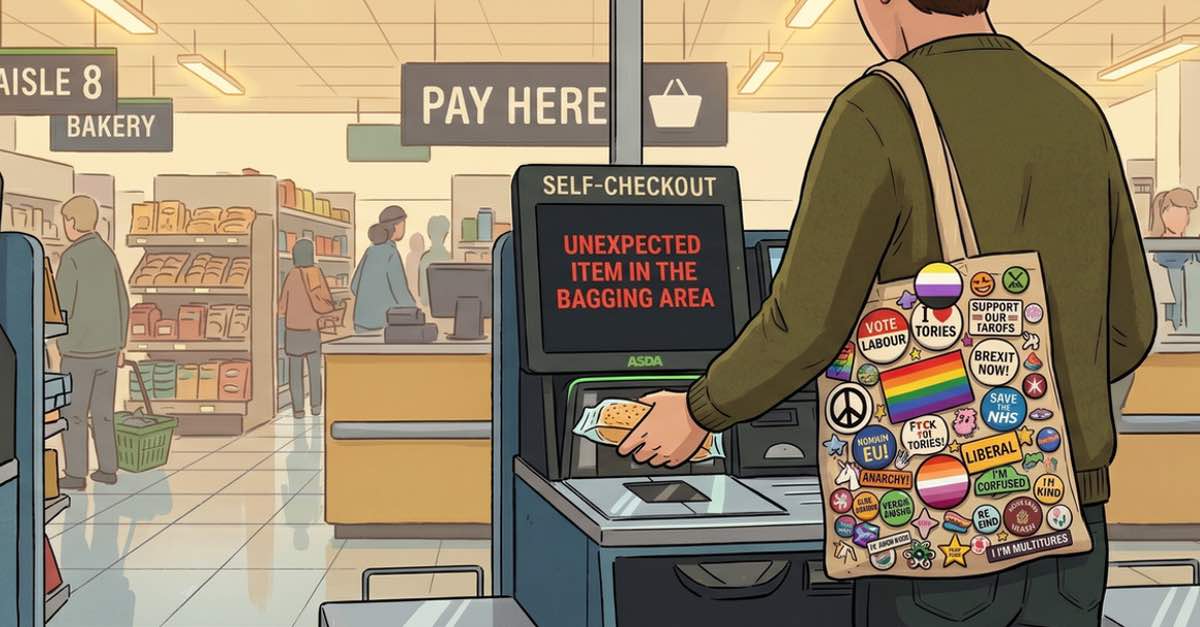
You and your people are in the same spaces every day. The same supermarkets, the same offices, the same commutes. The problem was never finding each other. It was knowing each other. And that is a different problem entirely.