Your Cart is Empty


Gender is yours to define.
If you've ever felt like the categories "man" and "woman" don't quite capture who you are, you're not alone. If you've questioned whether you need to fit neatly into one box or the other, or if you've wondered whether your gender shifts, blends, or refuses definition altogether, there's a word for that. You might be genderqueer.
Genderqueer is a gender identity for people who reject the rigid binary of male and female. Some genderqueer people experience their gender as both, neither, somewhere in between, or as something else entirely. There's no single way to be genderqueer, because gender itself is far more expansive than two boxes.
This guide explores what genderqueer means, how it relates to (and differs from) non-binary, the culture and symbolism that connects genderqueer communities, and the resources available in the UK. Whether you're questioning your own gender, supporting someone who's genderqueer, or simply curious to learn, this matters.
Genderqueer describes people whose gender identity exists outside the traditional male/female binary. The term emerged in the 1990s from queer activism, combining "gender" with "queer" to signal a deliberate rejection of conventional gender norms.
For some genderqueer people, this means:
Genderqueer is both a specific identity and an umbrella term. Some people use it to describe their precise experience of gender, whilst others use it more broadly to encompass anyone who doesn't fit neatly into "man" or "woman."
The political roots of "genderqueer" are important. The word "queer" itself was reclaimed from being a slur to become a badge of pride and resistance. When applied to gender, it carries that same rebellious, anti-assimilationist energy. Genderqueer isn't simply about existing outside the binary: for many, it's about actively challenging the idea that there should be a binary at all.
You'll often see "genderqueer" and "non-binary" used interchangeably, and whilst there's significant overlap, they carry different connotations.
Non-binary is a more neutral, descriptive term. It simply means not fitting into the male/female binary. Non-binary people might identify as agender (having no gender), bigender (having two genders), genderfluid (moving between genders), or any number of other identities outside the binary. The term "non-binary" is more recent, gaining widespread use in the 2010s, and tends to be more politically neutral.
Genderqueer, by contrast, carries the political weight of the word "queer." It emerged from 1990s queer activism and maintains those anti-establishment, countercultural roots. Many genderqueer people don't simply exist outside the binary. Their identity is a deliberate challenge to gender itself: questioning, subverting, and refusing to play by traditional gender rules.
In practice:
There's no hierarchy here. Neither term is "better" or more valid. The key is to respect how each person labels themselves.
Genderfluid is another term you'll often hear alongside genderqueer and non-binary. Whilst there's overlap, they describe different experiences of gender.
Genderfluid refers specifically to someone whose gender identity shifts or changes over time. A genderfluid person might feel like a woman one day, a man another day, both simultaneously, or something else entirely. The "fluid" part is key: their gender isn't static.
Genderqueer is broader. It encompasses anyone whose gender exists outside or challenges the binary, including people whose gender is stable and unchanging. You can be genderqueer without being fluid.
Think of it this way:
Many genderfluid people identify as genderqueer, because fluidity inherently exists outside rigid binary categories. Some genderqueer people are fluid; others have a consistent gender that simply isn't male or female. Both are valid ways to experience gender beyond the binary.
Not quite. They're related concepts.
Gender non-conforming (GNC) describes someone whose gender expression (clothing, mannerisms, presentation) doesn't match society's expectations for their assigned gender. A cisgender man who wears makeup and dresses might be gender non-conforming, even though he still identifies as a man.
Genderqueer is about gender identity, not simply expression. You can be genderqueer and present in ways that society codes as masculine, feminine, androgynous, or anything else. Your external presentation doesn't determine your internal identity.
That said, many genderqueer people also present in gender non-conforming ways. The two often go hand in hand. They're not the same thing.
Genderqueer identities face misunderstanding from people who've only ever thought about gender as binary. Let's address some common myths:
Gender exploration is valid at any age, and for many people, their genderqueer identity is lifelong. Some people realise they're genderqueer in childhood; others come to it later in life after years of feeling like something didn't fit. Neither timeline makes the identity less real.
Yes, some people's relationship with gender evolves over time. That's not a "phase." That's growth and self-discovery. Your gender at 20 doesn't invalidate your gender at 40.
Genderqueer people express their gender in countless ways: feminine, masculine, androgynous, or a mix that changes day to day. Your appearance doesn't determine your identity.
Some genderqueer people love makeup and dresses. Some love beards and button-downs. Some love both. Some love neither.
Confusion implies uncertainty or a lack of understanding. Most genderqueer people have thought deeply about gender and understand themselves quite well, thank you. What might look like "confusion" to others is often a nuanced, intentional relationship with gender that doesn't fit into neat boxes.
The real confusion comes from a society that insists there are only two options and can't comprehend anything else.
Being visibly genderqueer often brings unwanted attention, harassment, and discrimination. Most genderqueer people would prefer to live authentically without constantly having to explain or defend themselves.
Claiming your identity in a world that doesn't want to see you isn't attention-seeking. It's survival.
Singular "they" has been used in English since the 14th century. Shakespeare used it. Jane Austen used it. You use it all the time without thinking: "Someone left their umbrella. I hope they come back for it."
The "grammatically incorrect" argument is a convenient excuse to avoid respecting people's pronouns. Language evolves.
Not everyone will understand what it means to be genderqueer. Some people will push back: misgendering, dismissing, or insisting your identity isn't real. In the UK right now, that dismissal often plays out in public debate, where non-binary and genderqueer people are treated as a controversy rather than as human beings.
It's worth saying clearly: that causes real harm. The impact of being dismissed, misgendered, or erased doesn't diminish because the person behind it didn't intend cruelty.
At the same time, much of that hostility comes from unfamiliarity rather than malice. Gender has been presented as a simple binary for so long, and in so many contexts, that many people have never had reason to question it. They're not working from a fuller picture. They simply haven't been offered one yet.
Human beings vary across every spectrum imaginable. Biology, anthropology, and history all point to the same conclusion: rigid binary gender isn't the full story of human experience. Cultures across the world and throughout time have recognised identities beyond male and female. The binary is a framework, not a fact.
For many people, that framework just needs expanding.
That doesn't make the hostility acceptable. It doesn't mean you owe anyone an explanation either. Your identity is real whether or not someone else has the knowledge or willingness to understand it.
Knowing that most opposition stems from a gap in understanding, rather than something fundamentally wrong with you, can make it easier to carry.
For many genderqueer people, the realisation comes gradually. You might spend years feeling like you don't quite fit as a "man" or "woman" without having words for it. You might feel disconnected from gendered expectations, roles, or assumptions people make about you.
Some common experiences include:
Finding the word "genderqueer" often feels like coming home. Finally, there's language for what you've been experiencing.
Coming out is intensely personal and there's no "right" way to do it. Some genderqueer people come out publicly and ask everyone to use new pronouns. Others come out selectively to trusted friends and family. Some never formally "come out" at all, simply living as themselves.
The UK can be particularly challenging for genderqueer visibility. Whilst trans issues have gained more attention in recent years, non-binary and genderqueer identities often get left out of the conversation.
Coming out might mean:
Society is organised around the gender binary in ways most cisgender people never notice. Forms with only M/F boxes. Toilets divided by gender. Clothing sections, healthcare systems, legal documents: all designed for a world that only acknowledges two genders.
For genderqueer people, these everyday moments become constant reminders that you don't fit the script. Which toilet do you use? Which changing room? How do you fill out forms that don't have your option? What do you say when someone calls you "sir" or "madam"?
Some genderqueer people navigate these spaces by choosing whichever option feels least uncomfortable in the moment. Others push for change, advocating for gender-neutral facilities and inclusive forms. Many do both, picking their battles and conserving energy.
The exhaustion of existing in a binary world whilst being non-binary is real. It's okay to be tired.
For many genderqueer people, using they/them pronouns (or neopronouns like ze/zir, xe/xem) is more than personal comfort. It's a political act.
Every time someone uses your correct pronouns, they're acknowledging that the gender binary isn't universal. They're making space for identities outside male and female. They're participating in a small act of resistance against systems that erase you.
This is why pronouns matter. They're not trivial. They're about being seen.
Isolation is common for genderqueer people, especially if you don't live in a major city or don't have access to LGBTQ+ spaces. Finding your people (online or in person) can be transformative.
Genderqueer communities offer:
Community doesn't erase the challenges of being genderqueer in a binary world. It makes them more bearable.
Genderqueer communities have developed their own culture, symbols, and shared references that create connection and visibility.
Lavender has long been associated with queer communities. The term "lavender menace" was used in 1969 by Betty Friedan to describe lesbians in feminist spaces (later reclaimed as a badge of pride by the Radicalesbians at the 1970 Second Congress to Unite Women). Lavender represents the blending of pink and blue (traditionally coded as feminine and masculine) into something that's neither and both.
For genderqueer people, lavender carries this history of queer resistance whilst also symbolising androgyny and the mixing of gender. It appears throughout genderqueer spaces: in art, clothing, flags, and as a visual shorthand for "we're here, we're queer, and we're not fitting into your boxes."
Using they/them pronouns (or neopronouns) is a daily act of visibility. Every email signature with "they/them," every introduction where you state your pronouns, every correction when someone misgenders you: these are small rebellions against a system that wants to sort everyone into M or F.
Pronouns are also community identifiers. When you meet someone else who uses they/them, there's immediate recognition. You've found your people.
Genderqueer culture is fundamentally about questioning why we have a gender binary at all. Why are colours, clothes, jobs, and behaviours gendered? Who benefits from sorting people into two rigid categories? What would the world look like if we dismantled these structures?
This isn't academic theory. It's lived experience. Every time a genderqueer person refuses to tick M or F, we're asking these questions with our existence.
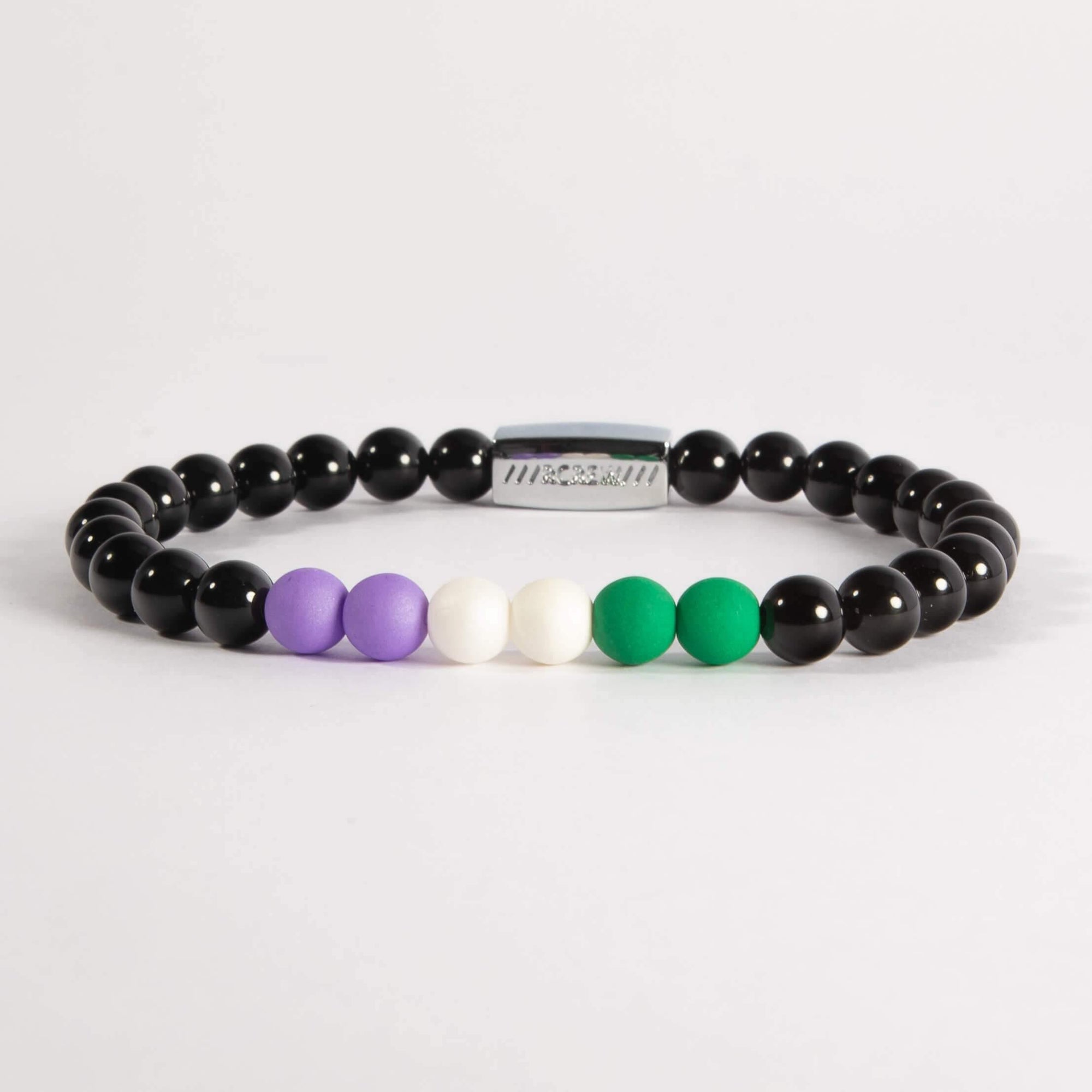
The genderqueer pride flag was designed in 2011 by Marilyn Roxie, a genderqueer writer and advocate. The flag features three horizontal stripes in lavender, white, and chartreuse green.
 |
Lavender: Represents androgyny and the blending of masculine and feminine. It's the mixture of blue and pink (traditional colours for boys and girls) creating something in between. Lavender also represents queer identity and community, honouring the long history of lavender as a queer colour. White: Represents agender identities (people who have no gender or identify as gender-neutral). Like the white stripe on the transgender flag, it symbolises the full spectrum of gender, including the absence of gender. Green: Represents identities that exist outside the binary altogether. Green is the inverse of lavender on the colour wheel, symbolising "third gender" identities and those defined without reference to male or female.
|
The flag was created to provide visibility for genderqueer and non-binary people. When the non-binary flag was designed in 2014 by Kye Rowan, it became a companion to the genderqueer flag rather than a replacement. Some people fly the genderqueer flag; others prefer the non-binary flag; many identify with both.
The colours aren't meant to divide genderqueer identities into separate categories. They're all interrelated, all part of the expansive reality of gender beyond the binary.
Genderqueer and non-binary representation in UK media is slowly improving, though there's still a long way to go.
Cal (Sex Education): Played by non-binary actor Dua Saleh, Cal appeared in Season 3 as Moordale's first openly non-binary student. Their storyline explored navigating a rigid school system, setting boundaries in relationships, and asserting their identity in spaces that don't accommodate it.
Naomi (Heartstopper): Played by Bel Priestley, a trans woman who identifies as part of the broader trans and non-binary community. Heartstopper has become a landmark show for LGBTQ+ youth representation in the UK.
Iz Hesketh: Known for stage roles and recently appearing in Hollyoaks and Disney+'s Renegade Nell, playing non-binary assistant Valerian. Hesketh's presence in both soap opera and fantasy adventure shows demonstrates growing acceptance of non-binary actors in mainstream UK television.
Sam Smith: One of the most prominent non-binary musicians in the world. They first spoke publicly about their gender identity in 2017, telling the Sunday Times "I feel just as much woman as I am man." They formally came out as non-binary and genderqueer in March 2019 in an interview with Jameela Jamil, then changed their pronouns to they/them in September 2019. Smith has been vocal about the challenges of being non-binary in the public eye and the importance of pronoun respect.
Mae Martin: British-Canadian comedian, writer, and actor known for their Netflix series Feel Good, which explores gender, sexuality, and identity through comedy. Martin has spoken openly about being non-binary and the fluidity of gender.
Kae Tempest: Musician and poet who came out as non-binary in 2020. Their work often explores themes of identity, transformation, and existing outside societal boxes.
CN Lester: British musician, writer, and trans rights activist who identifies as non-binary. Lester has written extensively about gender identity and is a prominent voice in UK trans and non-binary advocacy.
Representation matters because it shows genderqueer people (especially young people) that they're not alone. When you see someone like you thriving, it becomes easier to imagine your own future.
Gendered Intelligence: UK charity working to improve the lives of trans people, including those who are non-binary and genderqueer. They provide youth services, training, and advocacy work.
Stonewall UK: Whilst primarily focused on LGB rights, Stonewall has expanded to include trans and non-binary people. Their website includes resources on non-binary identities and workplace rights.
Mermaids: Support organisation for young trans and gender-diverse people and their families. Whilst focused on youth, they provide resources relevant to genderqueer identities.
Scottish Trans Alliance: Scotland-based organisation providing support and advocacy for trans and non-binary people across Scotland and the UK.
Switchboard LGBT+ Helpline: 0300 330 0630 (10am-10pm daily). Confidential support for LGBTQ+ people, including those questioning their gender identity.
LGBT Foundation: 0345 3 30 30 30 (9am-9pm Mon-Fri, 10am-6pm Sat-Sun). Information, support, and advocacy for LGBTQ+ people across the UK.
MindOut: Mental health support specifically for LGBTQ+ communities. Whilst Brighton-based, they offer resources nationally.
"They/Them/Their: A Guide to Nonbinary and Genderqueer Identities" by Eris Young: Comprehensive guide to non-binary and genderqueer identities, language, and experiences.
"Beyond the Gender Binary" by Alok Vaid-Menon: Short, powerful book challenging binary thinking and exploring gender expansiveness.
"Gender Queer: A Memoir" by Maia Kobabe: Graphic memoir exploring the author's journey to understanding their non-binary identity.
"GenderQueer: Voices From Beyond the Sexual Binary" edited by Joan Nestle, Clare Howell, and Riki Wilchins: Collection of essays from genderqueer voices, published in 2002 and foundational to genderqueer discourse.
r/genderqueer: Reddit community with over 30,000 members discussing genderqueer identities, experiences, and support.
r/NonBinary: Larger community (200,000+ members) for non-binary people, including those who identify as genderqueer.
UK-specific Facebook groups: Search for "UK non-binary," "UK genderqueer," or location-specific groups to find local community.
Accessing gender-affirming healthcare as a genderqueer person in the UK can be challenging. Many NHS Gender Identity Clinics focus on binary transition, and wait times are extremely long (often 3-5 years).
Resources include:
Not all genderqueer people want medical transition. If you do, finding affirming healthcare providers who understand non-binary identities is essential.
Genderqueer people are erased in multiple ways. They're left out of conversations about trans rights (which often focus on binary transition). They're dismissed as confused or attention-seeking. They're rendered invisible by systems that only acknowledge male and female.
Visibility challenges this erasure. Every genderqueer person who lives authentically, who corrects their pronouns, who refuses to fit into boxes, makes space for others. They prove that gender is more expansive than the binary allows.
Visibility starts with the small things. Our genderqueer pride bracelet brings the lavender, white, and green of the genderqueer flag into your everyday. Wear it quietly, wear it proudly, be seen for who you are.
If genderqueer feels like home, welcome. If you're questioning, exploring, trying on different labels: you're valid. If you're certain you're genderqueer, you're valid. If you're still figuring it out, you're valid.
You don't need to perform androgyny. You don't need to medically transition. You don't need to have it all figured out. You simply need to be yourself.
Define it on your terms. Live it authentically. And know that there's a whole community out there doing the same.

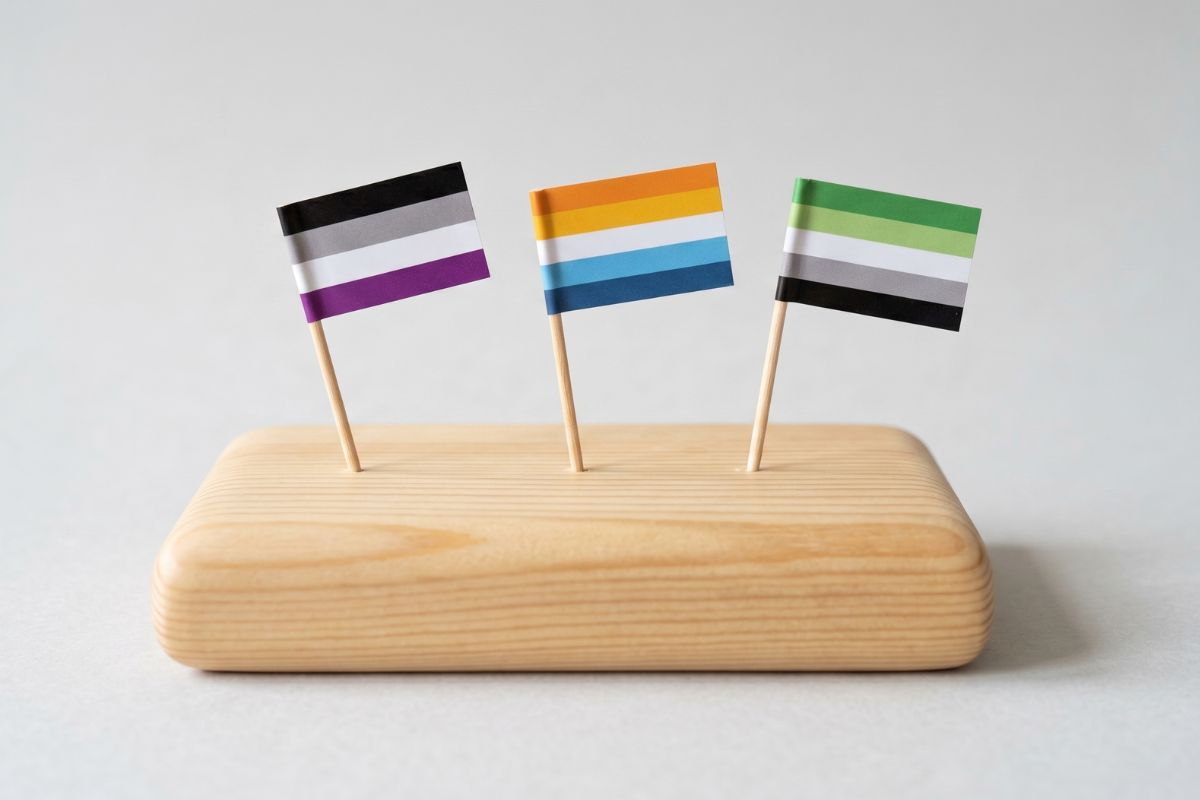
Pride Month is built around love and sexual liberation. For asexual and aromantic people, that framing can make June feel like the loneliest month of all. Here is what that experience actually looks like, and what belonging means when the party was not designed with you in mind.

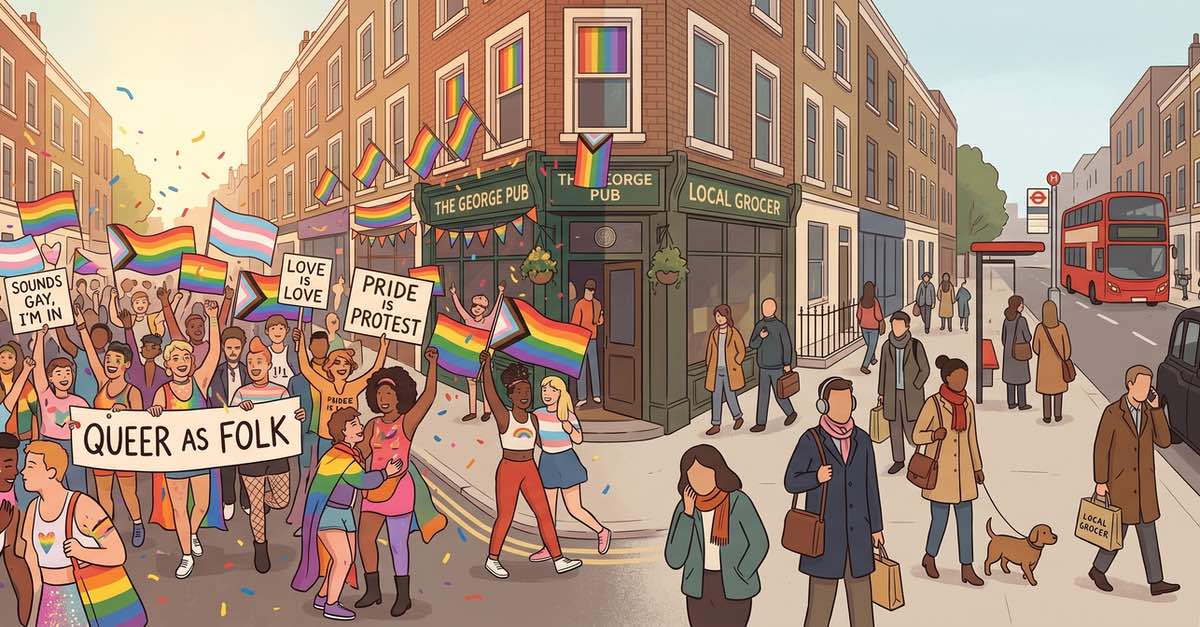
For a few hours every summer, the guesswork stops. You can look around and simply know. This is what Pride does that nothing else does. The question worth asking is what happens when it ends.

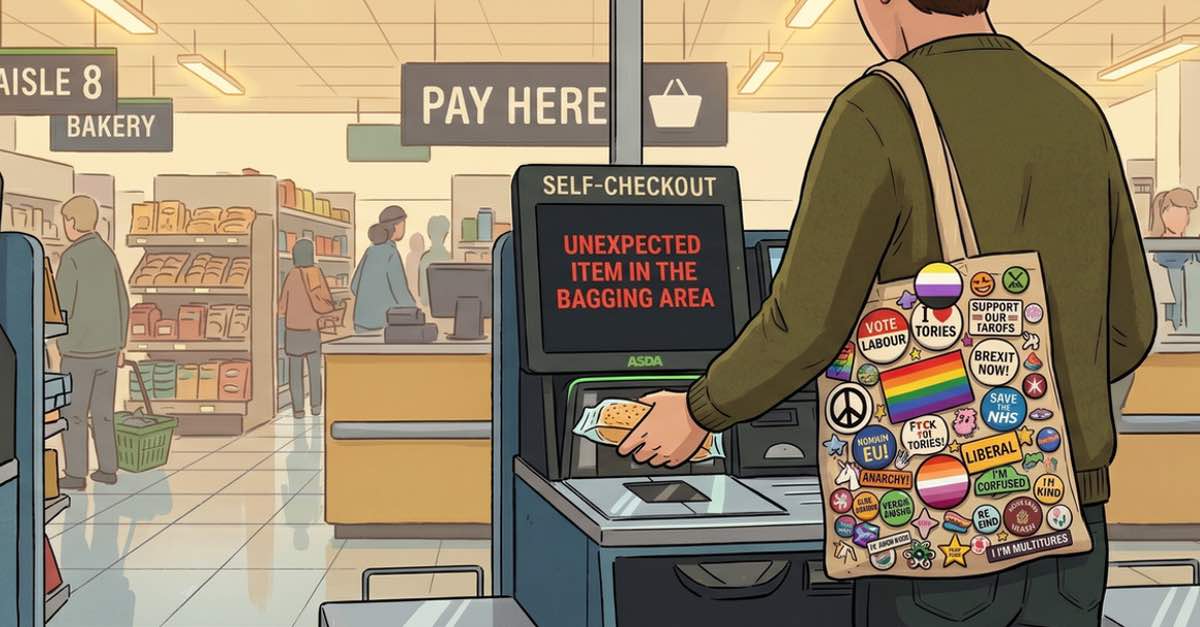
You and your people are in the same spaces every day. The same supermarkets, the same offices, the same commutes. The problem was never finding each other. It was knowing each other. And that is a different problem entirely.