Your Cart is Empty


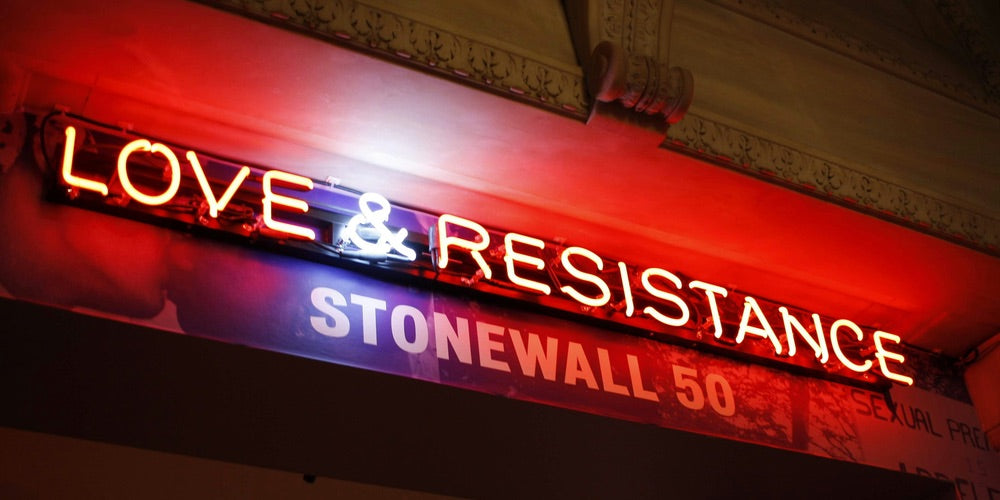
On 10th February 2026, news broke that the National Park Service had quietly removed the Pride flag from the Stonewall National Monument in New York City. The country's first national monument to LGBTQ+ rights, the site where the modern queer liberation movement began, was stripped of the symbol most closely associated with that movement.
By 12th February, hundreds of New Yorkers had gathered in Christopher Park, raised a new flag, and reminded the world of something governments keep forgetting: you cannot erase a community by taking down its symbols.
This matters. And it matters far beyond Manhattan.
It would be tempting to treat this as an isolated act of bureaucracy. The current US administration cited a federal memo restricting 'non-agency flags' at National Park Service sites. A policy decision, framed as housekeeping.
But context tells a different story. In early 2025, the same administration removed references to transgender and queer people from the Stonewall Monument's website. The T and Q were struck from the LGBTQ acronym across the site, replaced with 'LGB rights movement'.
Trans flags had already been taken down. The Pride flag removal is the latest step in a deliberate, documented pattern of erasure.
This pattern extends beyond Stonewall. The administration has removed a long-standing exhibit on slavery from Philadelphia's Independence National Historical Park. The American Battle Monuments Commission took down a cemetery display in the Netherlands commemorating African American soldiers in the Second World War. What we are witnessing is not a policy about flagpoles. It is a systematic effort to reshape which histories are told on public land, and whose stories are considered worth preserving.
Here is something worth remembering: Stonewall did not begin as a monument, a website, or a flag.
It began as people who had had enough.
On 28th June 1969, patrons of the Stonewall Inn, a bar in Greenwich Village, resisted a police raid. At the time, raids on gay bars were routine. Arrests were common. Public humiliation was the point. That night, the community fought back. Trans women, drag queens, butch lesbians, and young queer people of colour took to the streets. The uprising lasted six days, and it changed everything.
There was no Pride flag in 1969. Gilbert Baker would not create the rainbow flag for another nine years. There was no national monument. There was no institutional recognition of any kind. What there was though, was a community that decided its existence was worth defending.
The community response to the flag's removal was swift and it was clear.
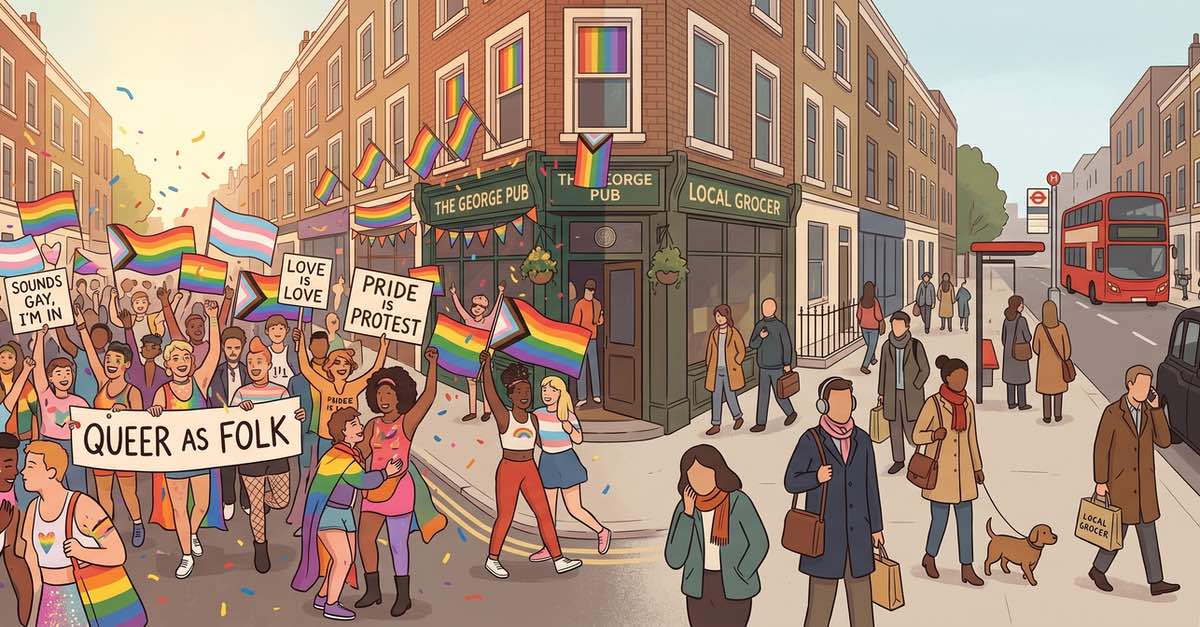
By Tuesday evening, protesters had gathered at the monument. By Wednesday, they were back. On Thursday 12th February, local politicians and activists arrived with a new Pride flag. They attached it to the flagpole without federal approval.
Hundreds filled the streets around Christopher Park. The crowd chanted. When officials attempted to fly the Pride flag alongside the American flag, the gathered community demanded it fly alone. 'This is our flag,' they shouted. Someone breached a fence, secured the flag properly, and the park erupted.
Manhattan Borough President Brad Hoylman-Sigal addressed the crowd: 'If you can't fly a Pride flag steps from the Stonewall Monument, at the National monument for LGBTQ liberation, where can you fly it? So, we put it back.'
It was, in the most literal sense, Stonewall happening again. A community deciding, collectively, that erasure would not stand.
It is worth being honest about what happens next. The Stonewall Monument sits on federal land, managed by the National Park Service. The re-raised flag was not sanctioned by the administration. It may be removed again. This is the reality of symbols that depend on institutional permission: they are only as durable as the institution's willingness to maintain them.
This is not cause for despair. It is cause for clarity.
The most resilient forms of pride have never lived on flagpoles. They have lived on people. In what we wear, how we show up, and the quiet decisions we make every day to be visible in our own lives.
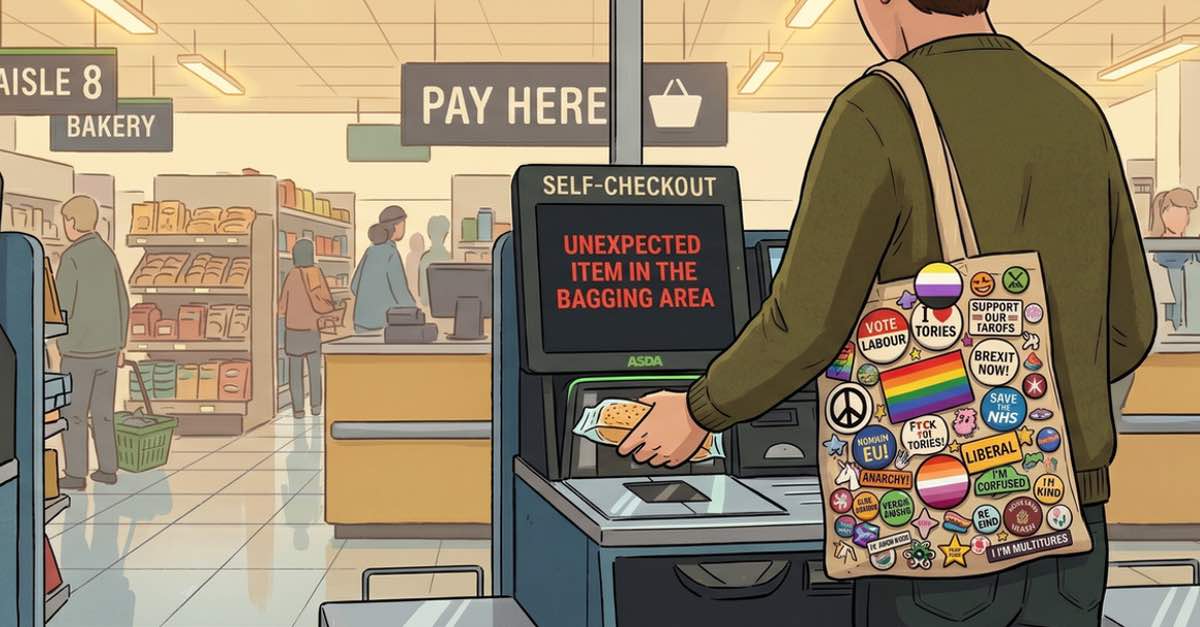
A pin on a bag. A sticker on a laptop. A bracelet on a wrist. These are the personal, portable, everyday acts of visibility that no administration can remove, no memo can restrict, and no policy can erase. They travel with us into offices, onto trains, through airports, and across borders. They are ours.
Wearing a little bit of pride every day, wherever you are, is its own act of defiance. It does not require a crowd or a monument. It requires a decision: to carry your identity with you, visibly, in a world that periodically tries to make that harder.
The people who gathered at Christopher Park this week did something extraordinary. They did not wait for a court order. They did not draft a petition. They showed up, raised a flag, and reminded the world what Stonewall has always meant: that when institutions fail us, we have each other, and we will speak out.

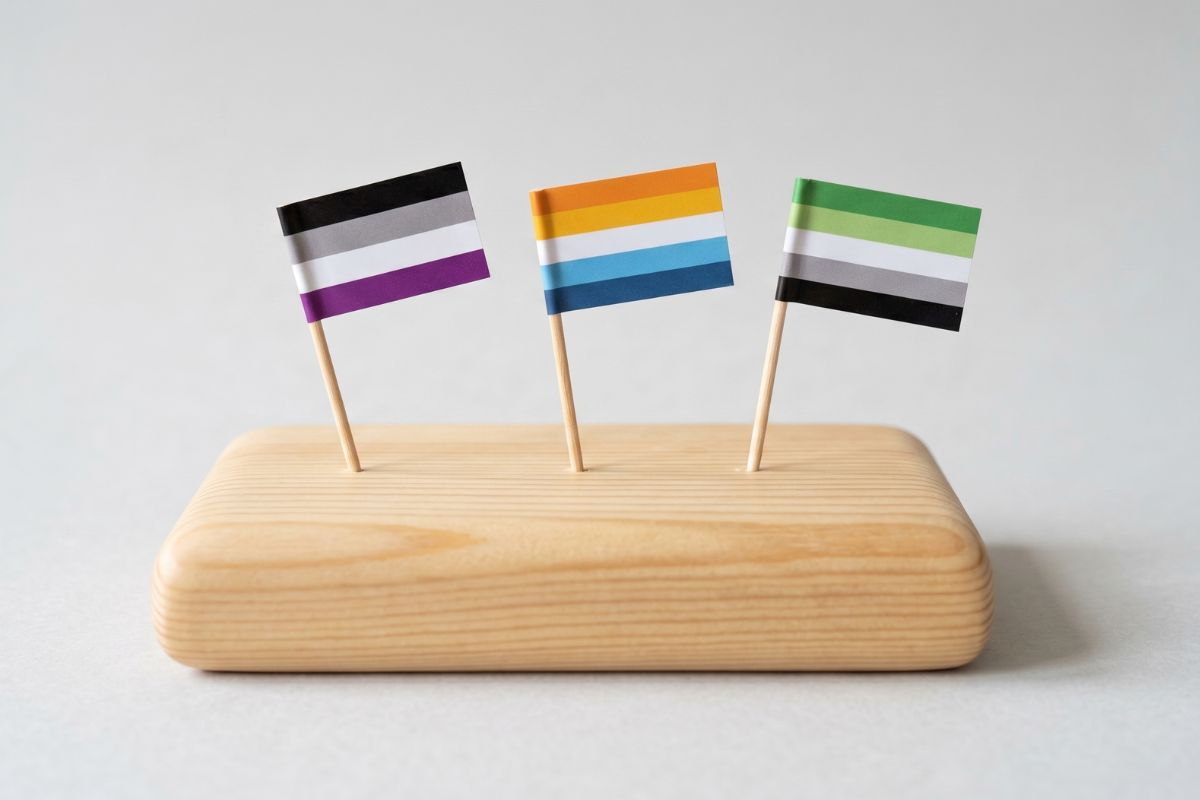
Pride Month is built around love and sexual liberation. For asexual and aromantic people, that framing can make June feel like the loneliest month of all. Here is what that experience actually looks like, and what belonging means when the party was not designed with you in mind.

For a few hours every summer, the guesswork stops. You can look around and simply know. This is what Pride does that nothing else does. The question worth asking is what happens when it ends.

You and your people are in the same spaces every day. The same supermarkets, the same offices, the same commutes. The problem was never finding each other. It was knowing each other. And that is a different problem entirely.