Your Cart is Empty


Tuesday felt masculine. Structured. Sharp. You moved through the day easily, recognised something you recognised.
Wednesday was different. Not worse, not broken. Just different. Softer, maybe. More at home in certain clothes, a different posture, a different way of taking up space. Not Tuesday's version of you, but no less real for that.
For genderfluid people, this is not confusion. It is not a symptom of anything. It is the texture of how identity works.
Genderfluidity is a gender identity characterised by movement. Not instability. Not indecision. Movement, in the same way that a landscape has weather: not broken because it changes, but defined by the fact that it does.
A genderfluid person's sense of gender shifts over time. That shift might happen daily, weekly, seasonally, or in response to context. It might move between feeling more masculine, more feminine, somewhere in between, or somewhere off that axis entirely, including days that feel agender or days that feel like more than one thing simultaneously.
That last part is worth dwelling on. Genderfluidity is not a dial moving between two fixed points. It is more like a landscape with different areas you might inhabit at different times: open plains, dense forest, high ground, somewhere without a name yet. Some genderfluid people spend most of their time in familiar territories. Others range widely. Both are genderfluidity.
What defines it is the movement itself, and the experience of genuinely inhabiting different gender states rather than performing them.
These three identities are neighbours, not synonyms, and understanding the distinction helps.
Non-binary is an umbrella term: it includes anyone whose gender falls outside an exclusively male or female identity. Genderfluid people are non-binary, but not all non-binary people are genderfluid. Some non-binary people have a consistent gender that is simply neither man nor woman. Fluidity is one experience within the wider non-binary territory.
Genderqueer carries a political dimension that genderfluid does not necessarily carry. It emerged from 1990s queer activism with an explicit intent to challenge gender norms, not just describe an identity outside them. Many genderfluid people also identify as genderqueer; others use genderfluid precisely because it describes the movement without requiring a political stance alongside it.
Some people use all three labels. Some use one. The choice usually comes down to which word most accurately names the actual experience.
The most common misreading of genderfluidity is the suggestion that change equals inconsistency, and inconsistency equals uncertainty. By that logic, someone whose mood shifts between serious and playful is confused about their personality. They're not. They're a person.
Genderfluid people are not uncertain about their gender. Their gender moves. Those are different things. The identity is genderfluidity: the experience of having a gender that is in motion is precisely what they know about themselves.
This misreading has a practical consequence. Because a genderfluid person might present differently on different days, or ask for different pronouns in different contexts, others may read this as unpredictability or as failing to commit to a narrative. What they're actually seeing is someone who knows themselves well enough to be honest about how their experience shifts.
Genderfluid people navigate a world built around fixed categories, which means a certain amount of translation is required every day.
Which pronoun applies today? Some genderfluid people use they/them consistently, as a neutral that holds across different gender states. Others shift pronouns alongside their gender, and may ask different people in their lives to use different pronouns at different times. Some use he/him some days, she/her others, they/them on others still. There is no single correct approach.
What that looks like in practice: a conversation with a colleague on a day when feminine pronouns feel right, and a gentle correction two weeks later when they don't. This requires a level of communication and trust that not every relationship can hold. Many genderfluid people make practical decisions about where and with whom they share the full picture. The Monday morning office may get a simplified version. Close friends get the real one.
This is not dishonesty. It is navigation.
One of the useful things about genderfluidity as an identity is that it resists the idea that gender is a fixed internal object that gets discovered once and stays put. For some people, that model works. For others, it doesn't describe their experience at all.
What tends to stay consistent across gender states for genderfluid people is not a particular presentation or set of pronouns. It's the broader sense of self: values, relationships, ways of thinking, what matters. The gender moves. The person doesn't disappear between states.
This is why the landscape metaphor holds. The landscape isn't a different place every morning. It's the same territory with different weather. You bring yourself to it each time.
There is a particular kind of self-doubt that genderfluid people describe, and it tends to arrive not on the days of obvious movement, but on the settled ones.
When gender has felt relatively consistent for a few weeks, a familiar question surfaces: was any of it real? If I've felt the same for this long, maybe I was mistaken about the fluidity. Maybe I was making it up.
This is sometimes called gender imposter syndrome, and it is specific to fluid identities in a way that other forms of doubt are not. It's the nature of the identity turned against itself: because genderfluidity involves change, a period without obvious change can feel like evidence against it. It isn't.
Gender can be genuinely fluid and still have stretches of relative stability. Some people shift between states multiple times a day; others shift over months or years. Both are genderfluidity. The absence of dramatic movement on any given Tuesday does not retroactively erase the rest of the landscape.
The doubt tends to ease when people recognise it for what it is: not a sign that the identity was wrong, but a predictable response to holding an identity that a lot of the world still treats as implausible. It makes sense to second-guess something you've been told, in various ways, does not exist.
 |
The genderfluid flag was designed in 2012 by JJ Poole and posted on Tumblr. It has five horizontal stripes: pink for femininity, white for the absence of gender, purple for both femininity and masculinity simultaneously, black for all genders including those outside the binary, and blue for masculinity. |
The design is more precise than it first appears. The purple stripe doesn't represent a midpoint between pink and blue. It represents holding both at once, which is a distinct experience from being somewhere in between. The white stripe makes room for agender experiences: the days that don't feel like any gender at all. The black stripe encompasses the full range of gender, including identities that sit outside familiar categories entirely. The flag maps a set of states rather than a spectrum from one end to the other.
It is, by the standards of pride flag design, a thoughtful piece of work.
Genderfluid community spaces exist online and, increasingly, within broader LGBTQ+ events and organisations. In the UK, Gendered Intelligence and the Scottish Trans Alliance both work with gender-diverse people including those who are genderfluid, and Switchboard (0300 330 0630) offers confidential support for anyone navigating questions of identity.
The five colours of the genderfluid flag translate into jewellery in a way that suits the identity rather neatly. The combination of pink, white, purple, black and blue reads as unconventional but not immediately legible to anyone unfamiliar with the flag's meaning. Which is part of the point.
Our genderfluid bracelet is made in semi-precious stones at Watford Workshop in Hertfordshire, by disabled workers who make every piece by hand. Worn on days when the flag colours feel right, or every day as a steady signal, it's a bracelet that carries a specific meaning for those who know, and reads as jewellery for those who don't.
That coded quality fits. An identity that moves, worn in a way that doesn't announce itself to everyone: it's the same logic that has always run through LGBTQ+ coded objects.
Shop the genderfluid pride bracelet at rcrew.com
Gender that moves is still gender. The landscape shifts. You're still there, in it, knowing the territory.
If genderfluidity describes your experience, there's a flag for it, a community around it, and a long tradition of finding ways to carry identity through days that don't all feel the same.
ALOK Vaid-Menon — writer, performance artist, and one of the most articulate voices on gender-fluid experience — has written Beyond the Gender Binary, a short book worth reading if any of this post resonated. Their Instagram (@alokvmenon) is also one of the better places to follow ongoing thinking on gender identity and visibility.
For UK-based support, Gendered Intelligence (genderedintelligence.co.uk) works with gender-diverse people of all ages, and Switchboard (0300 330 0630) offers confidential support for anyone working through questions of identity.
RCREW Bold Genderfluid Pride Bracelet

Pride Month is built around love and sexual liberation. For asexual and aromantic people, that framing can make June feel like the loneliest month of all. Here is what that experience actually looks like, and what belonging means when the party was not designed with you in mind.

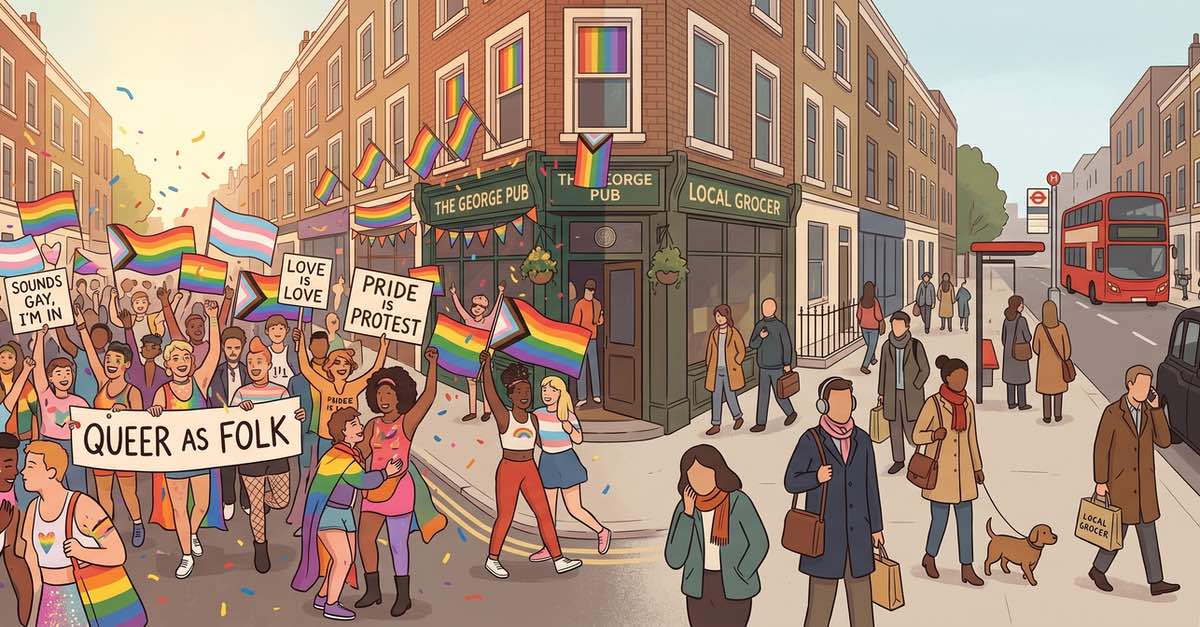
For a few hours every summer, the guesswork stops. You can look around and simply know. This is what Pride does that nothing else does. The question worth asking is what happens when it ends.

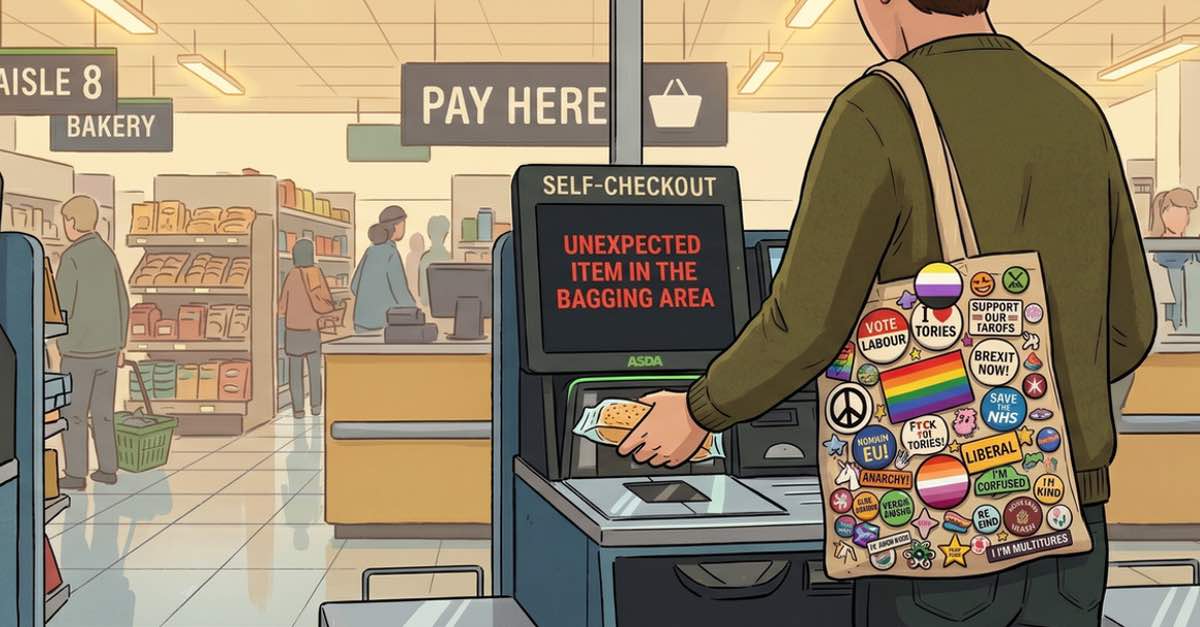
You and your people are in the same spaces every day. The same supermarkets, the same offices, the same commutes. The problem was never finding each other. It was knowing each other. And that is a different problem entirely.