Your Cart is Empty


There is a particular feeling that most queer people recognise, regardless of who they are or who they love. The feeling of moving through a world that was not built with you in mind, and searching, constantly, for evidence that you are not alone in it.
For a long time, the search required infrastructure. Physical spaces. Specific doors on specific streets. A system that worked for some people, in some places, at some times.
Then it went digital. And for a while, that felt like progress.
Ask any gay man who has been on Grindr for more than a year what he actually thinks of it. Not what he says in polite company. What he actually thinks.
You will hear about the ghosting. The opening messages that are a body part and nothing else. The conversations that evaporate the moment they become inconvenient. The relentless, grinding transactionality of it. The feeling of scrolling through hundreds of faces and somehow feeling more alone than when you started.
And now, increasingly, you will hear about the money: Grindr's recent decision to aggressively monetise the platform, restricting basic features behind a paywall, has prompted a wave of fury from the community it built its entire business on.
The app that promised liberation is charging admission.
Gay men are the most visible casualties of this particular failure. But the exhaustion is not theirs alone. It runs across the whole queer spectrum, in different forms, for different reasons. The apps solved one problem and created several others. And for large parts of the LGBTQ+ community, the apps never really arrived at all.
And yet: Grindr was, at its moment of arrival, genuinely revolutionary. A location-based, real-time system for finding gay men near you, available anywhere and at any time, on a device in your pocket. It solved a problem that had defined queer life for generations. Before it existed, finding your people required physical infrastructure: specific bars, specific streets, specific cities. Grindr removed all of that. It was, for a time, a genuine liberation.
But the apps didn't arrive in a vacuum. Before Grindr, before Gaydar, before any of this, there was a different kind of infrastructure. You couldn't log on. You had to show up.
At its peak, the gay bar was a remarkable thing. A physical infrastructure for a community that had no other way to find itself. Before the internet, before apps, before any of the digital architecture we now take for granted, the bar was the signal. You walked through a specific door on a specific street, and the act of walking through it told everyone inside something important about you. You were found. You were findable.
For gay men, it was the first system that didn't require hiding. And it worked.
It made visibility possible, on your terms, in a contained space, with an unspoken agreement among everyone present. You could be yourself without announcement. You could meet people through proximity and presence and the ordinary friction of being in a room together. There was no profile, no grid, no algorithm deciding who you saw first. There was just the bar, and the people in it, and whatever happened next.
Gay bars were also, for a long time, genuinely necessary in a way that is easy to underestimate now. They were not just social spaces. They were safe spaces, in an era when being visibly queer in public carried real risk. The bar had a door. The door had a purpose.
Lesbian bars existed too. Fewer of them, always. More precarious, always fighting harder to survive, always the first to close when a neighbourhood changed or rents rose or the scene shifted. The resourcefulness required when even the bar was not available, when women developed their own visual languages and signals and ways of finding each other in spaces not built for them, is part of a history that rarely gets told with the weight it deserves.
For bisexual people, there was no bar. For trans people, there was often the bar, but often only the margins of it, the tolerance that stopped well short of genuine welcome. For non-binary people, for asexual people, for pansexual people: there was nothing. No dedicated space. No door to walk through. No room built with them in mind.
The golden age of queer community spaces was golden for some. For others, it was the best available option in a landscape of very few options. And for many, it was not available at all.
Grindr was not the first attempt to solve this problem digitally. Gaydar, launched in 1999, brought gay men online for the first time: into chat rooms and profiles and the early, heady experience of finding each other across distance. It was imperfect and often explicit, but it was something. A digital space where you could exist as yourself, seek connection, and not feel entirely alone.
Grindr took that logic and made it mobile. Real-time. Location-based. The bar, freed from geography, in your pocket. For gay men, this was another revolution.
Other platforms followed:
HER arrived for lesbian and bisexual women, though its founder famously encountered investors who considered lesbians a niche and difficult consumer demographic.
Scruff built a home for bears and the broader world of queer men.
Lex, Taimi, Feeld, and others emerged for the wider community, and they matter.
But the centre of gravity never shifted. Grindr's user base dwarfed everything else. The dominant architecture of digital queer connection stayed built around gay men, and carried the same demographic weight forward from the bars into every smartphone.
Meanwhile, something else was happening. The apps were quietly replacing skills nobody had thought to protect. In the bar, you learned to read a room. You made eye contact. You started conversations with strangers based on nothing more than proximity and instinct. You got it wrong sometimes, and you got better. The apps made all of that unnecessary. Why develop the muscle memory of in-person connection when the app could do the work for you?
A generation of gay men is now documenting the cost of that trade. On Reddit, in therapy, in essays about loneliness in an era of infinite access. They are exhausted not just by Grindr's toxicity, or its paywall, or the transactions that replaced conversations. They are exhausted by the loss of something they cannot quite name: the feeling of being in a room with people, the accidental connection, the possibility that something unexpected might happen.
The serendipity. That is what the apps cannot manufacture. And that is what was lost.
Scroll through any queer community forum and you will find versions of the same conversation. Gay men describing the moment they realised they had forgotten how to talk to someone in person without a screen as an intermediary. Bisexual people describing the invisibility of moving through a world that reads them as straight or gay depending on who they are with, and finding nothing, digital or physical, that reflects their actual experience back at them. Trans people describing the calculation required before entering any space: is this safe, will I be welcome, will I have to perform my identity or defend it.
The bar, for all its limitations, had solved at least one part of this. You walked through the door and the question was answered. You were among your people. Whatever happened next, that first moment of recognition was given.
The apps tried to replicate it. They gave you the who. They could not give you the where, or the when, or the accidental quality of a conversation that starts because two people happened to be standing next to each other at the right moment. They could not give you the raised eyebrow across a crowded room, the moment of mutual recognition between strangers, the small electric charge of realising: you too.
That experience, for most of the LGBTQ+ community, has never reliably existed. Not in a bar built for someone else. Not in an app built around a different identity. Not anywhere.
What if it could exist everywhere?
Queer people have always found each other. That is one of the extraordinary facts of queer history: in the absence of infrastructure, in conditions of active hostility, in eras when visibility meant risk, communities still formed. Signals were developed. Codes were shared. Green carnations. Polari. Handkerchief colours. Identity flags. Each generation found its own language for the same persistent need: I am here. Are you?
What RCREW is building is the next chapter of that tradition. Not a bar. Not an app. Not a code that requires insider knowledge passed through networks you have to already belong to.
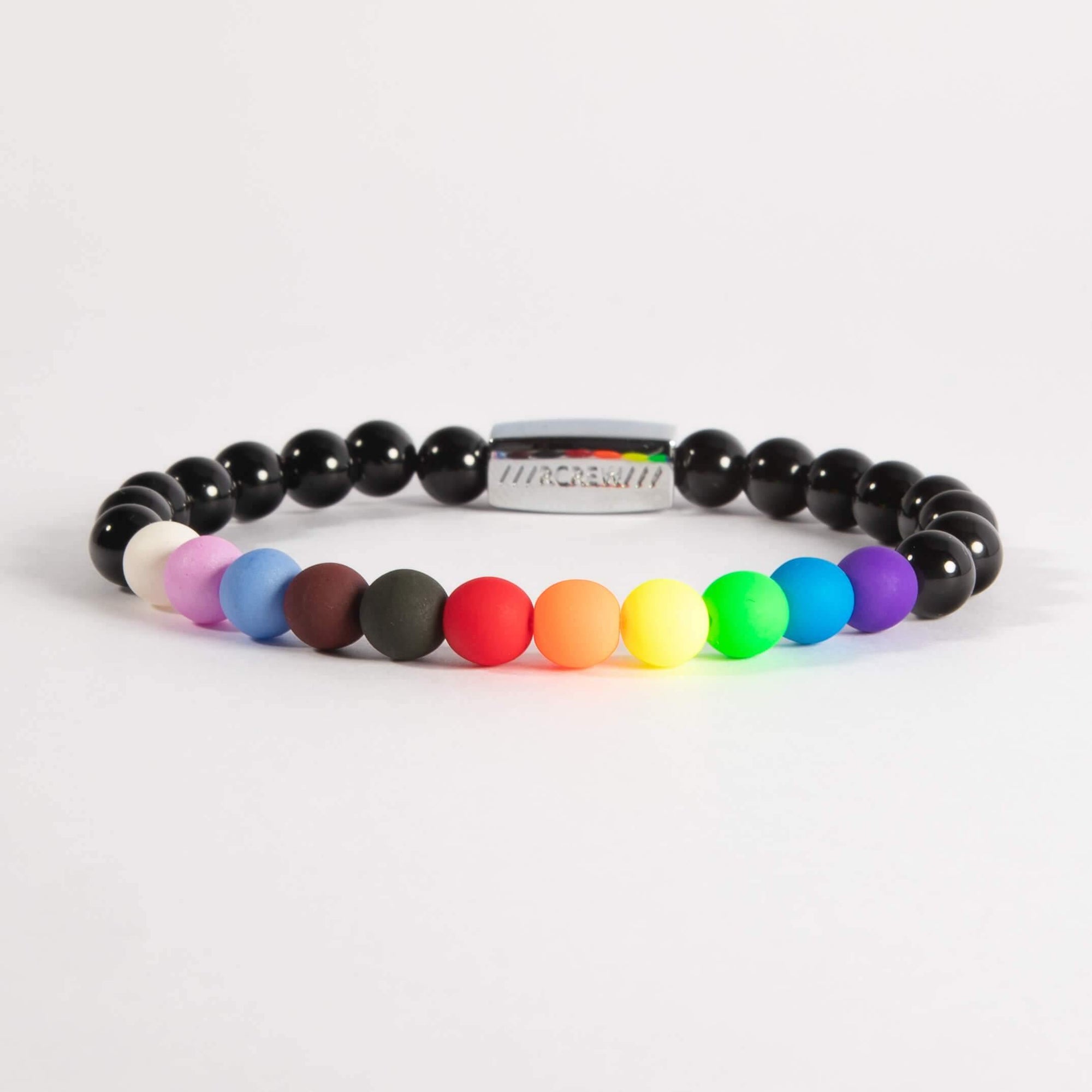
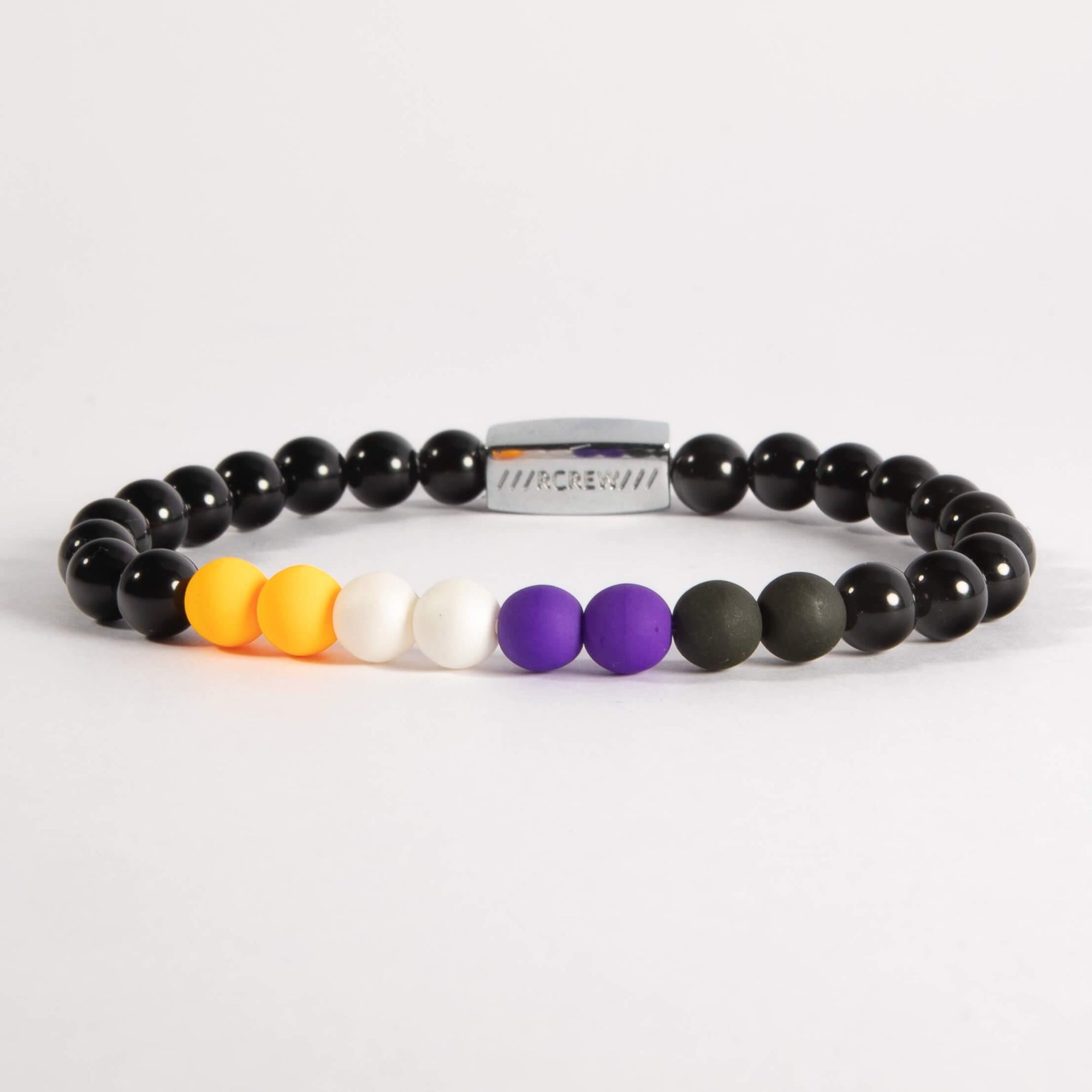
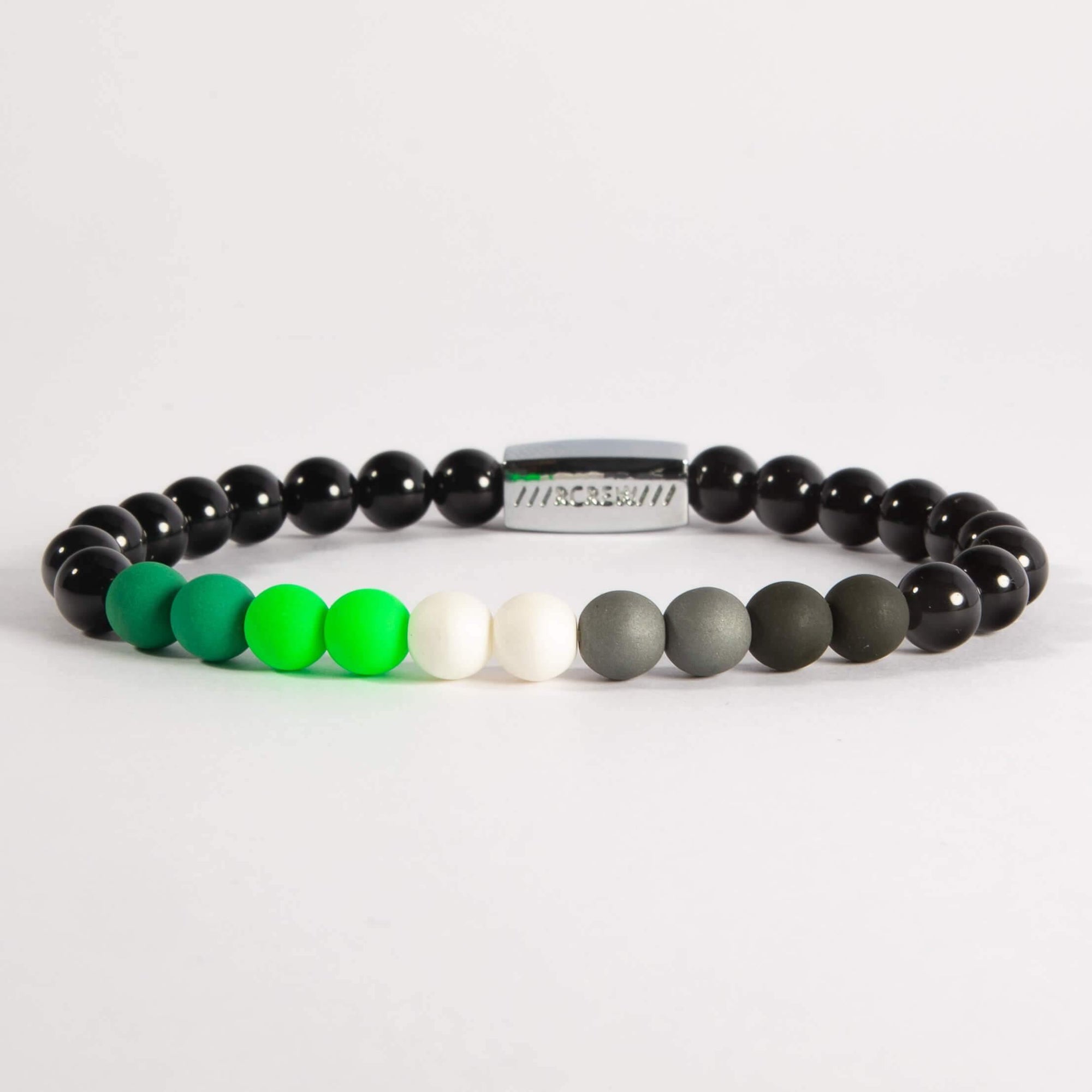
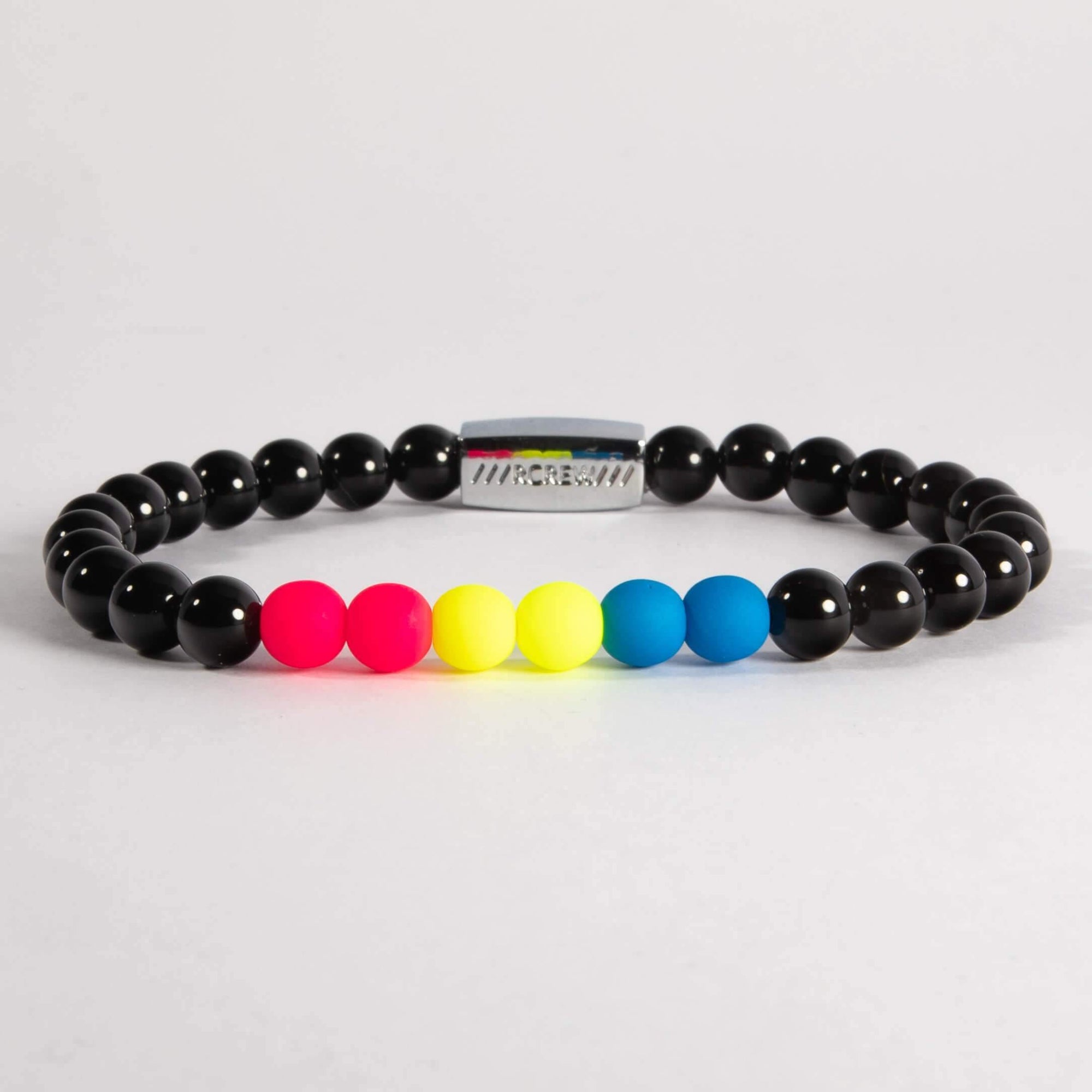
A bracelet in bisexual colours, handcrafted right here in the UK by disabled workers. To most people, it reads as jewellery: quiet, colourful, unremarkable. To someone who knows the flag, it is a signal. An answer to the question before it has been asked.
It works in the gym, on the train platform, in the office, at the family gathering where being visible is complicated. It works in small towns with no bar and large cities where the bar is closing. It does not require a venue or an algorithm or a profile or a paywall. No subscription. No profile. No algorithm deciding who you see. It requires only that two people are in the same space at the same time, and one of them is wearing something the other recognises.
A conversation starts. It would not have happened otherwise.
We are at the beginning of this. The signal only grows more legible as more people wear it. The language only becomes richer as it develops. But the foundation is the same one queer people have always built on: the need to find each other, in the real world, as themselves.
The gay bar was a start. The apps were a detour. This is the next thing.
Every RCREW bracelet is handmade by disabled workers at Watford Workshop, a community employment initiative based in the UK.
Shop the full collection → rcrew.com

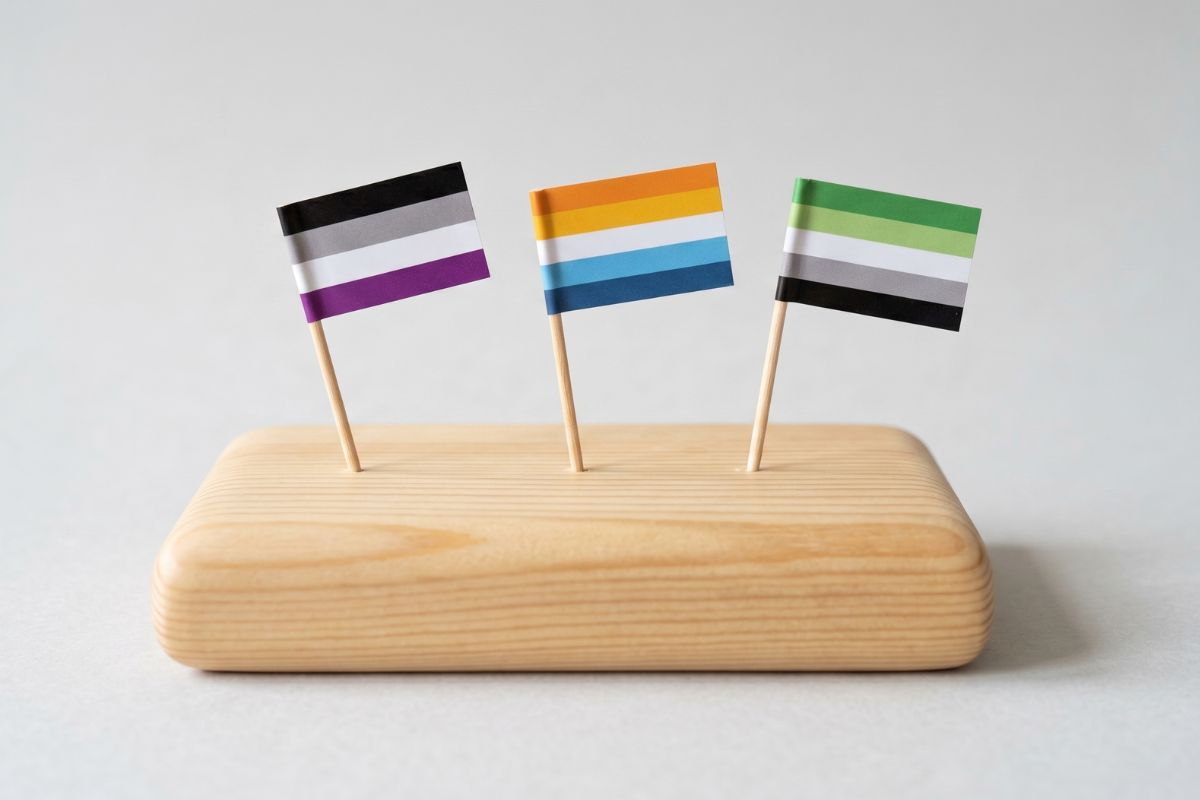
Pride Month is built around love and sexual liberation. For asexual and aromantic people, that framing can make June feel like the loneliest month of all. Here is what that experience actually looks like, and what belonging means when the party was not designed with you in mind.

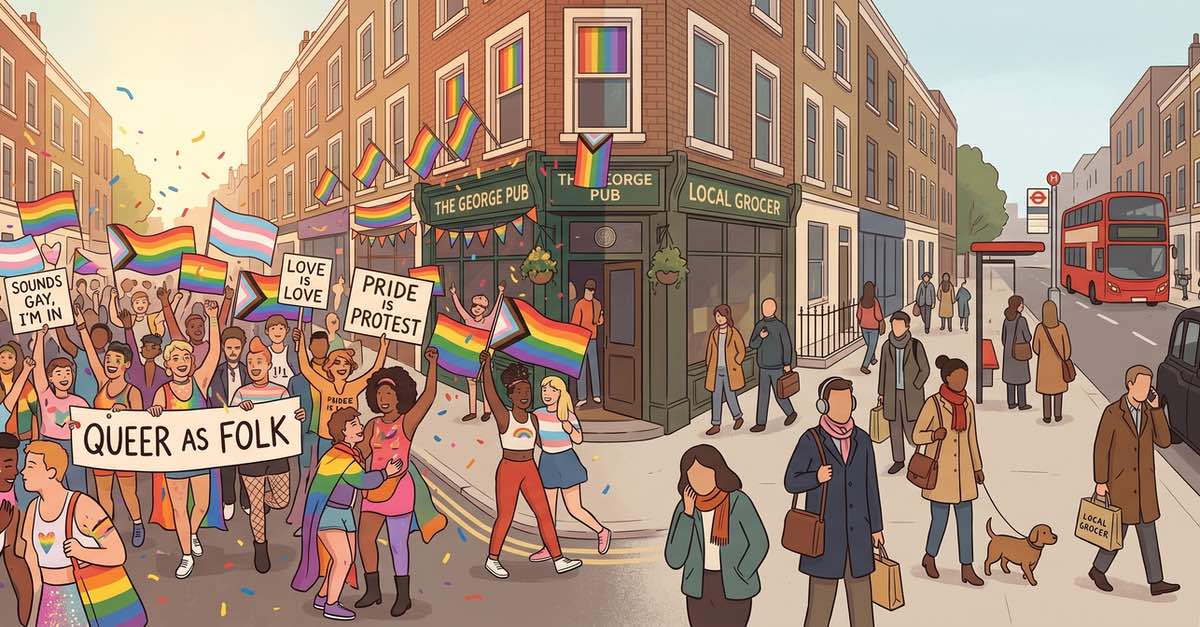
For a few hours every summer, the guesswork stops. You can look around and simply know. This is what Pride does that nothing else does. The question worth asking is what happens when it ends.

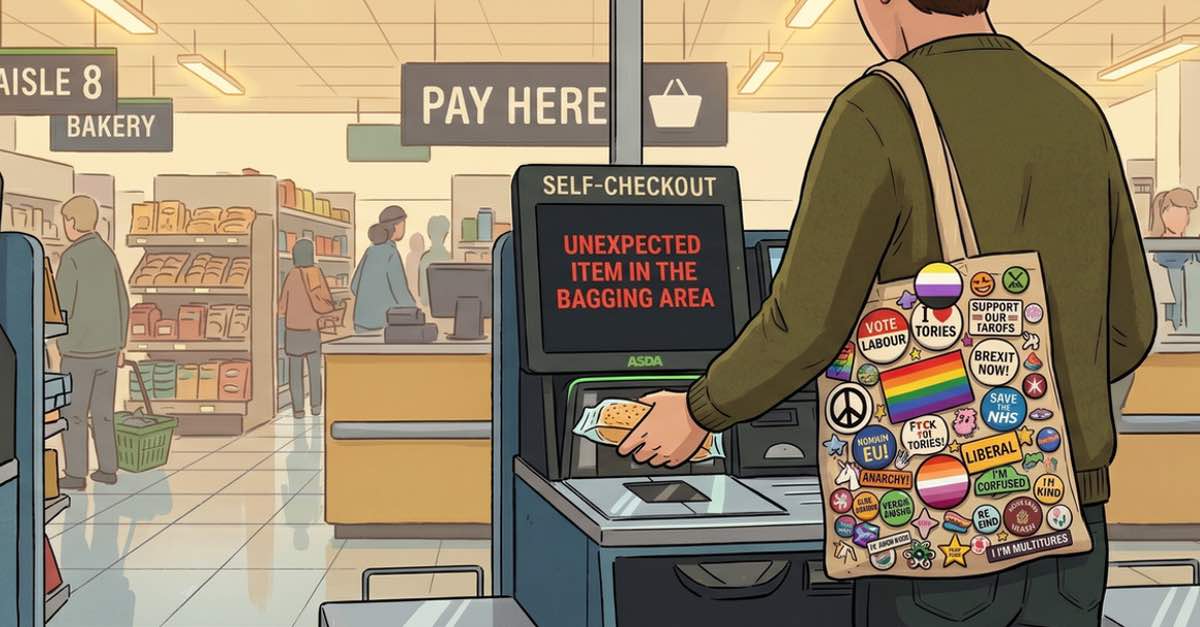
You and your people are in the same spaces every day. The same supermarkets, the same offices, the same commutes. The problem was never finding each other. It was knowing each other. And that is a different problem entirely.