Your Cart is Empty


"There's something wrong with me."
That's what countless asexual people think before they discover there's a word for their experience. When everyone around you seems obsessed with sex and you feel... nothing. When you're told you'll "meet the right person" or "haven't tried it yet." When you wonder if you're defective because you don't experience what everyone else seems to take for granted.
Here's the truth: You're not broken. You're asexual.
Asexuality is the lack of sexual attraction to others. It's a complete, valid sexual orientation experienced by approximately 1% of the population: that's around 70 million people worldwide, or roughly the entire population of the United Kingdom.
Let's explore what asexuality actually means, why the myths are harmful, and how ace people are building vibrant, fulfilling lives.
Asexual means experiencing little to no sexual attraction to others. People who are asexual (often called "ace" for short) don't look at someone and feel sexual desire for them.
Here's what's crucial to understand: asexuality is about attraction, not behaviour.
Some asexual people have sex. Some don't. Some are sex-repulsed. Some are sex-positive. Some masturbate. Some don't. Some want romantic relationships. Some don't. All of these are valid ways to be asexual.
Think of it this way: a straight person doesn't stop being straight when they're single. An asexual person doesn't stop being asexual based on whether they have sex.
Asexuality exists on a spectrum, often called the "ace spectrum" or "a-spec." Not everyone experiences asexuality in the same way:
Asexual: Experiencing little to no sexual attraction to anyone, regardless of gender.
Grey-asexual (Grey-ace): Experiencing sexual attraction rarely, only under specific circumstances, or with very low intensity. Grey-ace people exist in the grey area between asexual and allosexual (people who do experience sexual attraction).
Demisexual: Only experiencing sexual attraction after forming a strong emotional bond with someone. Demisexual people don't experience primary sexual attraction. They need that deep connection first.
Many people find that one of these labels fits their experience better than others, whilst some use multiple labels or simply identify as "ace" or "on the asexual spectrum."
This is where it gets interesting: sexual attraction and romantic attraction are not the same thing.
Asexuality describes sexual attraction (or lack thereof). Aromanticism describes romantic attraction (or lack thereof). These are separate aspects of identity, which means:
You can be asexual and still experience romantic attraction. Many ace people want romantic relationships, fall in love, and experience all the emotional aspects of romance. They're simply not sexually attracted to their partners.
You can be aromantic and still experience sexual attraction. Some people want casual sexual relationships without the romantic component.
You can be both asexual and aromantic (often shortened to "aroace"). These individuals experience neither sexual nor romantic attraction. If you're exploring aromanticism, our guide explains what it means to live without romantic attraction.
Asexual people who do experience romantic attraction might identify as heteroromantic (romantically attracted to different genders), homoromantic (romantically attracted to the same gender), biromantic, panromantic, or other romantic orientations.
This is called the split attraction model, and it helps ace people describe the full picture of their identity.
Asexual people face unique misconceptions that can be deeply harmful. Let's address the most common myths:
No. Celibacy is a choice to abstain from sexual activity, often for religious, personal, or other reasons. Celibate people may still experience sexual attraction. They're choosing not to act on it.
Asexuality is an orientation. It's not a choice. It's simply how someone experiences (or doesn't experience) sexual attraction. Some asexual people choose to have sex for various reasons (pleasing a partner, wanting children, curiosity, or physical pleasure) whilst still being asexual.
This is perhaps the most damaging myth. Asexuality is not a medical condition, a hormone imbalance, or a symptom of trauma. It's a sexual orientation, like being straight, gay, or bisexual.
Sexual attraction is not necessary for a person to be healthy. Whilst some medical conditions or medications can affect libido, asexuality itself is not a disorder and doesn't require "fixing."
If someone is distressed by their lack of sexual attraction, that's worth exploring with a healthcare provider. Many people, though, are perfectly happy being asexual once they understand it's a valid identity.
This dismissive statement suggests asexuality is temporary or will change with the "right" partner. For most asexual people, that's not how it works.
Whilst some people's experiences of attraction can be fluid over time, telling an ace person they'll change when they "meet the right person" invalidates their current identity and lived experience.
Many asexual people have fulfilling romantic relationships. They fall in love, get married, build lives with partners. All whilst being asexual.
Some ace people are in relationships with other ace people. Some are in "mixed" relationships with allosexual partners, where they navigate differing needs around sex with communication and compromise.
Some asexual people pursue queerplatonic relationships (QPRs): partnerships that go beyond friendship in commitment and intimacy, yet aren't romantic or sexual in nature.
There's no single "right" way to be in a relationship as an asexual person.
Asexual people have a wide range of attitudes towards sex:
Sex-repulsed: Uncomfortable with the idea of sex, may feel distress at sexual content or situations.
Sex-indifferent: Neutral about sex. May engage in it occasionally without strong feelings either way.
Sex-favourable: Enjoy sex for various reasons (physical pleasure, emotional connection, pleasing a partner) whilst still not experiencing sexual attraction.
All of these are valid ways to experience asexuality. Your attitude towards sex doesn't determine whether you're "really" asexual. Lack of sexual attraction does.
Many asexual people describe a moment of profound relief when they first learn about asexuality. After years of feeling "broken" or "wrong," discovering there's a word (and a community) changes everything.
Common experiences before discovering asexuality include: Feeling confused when friends discuss sexual attraction and you don't relate. Thinking you're "late bloomer" who will eventually feel what everyone else feels. Forcing yourself into sexual situations because it's "expected." Wondering if there's something medically or psychologically wrong with you. Feeling isolated and alone in your experience.
Then you find the word "asexual" and think: Oh. This is a thing. I'm not broken. Other people feel this way too.
Coming out as ace comes with unique challenges. Many people have never heard of asexuality, which means you're often educating people whilst also being vulnerable about your identity.
Common responses ace people receive include: "You'll change your mind when you meet the right person." "Have you seen a doctor?" "That's sad. You're missing out on one of life's greatest pleasures." "You're too young to know that." (Or, conversely, "You're too old not to have figured this out yet.") "Maybe you're just afraid of intimacy."
These responses, whilst often well-intentioned, are invalidating and harmful. They suggest asexuality isn't real or that it's a problem to be solved.
Some ace people choose to come out widely. Others only tell close friends and partners. There's no requirement to come out, and your identity is valid whether or not you share it with others.
We live in a culture that treats sexual attraction and sexual activity as universal experiences. From films to advertisements to casual conversations, sex is everywhere. And the assumption is that everyone wants it.
For asexual people, this creates constant friction: Dating apps designed around sexual attraction. Friendship circles where conversations revolve around sexual experiences. Media representation where character development often includes sexual storylines. The assumption that romantic relationships must include sex. Pressure from partners who don't understand or accept asexuality.
Navigating these situations requires asexual people to constantly assert their identity and boundaries in a world not designed with them in mind.
Dating as an asexual person comes with unique considerations:
When to disclose: Many ace people struggle with when to tell potential partners about their asexuality. Too early and you might scare people off. Too late and you risk someone feeling misled.
Finding compatible partners: Some ace people seek other ace partners. Others are open to allosexual partners who respect their boundaries. Either way, finding people who understand and accept asexuality can be challenging.
Negotiating physical intimacy: Relationships involving an ace person and an allosexual person require open communication about physical intimacy, boundaries, and needs.
Dealing with rejection: Some potential partners won't accept or understand asexuality. Whilst painful, it's better to know early that someone isn't compatible.
Despite these challenges, many asexual people build beautiful, fulfilling relationships.
The asexual community is warm, welcoming, and diverse. Finding other ace people (whether online or in person) can be transformative.
Online communities like AVEN (Asexual Visibility and Education Network) have connected ace people worldwide since 2001. Ace Week (held annually in October) brings together ace people for awareness, celebration, and community building. Local ace meetups exist in many UK cities. Social media hashtags like #Asexual and #AcePride connect ace people globally.
You're not alone. Not even close.
One of the delights of the asexual community is its unique sense of humour. Ace culture has developed its own set of inside jokes, memes, and symbols that bring the community together and make being ace feel less isolating and more fun.
Garlic bread: Perhaps the most famous ace meme is that asexual people would rather have garlic bread than sex. The joke originated from online discussions where ace people described their lack of interest in sex, with one person quipping they'd prefer garlic bread. It's become a beloved symbol of ace culture. You'll see garlic bread emojis, merchandise, and references throughout ace spaces. The underlying message? There are plenty of things in life more appealing than sex, and that's completely fine.
Cake: Similar to garlic bread, cake has become another ace symbol. The phrase "cake is better than sex" appears frequently in ace communities. At ace meetups and events, you'll often find cake as a nod to this shared joke.
Dragons: Many asexual people have adopted dragons as an unofficial mascot. Why dragons? They're powerful, magical, don't need romance or sex in their stories, and they're brilliant. The association grew organically through online communities, and now you'll find dragons all over ace art, memes, and merchandise.
The invasion of Denmark: One of the most wonderfully absurd ace memes involves the hypothetical "invasion of Denmark." The joke emerged from a Tumblr post in 2015 pointing out that there are more asexual people in the world than there are people living in Denmark. Therefore, if all ace people worked together, they could simply invade Denmark and claim it as the asexual homeland. The meme has evolved to include detailed invasion plans, debates about whether Sweden would be easier to conquer, and jokes about establishing an ace utopia complete with garlic bread and dragons.
Playing cards and the ace of spades/hearts: The word "ace" connects to playing cards, and many asexual people use the ace of spades or ace of hearts as symbols. You'll see these in ace jewellery, art, and tattoos.
These memes might seem silly, and they absolutely are. That's the point. For people who've felt broken or wrong for not experiencing sexual attraction, finding a community that can laugh together about garlic bread and imaginary invasions is healing. It transforms something that once felt isolating into something shared and joyful.
The humour also serves another purpose: it makes asexuality more visible and approachable. Someone might stumble across a meme about garlic bread being better than sex, laugh, then think "wait, is that actually a thing?" and discover they're asexual. The memes are a gateway to understanding.
For years, asexuality was virtually invisible. Most people had never heard of it, and those who were ace often had no language to describe their experiences.
Visibility changes that: Young people questioning their sexuality have language to describe their experiences. Asexual individuals feel less isolated when they see representation. Society develops better understanding of the diversity of human sexuality. Mental health outcomes improve when people feel seen and validated.
The 2021 UK Census was the first to include asexuality as an option. Around 28,000 people in England and Wales (0.06% of the population) identified as asexual. Though experts believe the true number is likely higher, as many ace people may not have heard the term or felt comfortable disclosing.
Every person who speaks openly about being asexual helps combat invisibility and validates others in the community.
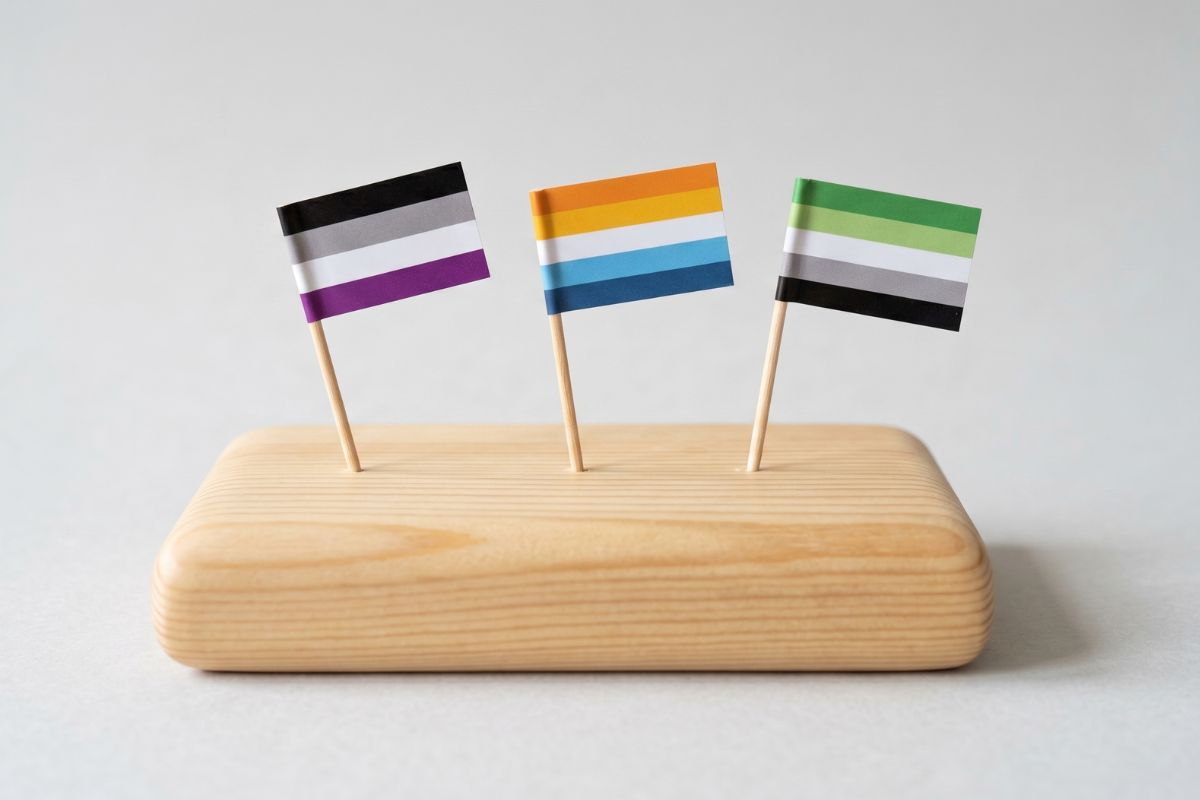
The asexual pride flag was created in 2010 following a community contest on AVEN. It consists of four horizontal stripes:
 |
Black: Represents asexuality Grey: Represents grey-asexuality and demisexuality White: Represents sexuality (allosexual partners and allies) Purple: Represents community. The flag serves as a unifying symbol for the ace community and a visible sign of ace pride. |
One of the most recognisable symbols of asexuality is the black ace ring: a black ring worn on the middle finger of the right hand.
The tradition began in 2005 on an AVEN forum thread titled "Black rings and other ways to show asexual pride." Community members discussed wanting a subtle way to signal their identity to other ace people, and the black ring quickly became the standard.
Why the middle finger of the right hand? The placement was chosen deliberately. The right hand avoids confusion with engagement or wedding rings (typically worn on the left hand in Western cultures). The middle finger was selected as a neutral choice that doesn't carry other symbolic meanings.
Why black? Black was chosen for its neutrality and because it doesn't typically carry meanings related to sexuality or relationships. It also aligns with the black stripe on the asexual pride flag.

What wearing an ace ring means:
"I'm asexual." It's a quiet declaration of identity, visible to those who know to look for it.
"You're not alone." When another ace person spots your ring, there's instant recognition. You've found each other.
"I'm proud of who I am." The ring is an affirmation that asexuality is valid, real, and nothing to hide.
"You can talk to me. I understand." For other LGBTQ+ people navigating their identity, visible ace people offer community and validation.
In professional or family settings where being openly asexual might be complicated, a black ring offers a subtle signal. Other ace people will recognise it. Those who don't might think it's fashionable jewellery.
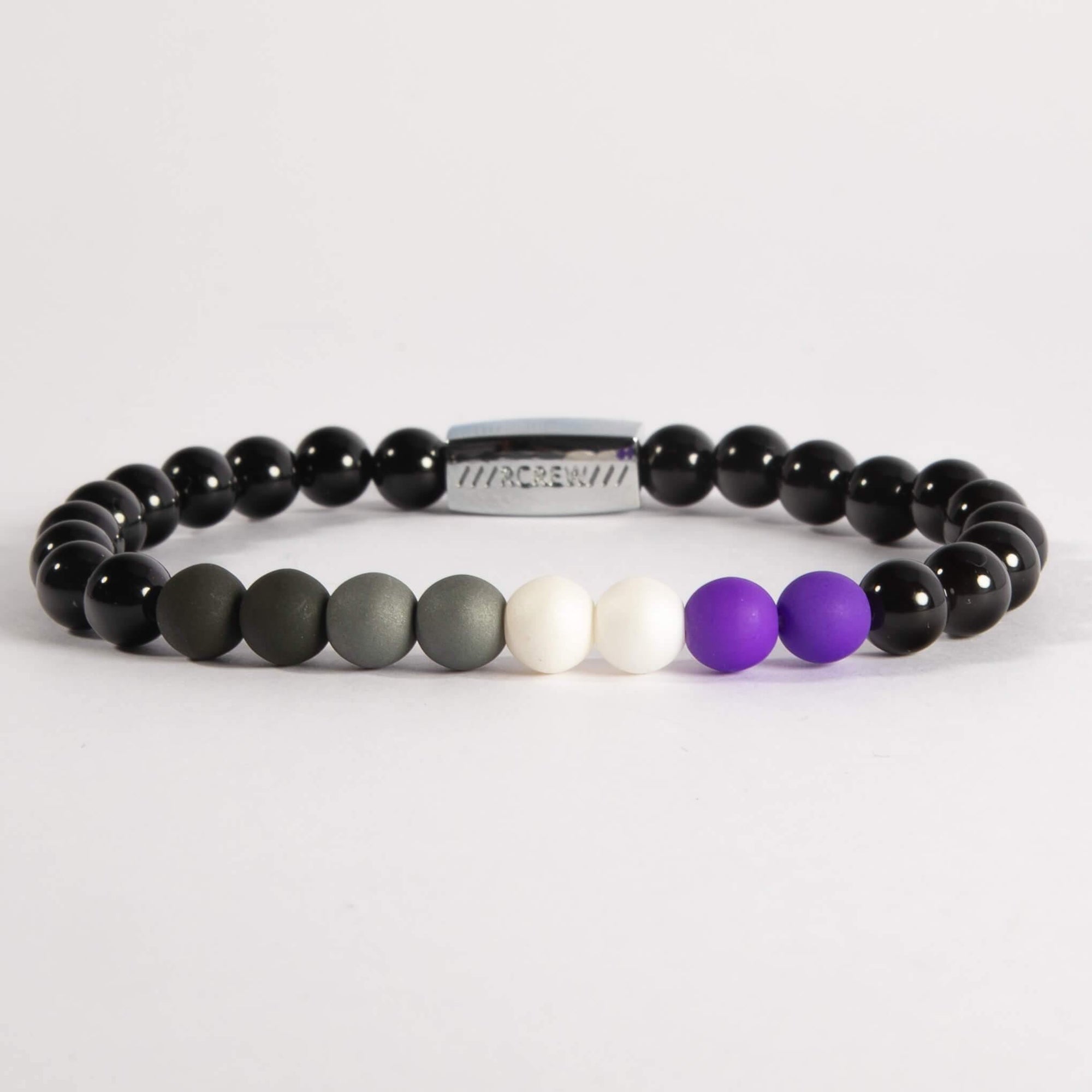
Our asexual bracelet is designed to keep you visible. Because invisibility is exhausting, and you deserve to be seen for who you are: someone who experiences the world differently, and that's perfectly valid.
Representation has slowly improved in recent years, with more asexual characters appearing in television and public figures speaking openly about their identities.
Isaac Henderson (Heartstopper): Perhaps the most significant recent representation, Isaac's journey of self-discovery in seasons 2 and 3 of Heartstopper resonates deeply with ace viewers. Created by Alice Oseman (who is herself aroace), Isaac's storyline shows the confusion, research, and eventual acceptance of being asexual and aromantic. The show handles his identity with sensitivity, showing Isaac reading Angela Chen's book "Ace" and meeting other aroace people.
Todd Chavez (BoJack Horseman): Todd's asexuality develops organically throughout the series. In season 3, he tells his girlfriend he's "not really a sexual person." By season 4, he comes out to BoJack, saying he doesn't think he's "allowed to be in love" before identifying as asexual. The show explores Todd joining ace meetups and dating other ace people.
O (Sex Education, Season 4): O is a brilliant, book-smart student who comes out as asexual during the season. Her character shows an ace person who is fascinated by sex academically whilst not experiencing sexual attraction herself.
Liv Flaherty (Emmerdale): UK soap Emmerdale made history with Liv, who came out as asexual in 2019. She explained to her brother: "I don't have sexual feelings for people, and that's alright. You can still have romantic feelings and be attracted to people, not physically."
Yasmin Benoit: British model, activist, and writer who identifies as aromantic asexual. Benoit challenges stereotypes about what asexual people "look like" and co-founded the UK's first Asexual Awareness Week. She's become one of the most prominent ace activists globally.
Alice Oseman: British author and creator of Heartstopper. Oseman identifies as aroace and has been vocal about how discovering these terms would have helped her understand herself earlier. Her book "Loveless" features an aroace protagonist.
Tim Gunn: Fashion consultant and television personality. In his 2011 memoir, Gunn wrote: "I knew what I wasn't: I wasn't interested in boys, and I really wasn't interested in girls. For many years, I described myself as asexual, and I still think that's closest to the truth."
David Archuleta: American Idol alumnus who discussed his asexuality in a 2021 Instagram post, explaining he doesn't have "too much sexual desires and urges as most people."
Paula Poundstone: Comedian who has been open about being asexual, telling Pride Source: "I don't talk about sex a lot because I don't actually have sex."
AVEN (Asexual Visibility and Education Network): Founded in 2001, AVEN hosts the world's largest online asexual community and extensive resources. Their forums include a UK and Ireland section for local community building.
Stonewall UK Ace Hub: Stonewall's dedicated space for ace community resources, including the first-ever UK report on ace experiences and discrimination.
Asexuality Archive: Comprehensive repository of information, definitions, and community resources specifically for the ace community.
Aces & Aros: Website connecting people to local ace and aro communities, events, and support resources across the UK.
Switchboard LGBT+ Helpline: 0300 330 0630 (10:00-22:00 every day). Safe space to discuss sexuality, including asexuality.
LGBT Foundation: 0345 3 30 30 30 (Monday-Friday, 10:00-18:00). Support and advice for LGBTQ+ people, including specific understanding of ace experiences.
MindOut: Mental health service run by and for LGBTQ+ people, explicitly welcoming those who identify as asexual.
"Ace: What Asexuality Reveals About Desire, Society, and the Meaning of Sex" by Angela Chen: Essential reading exploring asexuality through research, interviews, and personal experience.
"Loveless" by Alice Oseman: Young adult novel featuring an aroace protagonist navigating university and self-discovery.
"The Invisible Orientation: An Introduction to Asexuality" by Julie Sondra Decker: Comprehensive introduction to asexuality, covering definitions, myths, and ace experiences.
r/asexuality on Reddit: Active community with over 200,000 members sharing experiences, memes, and support.
AVEN Forums: Long-running forums where ace people discuss everything from coming out to relationships to ace culture.
#Asexual and #AcePride: Social media hashtags connecting ace people globally and sharing ace visibility content.
Ace Week (Asexual Awareness Week): Annual campaign held in October, with events, resources, and community building worldwide.
If you're asexual, your identity is valid. It doesn't matter if you've had sex or haven't. It doesn't matter if you want a relationship or don't. It doesn't matter if people understand it immediately. It doesn't matter if you're sex-repulsed, sex-indifferent, or sex-favourable.
You're not broken. You're not defective. You're not "missing out" on anything. You're not too young, too old, too prudish, or too anything else.
You're asexual. And that's a complete, valid, beautiful way to experience the world.
Whether you've known you were ace for years or you're reading this and thinking "wait, this might be me," you're part of a vibrant, diverse, wonderful community. Your experience matters. Your voice matters.
Understanding asexuality often means understanding the split attraction model. Many people are both asexual and aromantic (aroace), experiencing neither sexual nor romantic attraction. If you're exploring both orientations, our companion guide explains what it means to live without romantic attraction: You Don't Need Romance to Be Whole: Understanding Aromanticism.
If you want a signal that communicates your identity without requiring an explanation, the Bold Asexual Bracelet translates the ace flag into black agate and Czech glass: black, grey, white, and purple, worn as jewellery by most, read as recognition by those who know. Made at Watford Workshop, a charity providing skilled work and living wages in Hertfordshire.

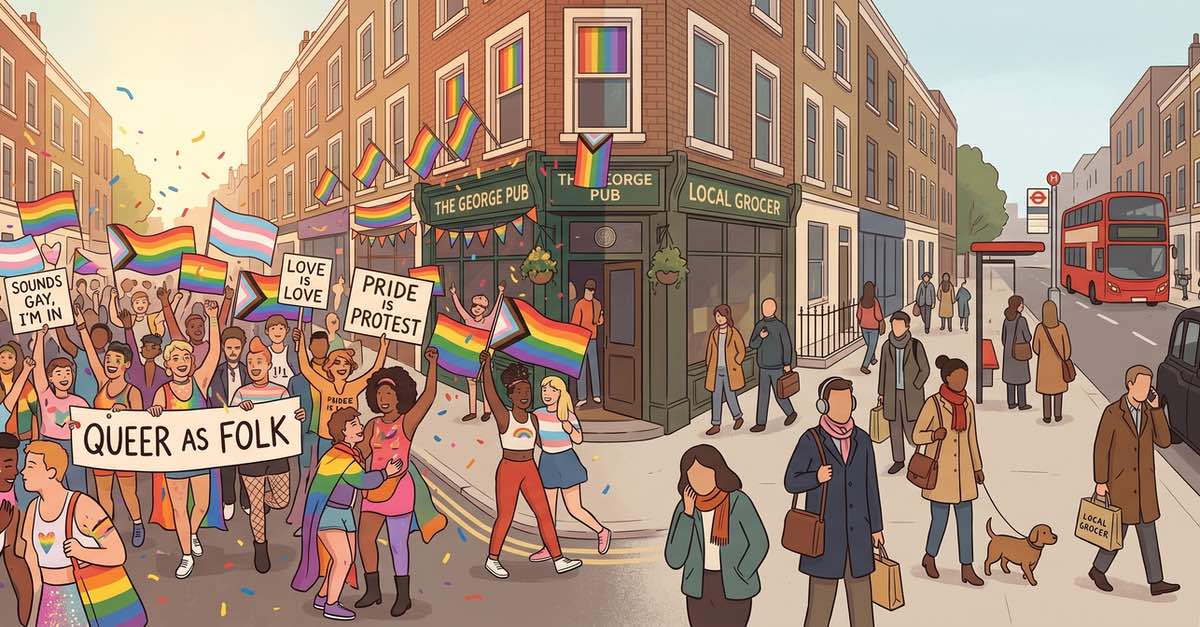
Pride Month is built around love and sexual liberation. For asexual and aromantic people, that framing can make June feel like the loneliest month of all. Here is what that experience actually looks like, and what belonging means when the party was not designed with you in mind.

For a few hours every summer, the guesswork stops. You can look around and simply know. This is what Pride does that nothing else does. The question worth asking is what happens when it ends.

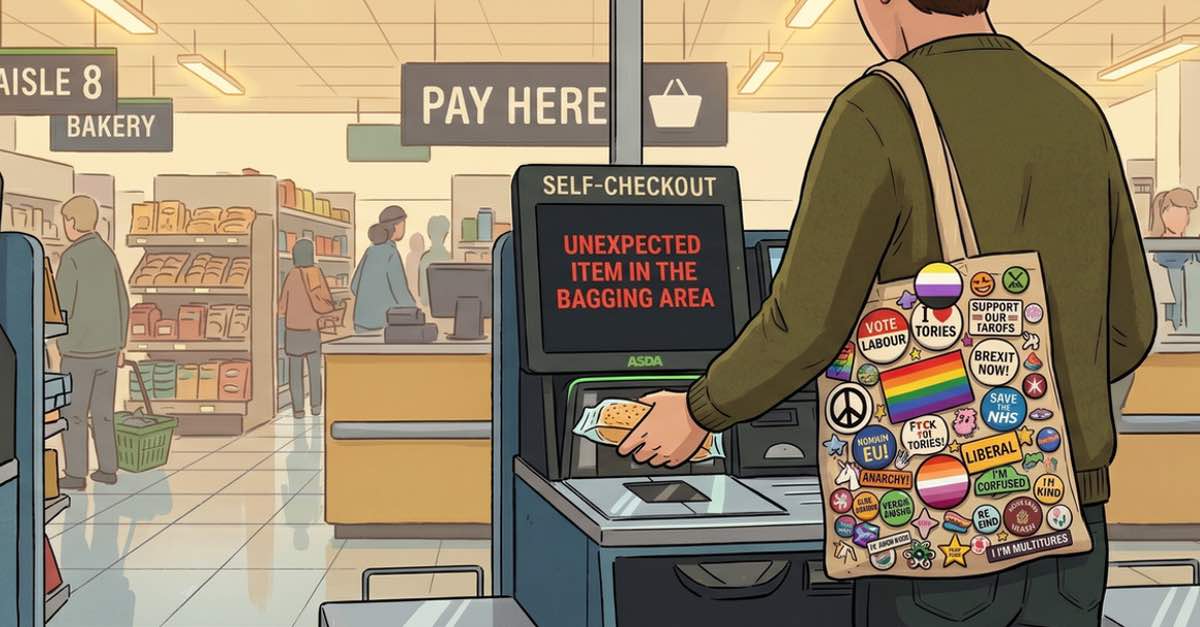
You and your people are in the same spaces every day. The same supermarkets, the same offices, the same commutes. The problem was never finding each other. It was knowing each other. And that is a different problem entirely.