Your Cart is Empty


It's mid-February. Your coupled friends are panicking about restaurant reservations. Your single mates are either pretending they don't care or joining the panic anyway. The shops are drowning in red hearts and 'romance is in the air' nonsense.
And you? You're wondering what all the fuss is about.
Welcome to Valentine's Day when you're asexual or aromantic. It's a bit like being the only person at a party who doesn't drink, watching everyone else get progressively more enthusiastic about something you fundamentally don't experience. Except the party is everywhere, it lasts a fortnight, and people keep asking why you're not joining in.
But here's the thing: the ace and aro communities have responded to Valentine's Day with possibly the most brilliant act of cultural subversion in recent queer history. We've looked at your roses and chocolates and said, 'That's lovely for you. We'll have cake.'
Somewhere in the mid-2010s, the asexual community collectively decided that if the rest of the world was going to obsess over romantic and sexual attraction, we'd obsess over cake instead. And garlic bread. And dragons, for reasons that make perfect sense if you've spent any time in ace spaces online.
It started as an inside joke. 'I'd rather have cake than sex' became a meme, then a rallying cry, then an actual identity marker. The aromantic community joined in with similar enthusiasm. Why stress about finding 'the one' when you could perfect your sourdough starter or finally read that book you've been meaning to get to?
This isn't sad. This isn't 'making do'. This is a community looking at a massive cultural assumption (that everyone experiences romantic and sexual attraction) and going, 'No thanks, we're good actually.' Then throwing a better party.
It's cheeky. It's confident. It's absolutely rooted in queer tradition.
February is LGBTQ History Month in the UK, which makes it the perfect time to point out: ace and aro people rejecting romance and coupling isn't new. We've been at this for centuries.
The 'Boston marriages' of the late 19th and early 20th centuries saw women sharing homes and lives together. Were they all romantic partnerships? Probably not. Some were undoubtedly women who found in each other companionship, financial independence, and freedom from the expectation of marriage to men, without needing the relationship to be romantic.
The writer Victoria Woodhull argued in 1871 for 'the right to remain unmarried', recognising that the pressure to couple was social control, not natural law. She wasn't aromantic herself, but she understood something crucial: opting out should be a legitimate choice, not a tragedy.
Every generation has had people who looked at romantic and sexual relationships and thought, 'Not for me, thanks.' They weren't waiting to be fixed. They were living full lives on their own terms.
The difference now? We have language for it. We have community. We have cake.
LGBTQ History Month exists because our stories were erased. Not ace and aro stories specifically (though those too), but the broader story of people whose experiences didn't fit the heterosexual, romantic, coupled narrative society insisted was universal.
In 1980, Adrienne Rich wrote about 'compulsory heterosexuality', the idea that being straight wasn't a natural default but an enforced expectation. We might extend that to 'compulsory romance': the assumption that everyone experiences romantic attraction, everyone wants a partner, and a life without romance is somehow incomplete.
Valentine's Day is compulsory romance's biggest day out. The entire holiday operates on the premise that everyone either has romantic love, wants it, or should want it. The possibility that some people genuinely don't experience romantic or sexual attraction isn't just ignored. It's unthinkable.
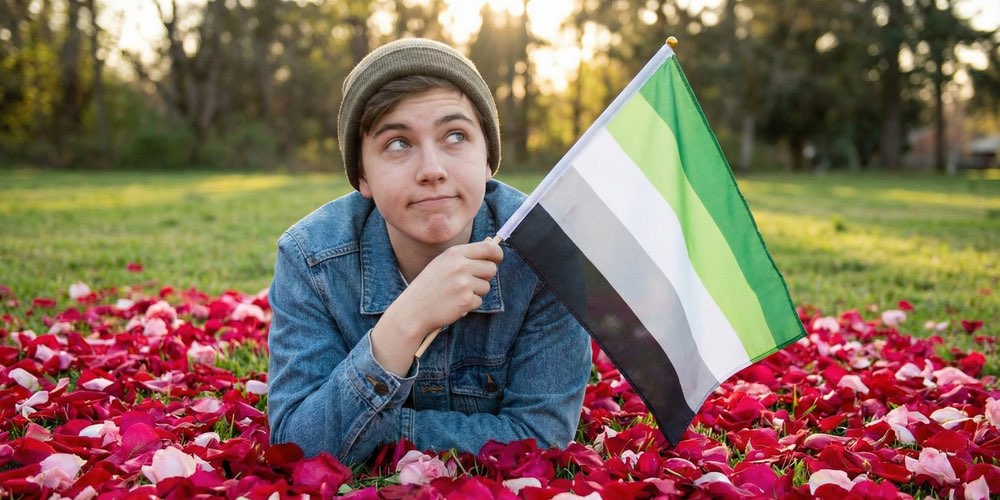
For ace and aro people, visibility means asserting: we exist, we've always existed, and we're not broken. Wearing your identity on Valentine's Day isn't sad or defensive. It's saying, 'Your framework doesn't apply to me, and I'm thriving anyway.'
That's queer history in action. That's the same impulse that drove earlier generations to signal through green carnations, lavender, and coded language. When society insists your experience is impossible, making yourself visible becomes resistance.
Also, it's funny. There's power in responding to a £4 billion industry built on roses and chocolates with, 'We'd rather have garlic bread, actually.'
The ace and aro communities have developed their own recognition signals, and they're brilliant.
Asexual people wear black rings on the right middle finger. It's so subtle you have to know what you're looking for.
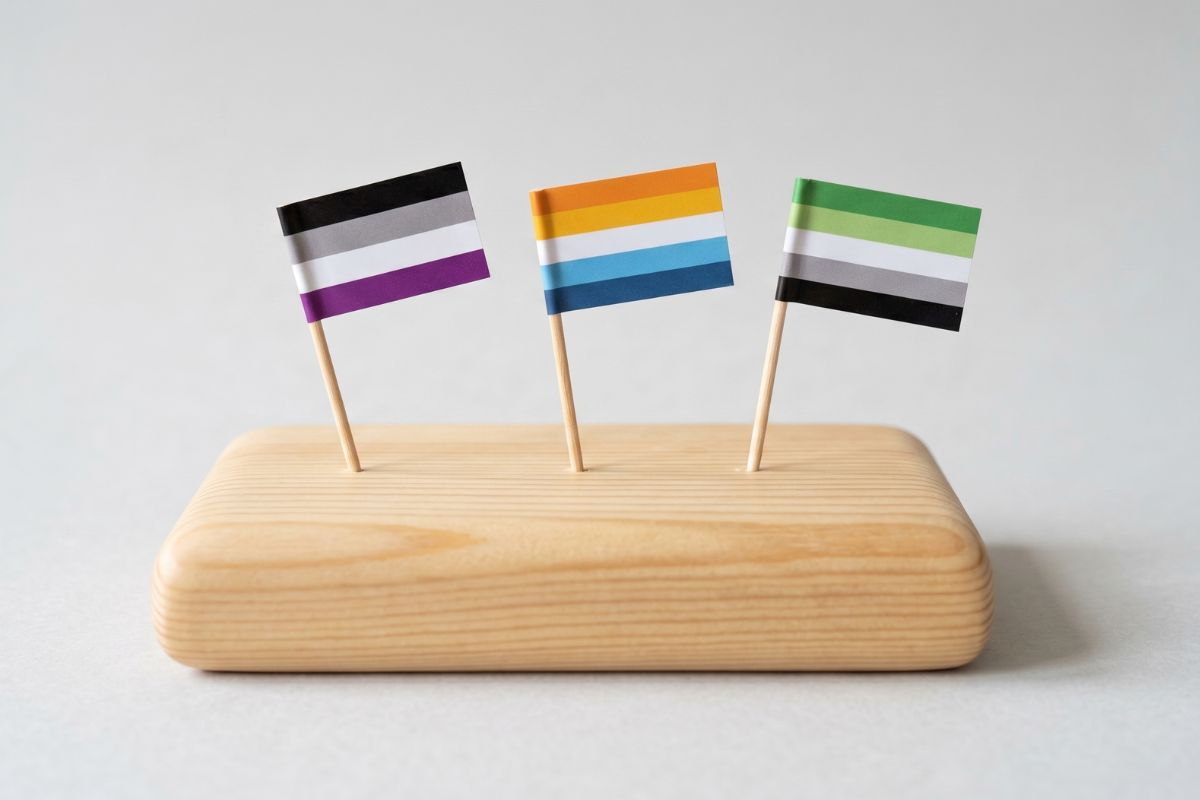
But for aromantic people? They've mostly relied on online community symbols (the aro flag colours, shared memes about garlic bread) without a widely-recognised physical marker in the real world.
Which is where wearable flag colours come in.
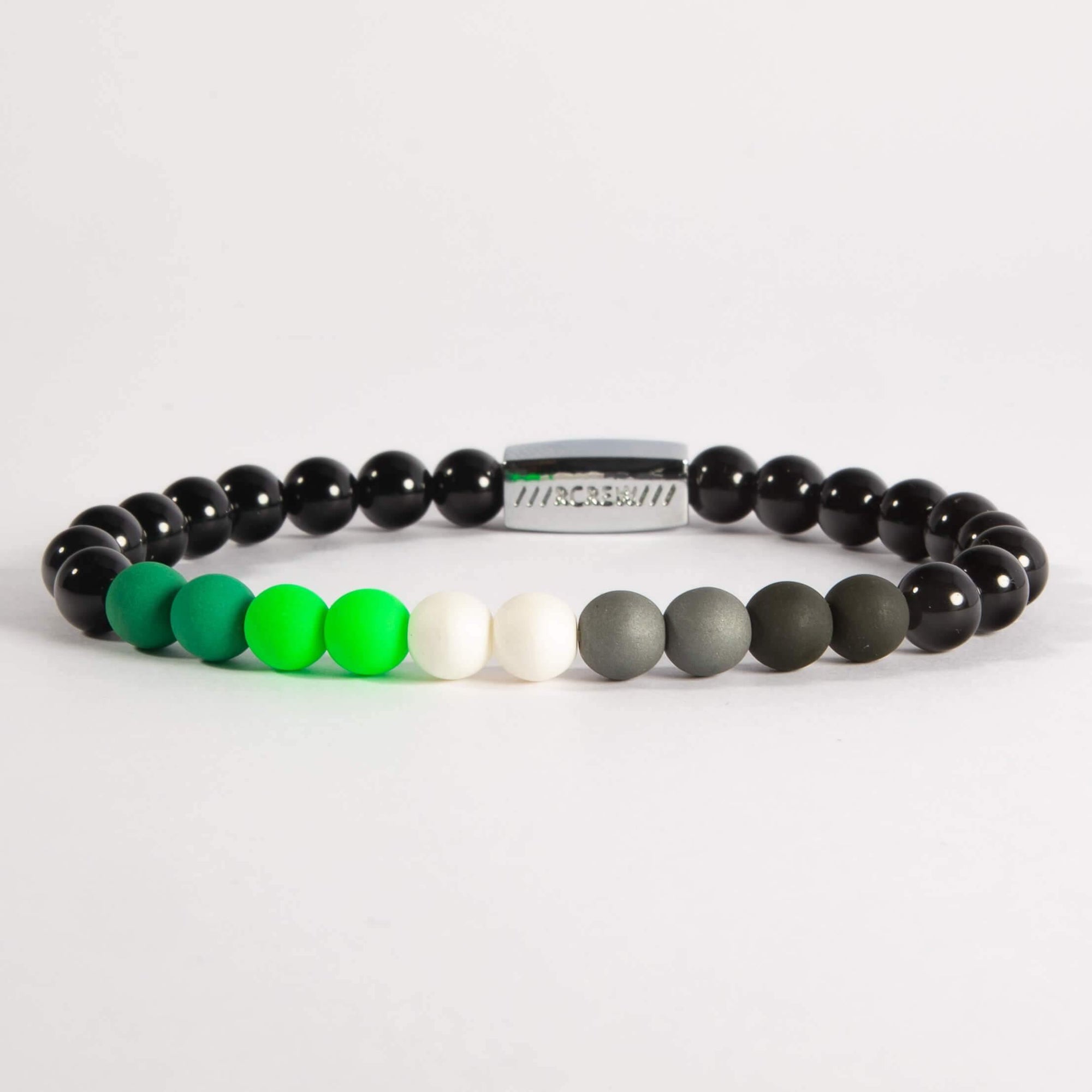
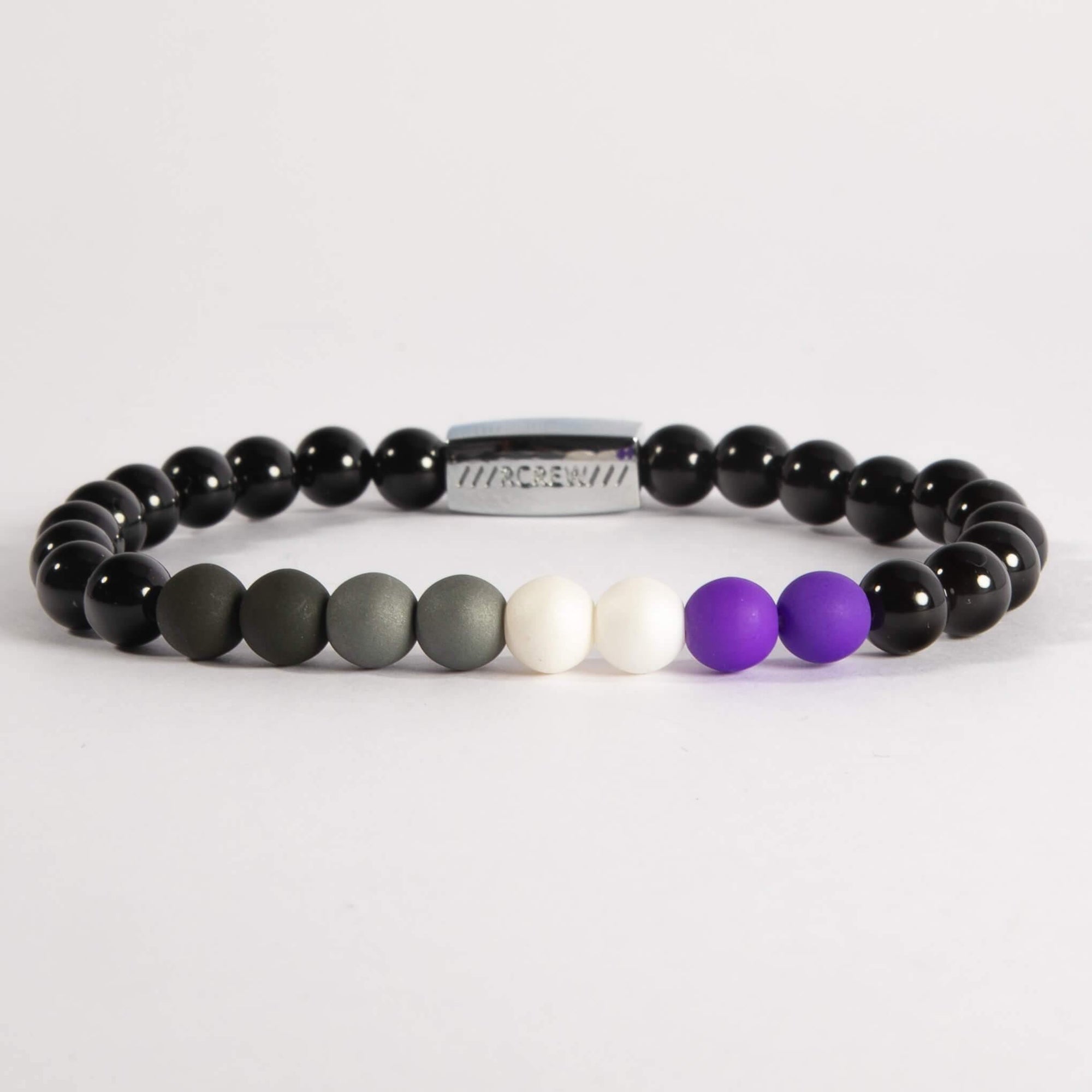
Our asexual and aromantic pride bracelets translate the ace and aro flags into signals you can wear every day. To someone unfamiliar with the flags, they read as minimalist jewellery. To someone who knows? They're a signal. A quiet 'me too' in a world that assumes you don't exist.
For ace people, it's an alternative to the black ring, or something to wear alongside it. For aro folk, it's one of the first widely-available wearable signals using the flag colours. Either way, it's another tool in the visibility toolkit.
Every bracelet is handcrafted by disabled workers at Watford Workshop, a UK charity providing meaningful employment. It's queer community supporting disability community, which feels right.
This Valentine's Day, couples will celebrate their relationships. Brilliant. Romantic love is genuinely lovely when it's wanted.
And ace and aro people will celebrate something equally valid: the freedom to define fulfilment without romance or sex in the equation. That might look like a night in with mates. A good book. Pursuing a hobby. Actual cake.
It's not 'making do'. It's not settling. It's living full lives that happen not to include the thing society insists is universal.
During LGBTQ History Month, we remember the queer people who came before us and refused to fit into boxes that didn't work for them. Ace and aro people are part of that tradition. We're not waiting to be fixed or found. We're already here, already whole, already thriving.
Also, our Valentine's plans are significantly cheaper than yours, and we're getting better sleep. Just saying.

Pride Month is built around love and sexual liberation. For asexual and aromantic people, that framing can make June feel like the loneliest month of all. Here is what that experience actually looks like, and what belonging means when the party was not designed with you in mind.

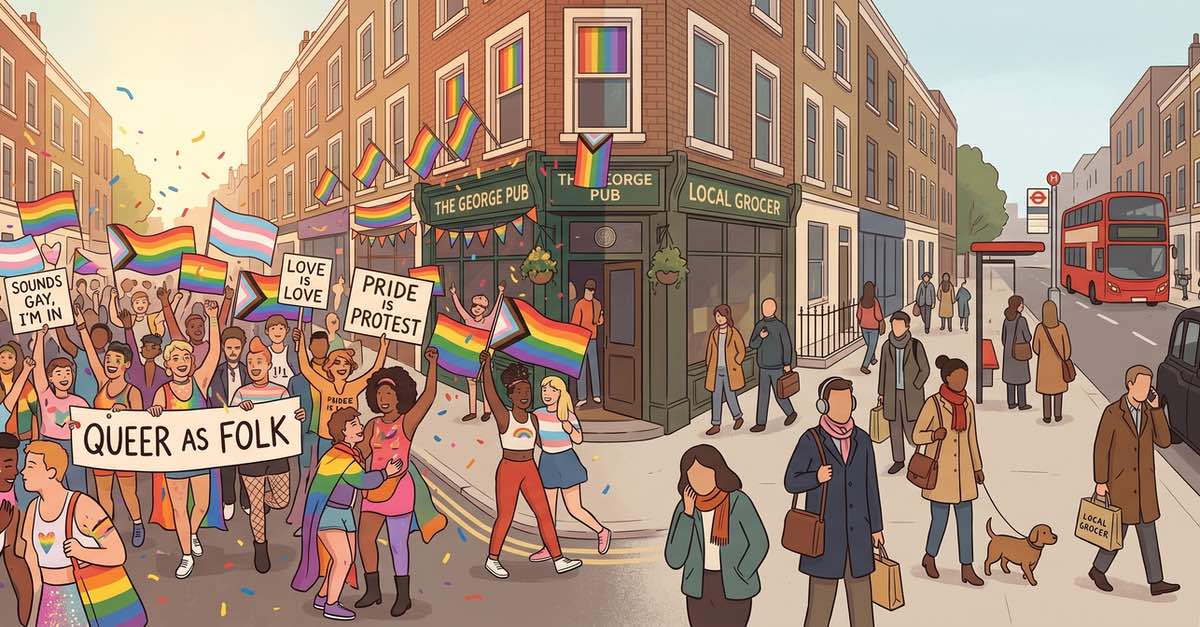
For a few hours every summer, the guesswork stops. You can look around and simply know. This is what Pride does that nothing else does. The question worth asking is what happens when it ends.

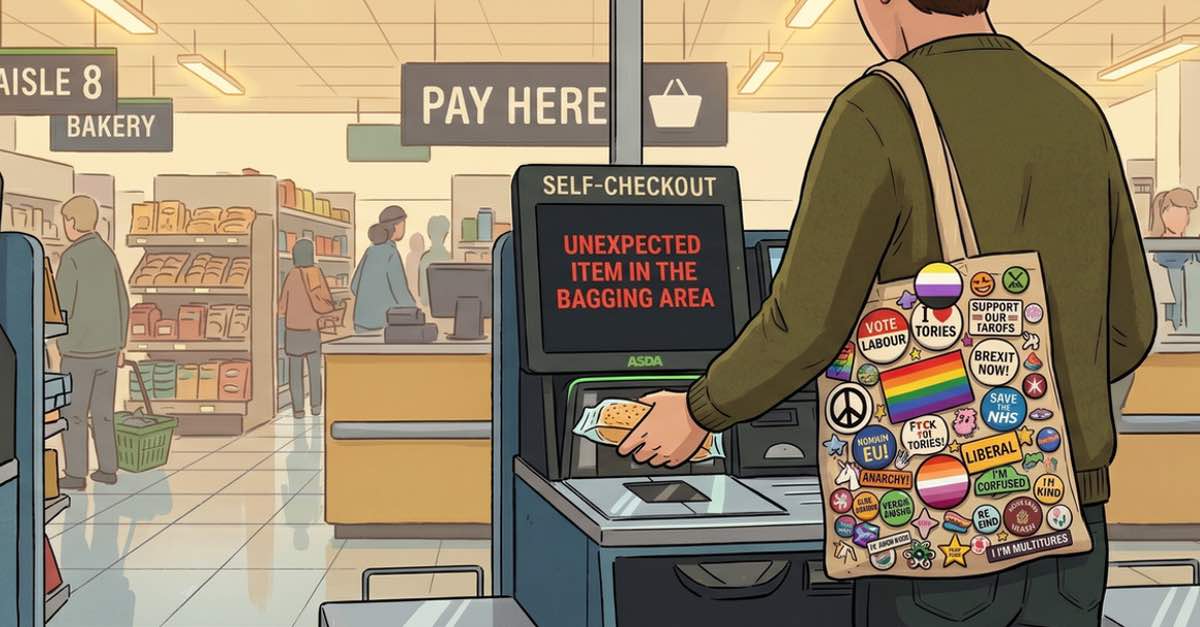
You and your people are in the same spaces every day. The same supermarkets, the same offices, the same commutes. The problem was never finding each other. It was knowing each other. And that is a different problem entirely.