Your Cart is Empty


"Pick a side."
Three words bisexual people hear constantly. From straight people who think you're confused. From some within the LGBTQ+ community who question your commitment. Even from well-meaning friends who accidentally erase your identity every time you're in a relationship.
Here's the truth: Bisexuality is attraction to more than one gender. Full stop.
It's not confusion. It's not a phase. It's not "half gay, half straight." It's a complete, valid sexual orientation experienced by millions of people. In fact, bisexual people make up roughly 50% of the LGBTQ+ community, making it the largest group within the rainbow.
Let's explore what that actually means, why bisexual erasure happens, and how bisexual people are fighting to stay visible.
Bisexual means being attracted to more than one gender. Historically, the term meant attraction to "both" genders (hence "bi"), but the modern understanding is much broader and always has been within the bisexual community itself.
Many bisexual people are attracted to:
The key is multiple genders, not necessarily "all genders" or "only two genders." The Bisexual Manifesto from 1990 explicitly stated that bisexuality includes attraction to non-binary people and has never been limited to a binary understanding of gender.
Some bisexual people experience attraction to different genders in different ways. Some experience it similarly. Some have preferences: maybe you're more often attracted to women, or men, or non-binary people. Some don't have preferences at all. Bisexuality is beautifully diverse. There's no single "correct" way to be bi.
Important distinction: Bisexuality is a sexual orientation (who you're attracted to), not a behaviour. A bisexual woman in a relationship with a man is still bisexual. A bisexual man in a relationship with a man is still bisexual. Your current partner doesn't redefine your orientation.
Think of it this way: a straight person doesn't stop being straight when they're single. A bisexual person doesn't stop being bisexual based on who they're currently dating.
"Isn't bisexual outdated? Shouldn't you say pansexual instead?"
No. Absolutely not. Here's why this question, whilst asked with good intentions, actually perpetuates harmful myths about bisexuality.
Bisexuality has never meant "only attracted to two genders." The bisexual community has always included people attracted to non-binary individuals, genderfluid people, and folks across the gender spectrum. The Bisexual Manifesto from 1990 explicitly stated: "Bisexuality is a whole, fluid identity. Do not assume that bisexuality is binary or duogamous in nature."
The difference between bi and pan often comes down to personal preference and how people describe their individual experience:
Neither label is more "woke" or inclusive. The suggestion that "pansexual is better because it includes non-binary people" is based on a fundamental misunderstanding of what bisexuality means.
If you're wondering which label fits you? Use the one that feels right. Both are valid. Both are beautiful. And honestly, the overlap is so significant that many people find both labels fit their experience.
Here's something bisexual people navigate constantly: erasure. The phenomenon where bisexual identity is questioned, dismissed, or outright denied based on context.
When you're in a different-gender relationship: "See? You're straight now."
When you're in a same-gender relationship: "So you finally picked a side. You're gay now."
When you're single: "You're confused."
When you have preferences: "If you prefer women, you're a lesbian in denial."
When you don't have strong preferences: "That's not bisexual, that's pansexual."
See the pattern?There's no configuration of being bisexual that doesn't get questioned.
This erasure happens from all sides. Straight people who can't comprehend attraction to multiple genders. Some gay and lesbian people who view bisexuality as a "phase" on the way to being "fully gay." Even well-meaning LGBTQ+ allies who accidentally erase bi identity by defining people solely by their current relationship.
According to research by Stonewall, bisexual people report feeling unwelcome in both straight spaces (where they're seen as "too gay") and some LGBTQ+ spaces (where they're seen as "not gay enough"). This double erasure has real mental health consequences.
Let's address the elephant in the room: the stereotype that bisexual people are "greedy" or can't commit.
Being attracted to multiple genders doesn't make someone polyamorous or unable to commit. Bisexual people are equally capable of monogamy as anyone else. A straight woman doesn't need to date every man on earth to know she's straight. A bisexual person doesn't need multiple partners to validate their orientation.
Orientation describes who you're capable of being attracted to, not how you behave in relationships. Bisexuality and non-monogamy are separate things (though some bi people are non-monogamous, as are people of every orientation).
When celebrities come out as bisexual, watch what happens. If they're in a different-gender relationship, media calls them "straight" or describes their sexuality as "fluid." If they're in a same-gender relationship, media calls them "gay" or "lesbian."
Actual bisexual celebrities: Billie Joe Armstrong, Lady Gaga, Megan Fox, Halsey, Aubrey Plaza and countless others. How often do you see their bisexuality acknowledged in media coverage? Or is it erased based on their current partner?
This erasure filters down to everyday bisexual people. When you never see your identity accurately represented, you start to question whether it's "real enough" to claim.
No. Bisexual people aren't confused about who they're attracted to. They're quite clear about it. The confusion usually comes from other people who can't understand attraction to multiple genders.
Some people do come out as bi before later identifying as gay or lesbian, and that's fine. Sexual orientation can be a journey of self-discovery. Millions of people are bisexual their entire lives. For them, it's not a stepping stone. It's who they are.
Sexual orientation is aboutattraction, not experience. A straight person doesn't stop being straight if they've never dated. A bisexual person doesn't need to "prove" their identity through sexual experience with multiple genders.
You know your own attraction. That's enough.
Absolutely not. Many bisexual people have preferences. Maybe you're more often attracted to women (70/30 split). Maybe your attraction fluctuates over time. Maybe it's roughly equal.
There's no "Kinsey scale requirement" for bisexuality. You don't need to be precisely 50/50 to count.
This is bisexual erasure in action. Your orientation doesn't change based on your current relationship.
A bisexual woman married to a man is still bisexual. A bisexual man married to a man is still bisexual. Your partner doesn't redefine your identity.
No, and this actually minimises bisexual identity. Whilst sexuality exists on a spectrum, not everyone experiences attraction to multiple genders. Bisexuality is a specific orientation, not "everyone is secretly bi, and most people suppress it."
Straight people are straight. Gay people are gay. Bisexual people are bisexual.
Many bisexual people describe their realisation as a gradual "oh... I'm attracted to multiple genders, aren't I?" moment. For some, it happens young. Childhood crushes on different genders make it obvious. For others, it's a later-in-life revelation, particularly for people who grew up when bisexuality was even less understood or accepted.
Some bisexual people initially identify as straight (because they experience different-gender attraction) or gay (because they experience same-gender attraction) before realising bisexual fits better. That's not confusion. That's self-discovery with limited language and representation.
There's often a moment of relief when you find the word "bisexual" and think: Oh. This is a thing. I'm not broken. Other people feel this way too.
Here's something many bisexual people experience: being closeted twice. Not out to straight people who'd judge your same-gender attraction. Not out to some LGBTQ+ spaces where bisexuality is questioned or dismissed as "not gay enough."
It's exhausting to have your identity questioned from all sides. To be told you're "too gay" for straight spaces and "not gay enough" for queer spaces. To be treated like you're confused, greedy, or lying.
Many bisexual people describe feeling like they don't fully belong anywhere. Too queer for straight friends, not queer enough for gay friends. This in-between space (bi invisibility) has real mental health impacts.
Bisexual people navigate unique dating challenges:
From potential partners:
From dating apps:
From society:
Despite these challenges, bisexual people date, fall in love, and build beautiful relationships across the gender spectrum. The difficulties don't make bisexuality any less valid. They make bisexual visibility all the more important.
The bisexual community is vibrant, diverse, and incredibly welcoming. Bi+ spaces (the + includes pan, fluid, and other multi-gender attracted identities) offer places where you don't have to explain or justify yourself.
Online communities like r/bisexual on Reddit (500,000+ members) provide daily support, memes, shared experiences, and that crucial feeling of oh thank god, other people understand.
UK cities have bi social groups, Pride organisations have bi committees, and BiCon (annual UK bisexual convention) brings together hundreds of bi people for a weekend of community, workshops, and celebration.
You're not alone. Not even close.
Bisexual people make up roughly 50% of the LGBTQ+ community. They're the largest group within the rainbow. Yet they're often the least visible. This invisibility has real consequences:
Mental health disparities: According to multiple studies, bisexual people have higher rates of anxiety and depression compared to both heterosexual and gay/lesbian people. This is partly due to erasure, discrimination from multiple directions, and feeling unwelcome in both straight and LGBTQ+ spaces.
Economic challenges: Research shows bisexual people face unique workplace discrimination. Many hide their identity at work, particularly if they're in a different-gender relationship (passing as straight) or fear being seen as "attention-seeking."
Health outcomes: Bisexual women have higher rates of domestic violence and sexual assault compared to lesbian or straight women. Bisexual men face unique HIV prevention challenges when health campaigns are designed for either "gay men" or "straight people," erasing bi men entirely.
Media representation: When bisexual characters appear on TV or in films, their bisexuality is often treated as a phase, experimentation, or confusion rather than a stable identity. How many times have you seen a character revealed to be attracted to multiple genders, only for them to be labelled "curious" rather than bisexual?
Visibility combats all of this. When bisexual people are open about their identity (regardless of their current relationship status) it:
The bisexual pride flag features three stripes:
 |
Pink (40% of the flag, top) represents attraction to the same gender. It honours same-gender loving aspects of bisexual identity. Purple (20% of the flag, middle) represents attraction to multiple genders. It symbolises the blending and overlap of same-gender and different-gender attraction. Blue (40% of the flag, bottom) represents attraction to different genders. It honours different-gender loving aspects of bisexual identity. The overlapping pink and blue create purple in the middle, symbolising how bisexuality encompasses and blends different types of attraction. |
The flag was designed by Michael Page in 1998 to increase bisexual visibility. Page wanted to create a symbol that bisexual people could rally around, particularly as bi invisibility was (and remains) a significant issue within LGBTQ+ spaces.
The flag has become widely recognised and is flown at Pride events worldwide, offering bisexual people a visible symbol of identity and community.
When your identity is constantly erased based on who you're currently dating, having a visible signal becomes powerful.
Throughout history, LGBTQ+ people have developed ways to signal identity whilst controlling visibility. From lavender as a colour signal to specific jewellery to pride flags, each generation creates new ways to say "I'm here, I'm queer, I see you too."
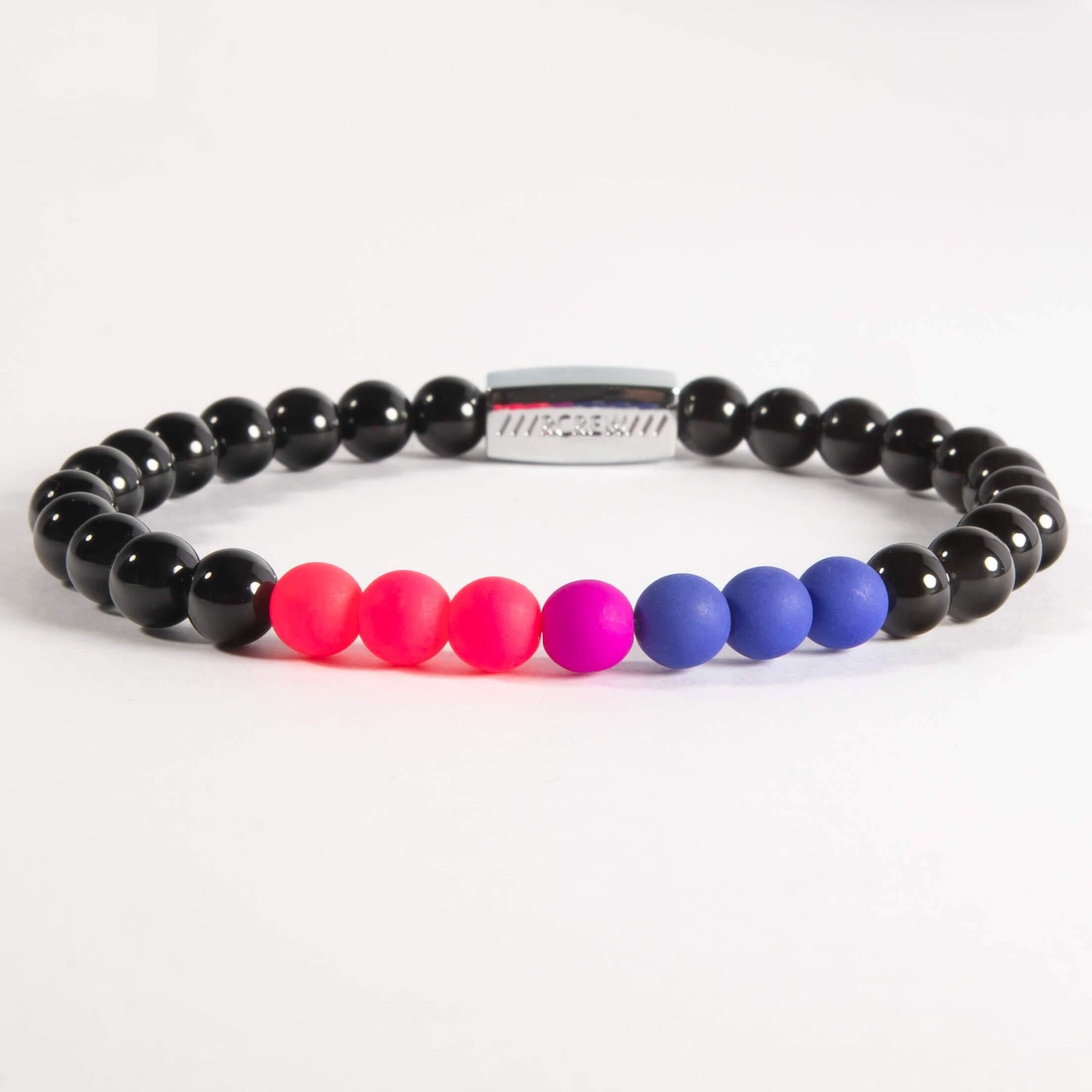
Wearing a bisexual pride bracelet says:
"I'm bi, regardless of who I'm currently with." Your relationship status doesn't erase your orientation. The bracelet is a daily affirmation that your bisexuality is real and valid whether you're single, dating a man, dating a woman, dating a non-binary person, or in any other relationship configuration.
"I'm here and part of this community." When another bisexual person spots your bracelet, there's instant recognition. You've found each other in a sea of erasure.
"You can talk to me. I understand." For other LGBTQ+ people navigating their identity, visible bi people offer safety and community. Your visibility helps others feel less alone.
"My identity doesn't disappear based on context." Straight-passing privilege is complicated. Yes, being in a different-gender relationship can make life easier in some ways, and it also comes with erasure. The bracelet says: I'm still bi, even when you assume I'm straight.
In professional settings where being openly bi might be complicated, a subtle pride bracelet offers a middle ground. Colleagues in the LGBTQ+ community will recognise it. Those who don't might think it's colourful jewellery.
Our bisexual bracelet is designed to keep you visible. Because erasure is exhausting, and you deserve to be seen for who you are, not who people assume you are based on your current partner.
If you're bisexual (whether you've realised it recently or you've known for decades) you're part of a massive, diverse, wonderful community.
Bi Pride UK (biprideuk.org)
UK-based bisexual community and advocacy organisation. Runs bi visibility campaigns, provides resources, and connects bi people across the UK.
Stonewall UK (stonewall.org.uk)
Britain's leading LGBTQ+ rights charity with bi-specific resources, workplace guidance, and research on bisexual experiences.
BiCon (bicon.org.uk)
Annual UK bisexual convention, running since 1984. Weekend event with workshops, social activities, and community building. A highlight of the UK bi calendar.
Switchboard LGBT+ Helpline (switchboard.lgbt)
Phone and online chat support for LGBTQ+ people, including specific understanding of bisexual experiences and challenges.
Bi: Notes for a Bisexual Revolution by Shiri Eisner
Comprehensive exploration of bisexual politics, history, and theory. Academic and essential reading for understanding bi activism.
Getting Bi: Voices of Bisexuals Around the World by Robyn Ochs
Collection of personal stories from bisexual people globally. Diverse, validating, powerful.
The Bisexual Option by Dr. Fritz Klein
Classic text on bisexual identity and experience. First published 1978, updated several times. Historical perspective on bi visibility.
Bi the Way: The Bisexual Guide to Life by Lois Shearing
UK author, practical and affirming guide. Covers coming out, relationships, mental health, and finding community.
Lewis Oakley (Instagram, Website)
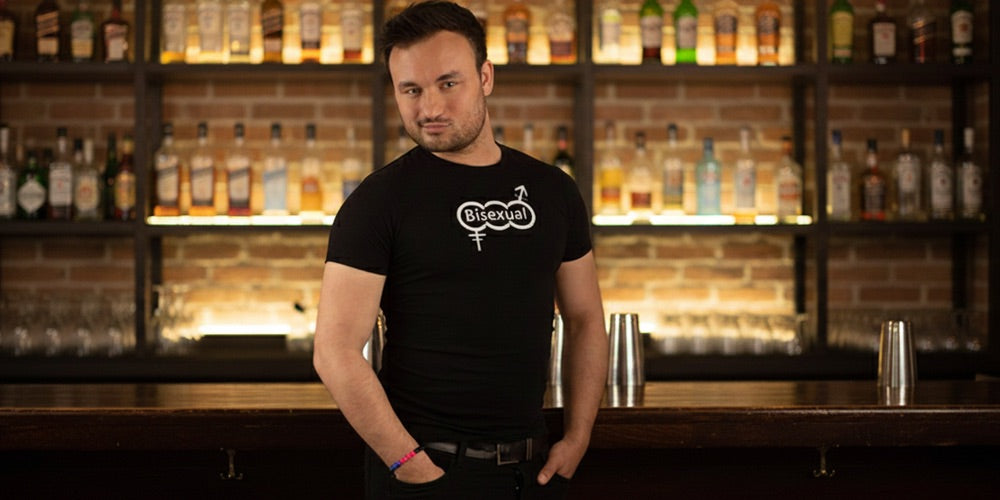
British bisexual activist, writer, speaker (and RCREW model no less!). Campaigns against bi erasure, writes for major UK publications, speaks at schools and universities about bisexual visibility. Author of "Bisexuality: The Basics." Co-hosts "Bisexual Brunch" podcast and writes "Ask a Bi Dad" advice column.
Vaneet Mehta (Website)
British bisexual activist and writer. Founded Bi Pride UK, writes extensively about bisexual mental health and visibility. Regular contributor to LGBTQ+ publications.
Heron Greenesmith (Writer)
UK-based bisexual writer covering LGBTQ+ rights, policy, and community. Regular commentary on bi visibility and erasure.
The Bisexual Index Podcast (YouTube)
UK-based podcast discussing bisexual experiences, history, and current issues. Features British bi voices and perspectives.
Television and film are slowly improving bisexual representation (though bi erasure in media remains common):
Brooklyn Nine-Nine (Rosa Diaz, played by Stephanie Beatriz, comes out as bisexual)
Orange Is the New Black (Piper Chapman's bisexuality is central to her character)
Heartstopper (Nick Nelson's bisexual coming-out journey)
The L Word: Generation Q (Several bisexual characters)
Sex Education (Multiple bi characters across different seasons)
Crazy Ex-Girlfriend (Darryl Whitefeather's bisexual storyline, includes the song "Gettin' Bi.")
r/bisexual on Reddit (Active, supportive community with 500,000+ members. Memes, support, discussion, and that crucial "you're not alone" feeling.)
#Bisexual and #BiTwitter on social media (Huge communities sharing experiences, calling out erasure, celebrating bi joy.)
UK Bisexual Facebook Groups (Local support networks, meetup organising, UK-specific discussions.)
BiCon Discord and forums (Year-round community building beyond the annual convention.)
Bisexuality is not confusion. It's not greed. It's not a phase. It's not half-gay or half-straight.
It's a complete, valid, beautiful sexual orientation.
You don't owe anyone proof. You don't need to justify your preferences or lack thereof. You don't need to have dated multiple genders to "count." You don't need to be equally attracted to all genders. Your identity doesn't change based on your current partner (or lack of partner).
You get to be yourself.
If you're bisexual and dealing with erasure: your identity is real. You belong in LGBTQ+ spaces. You belong in straight spaces when you want to be there. You belong in bisexual-specific spaces. You're not "too much" of anything or "not enough" of anything.
You're bisexual. Full stop.
And when you're ready to wear your identity proudly (to stay visible even when the world tries to erase you based on who you're dating) we're here for that.
Because bisexuality doesn't disappear when you fall in love. And that's something worth celebrating.

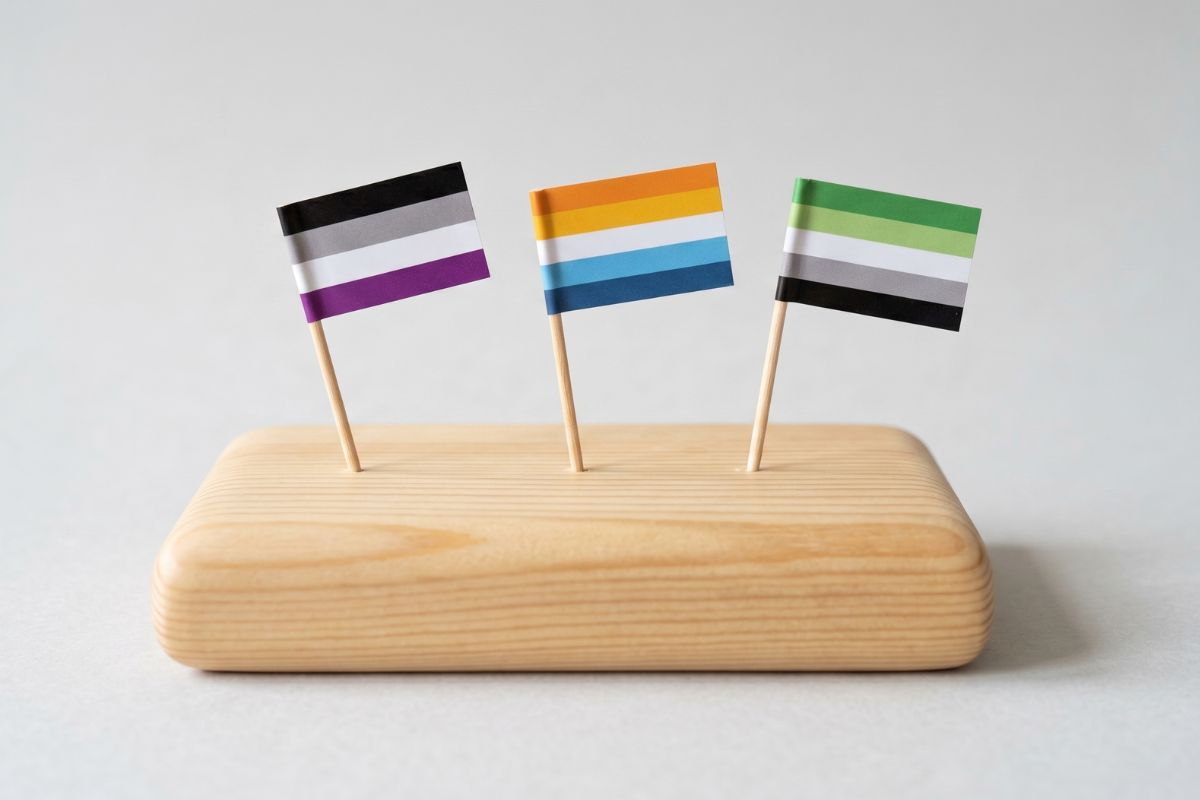
Pride Month is built around love and sexual liberation. For asexual and aromantic people, that framing can make June feel like the loneliest month of all. Here is what that experience actually looks like, and what belonging means when the party was not designed with you in mind.

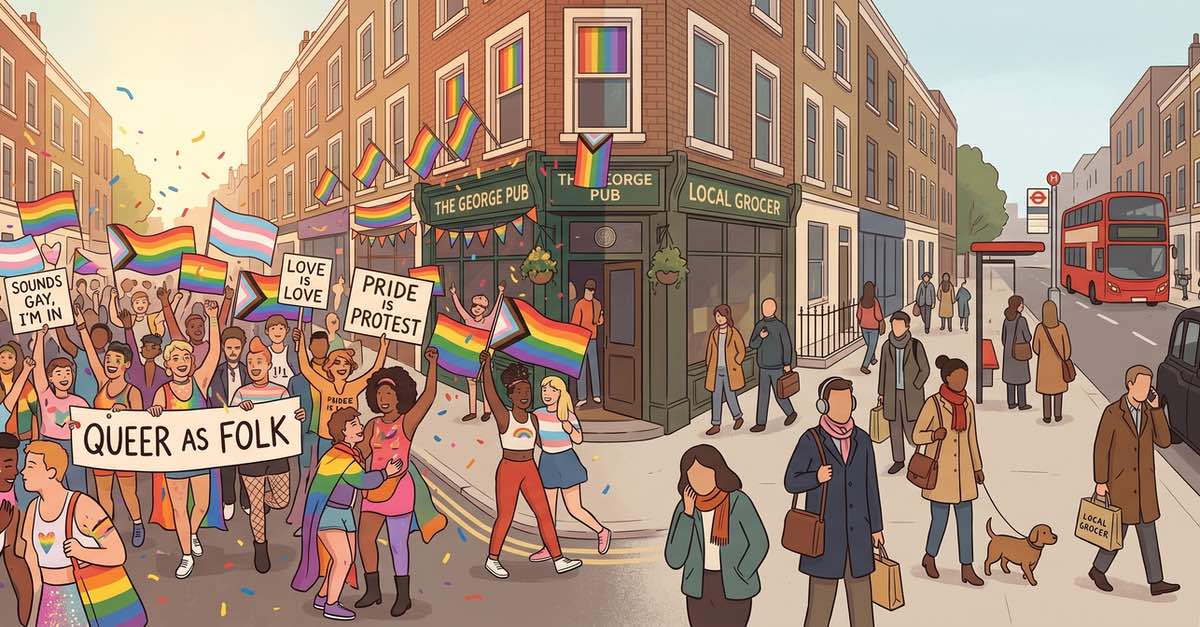
For a few hours every summer, the guesswork stops. You can look around and simply know. This is what Pride does that nothing else does. The question worth asking is what happens when it ends.

You and your people are in the same spaces every day. The same supermarkets, the same offices, the same commutes. The problem was never finding each other. It was knowing each other. And that is a different problem entirely.